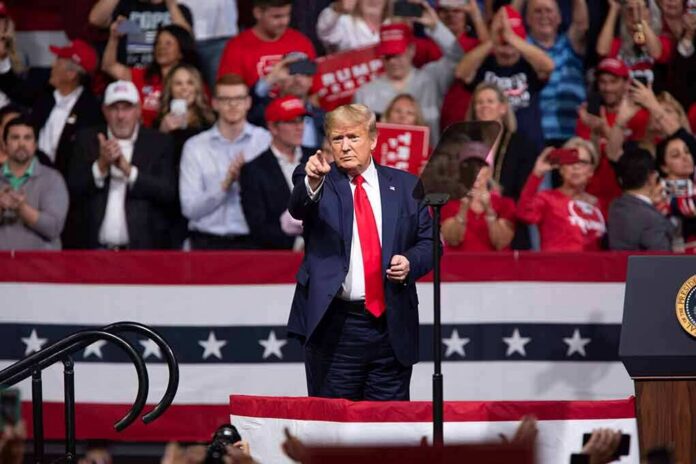
President Trump praised Flávio Bolsonaro’s first-round surge in Brazil as “a very good result,” signaling tighter U.S.–Brazil alignment against the global left.
Story Highlights
- Trump said he is following Brazil’s election “very closely,” without a formal endorsement.
- After round one, Trump called Bolsonaro’s showing a “very good result” and a “very, very big victory” in paraphrase.
- Trump hosted Flávio Bolsonaro at the White House in May during Bolsonaro’s run.
- Senate Democrats accused the administration of pressuring Brazil’s election environment.
Trump’s Words Put Momentum Behind a Conservative Ally
White House press remarks on October 2 showed President Trump was tracking Brazil’s race “very closely,” saying he was looking at “the whole thing.” He did not endorse a candidate, but his attention alone mattered. Reporters pressed him again after the vote. He then called Flávio Bolsonaro’s first-round performance “a very good result,” language that echoed in Brazil’s media and energized conservatives facing a leftist incumbent government under Luiz Inácio Lula da Silva.
Follow-up comments in the days after the first round sharpened that effect. Reuters reported Trump’s paraphrased description of the outcome as “close, but a very, very big victory,” which Bolsonaro’s camp seized to argue Lula looked weak abroad. For voters who want secure borders, lower crime, and growth, Trump’s framing said this: a center-right course in Brazil has wind at its back, and Washington is open to closer ties that put national interests first.
May White House Meeting Signaled Shared Priorities
A May meeting between Trump and Flávio Bolsonaro at the White House showed early alignment on issues like crime and resources. Outlets described the visit and photo as valuable political capital for Bolsonaro, even without a formal endorsement. The meeting also underlined a policy lane: closer U.S.–Brazil cooperation on critical minerals, trade, and a harder line on organized crime, all consistent with conservative goals of secure supply chains and law-and-order governance.
Supporters framed the rapport as normal diplomacy among like-minded leaders. Critics tried to label it pressure. The facts show contact, shared rhetoric, and public praise after round one. They do not show a signed endorsement or proof of campaign coordination. That is why claims of “interference” need careful sorting. Public signaling is routine in foreign policy. Coordination to tilt a ballot would require records or directives that have not been produced in public.
Democrats Cry ‘Interference,’ But Evidence Remains Thin
Senate Democrats warned the administration against meddling in Brazil, citing diplomatic and economic steps as pressure. Their letter charged that Washington used tools that could sway the race. The administration has rejected those claims. What is documented in open sources is Trump’s interest, his positive read of Bolsonaro’s result, and prior contact. What is not shown are internal orders tying any U.S. action to a plan to change votes in Brazil’s election.
Some outlets also blurred lines on endorsement. One report said Trump “openly endorsed” Bolsonaro earlier, while others reported he stopped short. The on-record quotes show caution: Trump said he was monitoring the election and later called the first-round outcome “a very good result.” Conservative readers will spot the pattern: media rush to say “interference,” then lean on conflicting phrasing. The firmer ground is what Trump actually said and did in public.
Why This Matters for U.S. Interests and Conservative Values
Brazil is a key partner for energy, farming, and rare earth minerals. A Brazil that rejects socialism and crime can be a strong ally against China’s grip on resources. Trump’s positive signals toward Bolsonaro’s agenda reflect a push for secure borders, safer streets, and cheaper energy through reliable supply chains. That approach helps American families by easing costs and cutting dependence on hostile regimes. It also backs leaders who respect free speech, faith, and traditional values.
Looking ahead to the runoff, Trump’s strategy appears clear. He is highlighting results, not dictating choices. He is welcoming partners who will fight cartels and defend sovereignty. He is keeping focus on outcomes that help working people, not on the noise of globalist scolds. Voters in both countries know the stakes: law and order versus chaos, growth versus stagnation, sovereignty versus lecture tours. Brazil decides soon. The United States will work with those who put their people first.
Sources:
theamericanconservative.com, latimes.com, english.elpais.com, nytimes.com, pbs.org, politico.com, reuters.com