
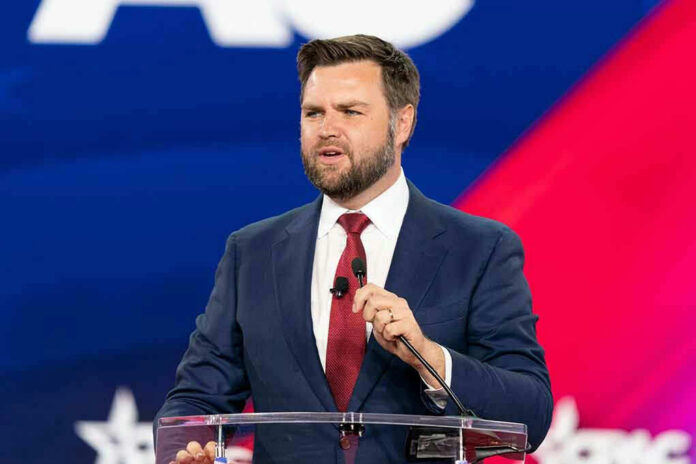
Vice President J.D. Vance says the United States should stop funding a “never-ending” Ukraine war and push for a negotiated peace led by Europe and Ukraine.
Story Snapshot
- Vance argued the United States has done “more than our fair share” and voted against a major Ukraine-aid bill in 2024.
- Vance told the Munich Security Conference the goal is a “reasonable settlement” negotiated from a position of strength.
- Reports say sanctions and other pressure remain on the table if Moscow acts in bad faith.
- The public record shows a strategy frame, not a detailed peace blueprint with terms and enforcement.
Vance Sets a Clear Brake on Open-Ended U.S. War Funding
In May 2024, J.D. Vance warned that endless Ukraine spending does not serve American interests. He said the United States had done “more than our fair share,” and he later voted against a foreign-aid package that included almost sixty-one billion dollars for Ukraine. That vote matched his message: help allies, but do not write a blank check. Many conservatives see this as common sense. Families face higher prices and energy costs, and they want Europe to carry more of its own defense load.
Vance’s case fits a wider burden-sharing debate. European states closer to Russia have natural reasons to stay engaged. Distant taxpayers here at home expect results and limits. Research on support for Ukraine shows location often drives who pays and who fights as wars drag on. That reality tracks with the conservative view: secure America’s borders, rebuild our energy strength, and stop letting global institutions push our country into open-ended bills without a clear end state.
Negotiations “From a Position of Strength,” Led by Europe and Ukraine
At the February 2025 Munich Security Conference, Vance said the administration seeks “a reasonable settlement between Russia and Ukraine” and stressed that Europe and Ukraine must be active at the table. He framed talks as a way to lock in a stable peace, not to reward aggression. “Negotiate from a position of strength” means build leverage first, then trade for security. That keeps the focus on regional leadership while aligning with American limits on spending and exposure.
Conference readouts and press coverage describe a plan that couples talks with real pressure. Economic penalties, including sanctions, remain tools to drive good faith. Reports also say no single military option was promised or ruled out, preserving flexibility while talks proceed. That balance helps deter bad behavior by Moscow, while signaling that Washington wants Europe and Ukraine to take the lead. It also matches a core conservative test: use power wisely, keep missions focused, and avoid nation-building drift.
What the Record Shows—and What It Does Not
The public record sets clear aims but not a full blueprint. The speeches and coverage explain the negotiation push and the leverage mix, but they do not list territorial lines, security guarantees, monitors, or step-by-step enforcement. That is a limit, and it matters. Durable ceasefires often need monitors, external guarantees, and penalties to stop cheating. Those tools, if needed, should land on Europe’s plate first, with the United States as a backstop, not the main funder.
Supporters say the strategy aligns with American interests. It protects our budget, checks a wider war, and keeps energy markets stable, which helps working families here at home. It also presses Europe to invest in its own defense and border security, long a conservative demand. Critics in legacy media have framed Vance as anti-Ukraine. The record instead shows a negotiation-first approach that keeps pressure on Russia and expects Europe and Ukraine to lead the hard choices.
The Path Forward: Strength, Limits, and Accountability
Next steps are practical. Define the leverage needed before talks start, track Europe’s share, and set a firm cap on U.S. support. Make any sanctions snap-back swift if Moscow stalls or cheats. Keep Congress in the loop with clear costs and goals so taxpayers know what they fund and why. That is how you end a war without starting a bigger one. Vance’s stance draws a line: defend American strength, stop the blank checks, and put Europe in the lead where the fight sits.
Sources:
transcripts.cnn.com, abcnews.com, securityconference.org, ro.usembassy.gov