

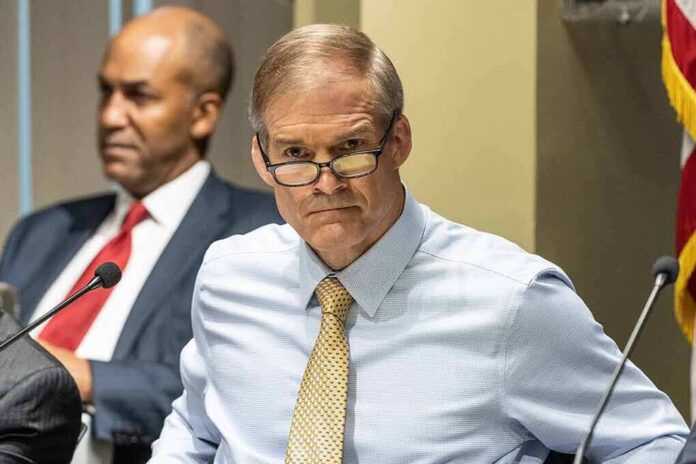
President Trump said he might endorse a House Republican leader only if talks deadlock, while urging members to choose on their own.
Story Highlights
- Trump said he might endorse Jim Jordan or Steve Scalise if House Republicans hit an impasse.
- Trump also said he expects Republicans to pick a leader without his help.
- House Republican leaders are elected by the conference through secret ballot rules.
- Jordan and Scalise are competing to lead House Republicans after leadership changes.
Trump Signals Conditional Help, Stresses Conference Decision
President Trump said he might endorse a candidate for House Republican minority leader if members cannot agree, yet he expects them to settle the race themselves. Trump made clear that his endorsement is a fallback, not a first step, saying the conference will “end up picking somebody” if talks move forward. That approach matches his public stance earlier in the week that he would stay out of the fight unless a deadlock forced a choice.
House Republicans are weighing Judiciary Chair Jim Jordan of Ohio and Majority Leader Steve Scalise of Louisiana for the top conference post. Both men have worked closely with Trump and are seen as reliable conservatives by many in the base. The contest follows leadership shifts after the midterms and sets the tone for how Republicans plan to oppose a Democratic House majority and prepare for future fights over spending, border security, and oversight.
How House Republicans Pick Their Leader
House Republican leaders are chosen inside the party conference, not by the full chamber. The conference rules name the Republican Leader as an elected position of the group, separate from the Speaker and other posts. Congress reference materials explain that party leaders are elected by secret ballot in organizational meetings, which means members vote privately without outside pressure inside the room. Official guidance and member resources also affirm that contested leadership races use secret ballots and bar proxy voting.
Those procedures keep formal control with elected House Republicans, but outside voices can still matter. Presidents and party figures can shape expectations about fundraising help, policy access, and messaging. Trump’s conditional stance threads that needle. He respects the conference’s vote while keeping an option to weigh in if members cannot get to a majority. That balances party unity with accountability to voters who want a strong, clear opposition to the left’s agenda.
Jordan vs. Scalise: What Each Brings to the Fight
Jim Jordan is known for aggressive oversight and sharp questioning in hearings that press agencies on spending, border policy, and free speech issues. Supporters see him as a fighter who will rally conservatives to push back on progressive bills and defend constitutional rights. Steve Scalise has deep leadership experience as Majority Leader, with ties across the conference. Backers view him as a vote-counter who can keep a diverse team together to win key procedural fights.
Both candidates signal continuity with core conservative goals. They promise to challenge Biden-era spending that fueled inflation, resist open-border policies, and stand for law and order. Either leader will need to hold Republicans together in a minority, where discipline and clear messaging are essential. Trump’s message to let members decide first encourages a fair race on ideas and strategy, with an understood safety valve if the room stalls.
Why Trump’s Approach Matters to Conservatives
Trump’s stance protects the conference’s right to choose while keeping focus on results. Conservatives want leaders who will defend the Constitution, secure the border, and stop bloated budgets. A secret-ballot process empowers members to pick the best fighter for that job without public arm-twisting. If talks break down, an endorsement from Trump could settle the race fast and get Republicans back to work on energy costs, immigration enforcement, and oversight of the bureaucracy.
🚨JUST IN: President Trump announces he will NOT be getting involved in the race for House Minority Leader.
"We'll stay out of it. The speaker was fantastic. The people under him were fantastic. All good people, I guess."
47 mentioned Jim Jordan, who has announced his… pic.twitter.com/I10aEi1rvn
— Nick Sortor (@nicksortor) November 4, 2026
The next Republican leader will define how the party confronts a Democratic House. The winner must be able to explain clear choices, block harmful bills, and prepare a sharper agenda for the next election. Trump’s conditional “might” is a nudge toward unity, not a takeover. It puts responsibility on House Republicans to lead, with backup if they need it. That is a practical path that respects limited government and delivers the toughness conservatives expect.
Sources:
thegatewaypundit.com, politico.com, rollcall.com