
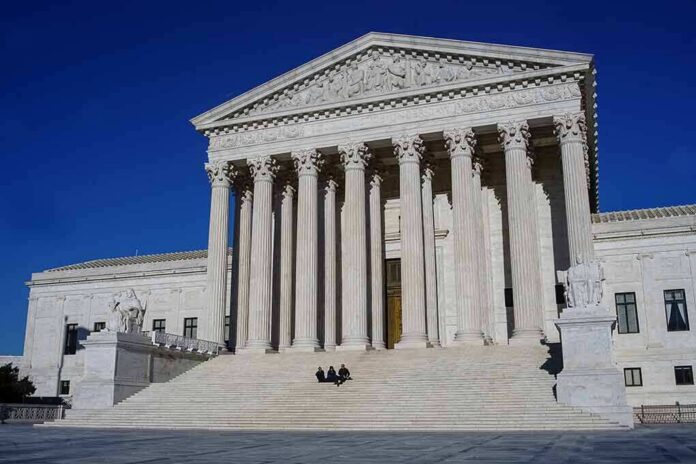
Sen. John Thune said a lame-duck Supreme Court confirmation “can be done,” signaling Republicans would move fast if a seat opens after Election Day.
Story Highlights
- Sen. John Thune said a post-election Supreme Court confirmation is procedurally possible.
- Thune said Republicans would treat any vacancy as a top priority and be prepared to confirm.
- No justice has announced retirement, and no nominee or schedule exists at this time.
- History shows confirmations in election or lame-duck periods are feasible, though politics can be rough.
Thune Signals Readiness For A Lame-Duck Supreme Court Fight
Senate Republican Leader John Thune told reporters that a lame-duck Supreme Court confirmation “can be done” and that he would not rule out action in the roughly 60 days after the election. He said Republicans would be ready if a vacancy occurs and that such a nomination would become the Senate’s top priority. The comments were reported by Punchbowl News and other outlets, which quoted Thune’s direct language about being prepared to confirm in a lame-duck session.
Thune’s remarks reflect a broader push he has led to confirm judges before the next Congress. Reporting described a “judicial blitz” aimed at filling as many seats as possible, and treating any Supreme Court opening as an immediate focus. His position stressed procedural readiness rather than hesitation. He framed the matter as standard contingency planning for Senate leaders who must move quickly when vacancies arise, especially on the nation’s highest court.
What Is Known And What Is Not
There is no confirmed Supreme Court vacancy, no named nominee, and no official Senate schedule tied to a potential confirmation. The reporting captures Thune’s willingness to act, not a finalized plan with vote counts. Outlets also noted speculation about possible retirements. But they did not identify public retirement notices or private assurances to Senate leaders. Bloomberg Law added that any post-election confirmation could face political headwinds depending on Senate control after the vote.
Thune’s readiness message aligns with past statements that Republicans would treat a vacancy as a contingency worth planning for. One report quoted him saying the conference would be prepared to confirm if a seat opened. That posture signals to conservatives that leadership is focused on the judiciary and will not lose time if an opening appears. It also underscores that the Senate calendar can still move big nominations in the weeks after voters cast ballots.
How A Lame-Duck Confirmation Could Work
History and Senate practice show that post-election confirmations are possible. The Congressional Research Service reported the median time for modern Supreme Court confirmations is about 66 days from nomination to final action. That timeline tracks with a typical lame-duck window, though it is not automatic. Speed depends on committee pace, floor time, and votes. Bloomberg Law reported that politics after the midterms could complicate timing and margins, which matters for any high-stakes vote.
If a justice retires and President Trump nominates a successor, Republicans could move hearings and a vote during the lame-duck period if they hold the votes. Thune’s comments suggest leadership planning is already in motion in case that moment comes. The approach mirrors how past Senates acted when vacancies arose late in a cycle. The core message to conservatives is simple: the Constitution sets the process, the Senate controls the calendar, and preparation keeps the Court from drifting left by default.
Why This Matters To Conservative Readers
Supreme Court balance shapes rulings on speech, faith, life, guns, and limits on federal power. A prepared Senate can defend those values by moving promptly and lawfully. Thune’s stance says Republicans will not waste time if a seat opens. That readiness matters when the left talks about court packing or rewiring norms. The right response is not panic; it is planning, votes, and clear rules. Thune’s message lands there: be ready, move fast, and keep faith with the Constitution.
Sources:
townhall.com, lifenews.com, news.bloomberglaw.com, nationalmemo.com, politico.com, punchbowl.news