
National polls during Barack Obama’s tenure showed Americans saw race relations sour sharply — and many blamed his presidency for the slide.
Story Highlights
- Gallup and New York Times/CBS polling showed a steep drop in how Americans viewed race relations during Obama’s presidency.
- Nearly half of likely voters in 2015 said Obama pushed races farther apart, Rasmussen found.
- Scholarly analysis documented a measurable decline in Black–White relations across the Obama era.
- Obama argued the nation was “not as divided as we seem,” offering a competing narrative.
What Polls Recorded As Public Sentiment Shifted On Race
Gallup reported that by 2016, 46% of Americans said race relations had worsened because of Obama’s presidency, up from 22% in 2009. Only 29% said they had improved in 2016, down from 41% in 2009. Concern also rose. The share who worried “a great deal” about race relations jumped from 13% in 2010 to 35% in 2016, after high-profile police killings and attacks on officers. These results tracked a broad, negative turn in public mood.
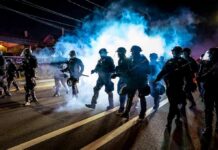
A New York Times/CBS News poll taken in July 2016 found race relations at their lowest point of Obama’s presidency. Sixty-nine percent of Americans said relations were generally bad, and 60% said they were getting worse. Those numbers marked a dramatic shift from the prior year, when 38% said relations were bad. The timing followed the Dallas police murders and other violent flashpoints, which colored the country’s outlook.
How Voters Assigned Responsibility For The Decline
Polling did more than register gloom; it asked who or what bore responsibility. Rasmussen found in late summer 2015 that 47% of likely voters believed Obama had driven people of different races farther apart. Twenty-seven percent saw no big impact, and 20% believed he brought them closer. That breakdown shows a near-half share linking the worsening divide to the Obama presidency, cutting across a national sample of voters.
Academic work also traced a decline in Black–White relations during the Obama years. One scholarly chapter that reviewed multiple surveys concluded relations “took a downward turn during the Obama Presidency,” and tied that shift to the political environment and presidential approval. The finding reinforces what polls picked up: a sustained and measurable deterioration, not just a passing mood swing.
Context: Events, Causation, And A Competing Presidential Narrative
The same record shows a fair caution on cause. Polls capture opinion, not a lab test. Several surveys occurred after police killings and the Dallas attack, events outside any president’s direct control. This complicates a clean line from any one speech or policy to national attitudes. Still, the public’s verdict at the time leaned toward “worse,” and many linked that to Obama’s tenure, even as the news cycle amplified outside shocks.
Rick Santorum Says Obama Deepened Racial Divisions in America
Former Sen. Rick Santorum criticized Barack Obama, arguing that the former president “reignited racism” and was more divisive than Donald Trump.
Santorum pushed back on claims that Trump has been the country’s most… pic.twitter.com/uQVbMEm8GS
— TechAmerica (@techamericaofcl) October 27, 2026
Obama pushed back on the charge that he deepened divides. At the Dallas police memorial in July 2016, he said, “We are not as divided as we seem,” and praised police service while acknowledging bias had not vanished. That message offered hope and balance, yet it ran against the polling trend lines of that period. Voters were telling pollsters that relations felt worse, even as the president argued the country’s fabric remained stronger than it looked.
Why This Debate Still Matters In 2026
Today’s conservatives want unity rooted in law, order, and equal justice, not lectures that excuse violence or smear police. The polling record from 2009 to 2016 charts a clear slide in public confidence on race. Many Americans blamed that era’s leadership for fanning tensions, fairly or not. As President Trump’s administration pushes safer streets and equal treatment under the law, this lesson remains simple: rhetoric matters, facts matter, and results matter most.
Sources:
youtube.com, news.gallup.com, rasmussenreports.com, link.springer.com, nytimes.com