

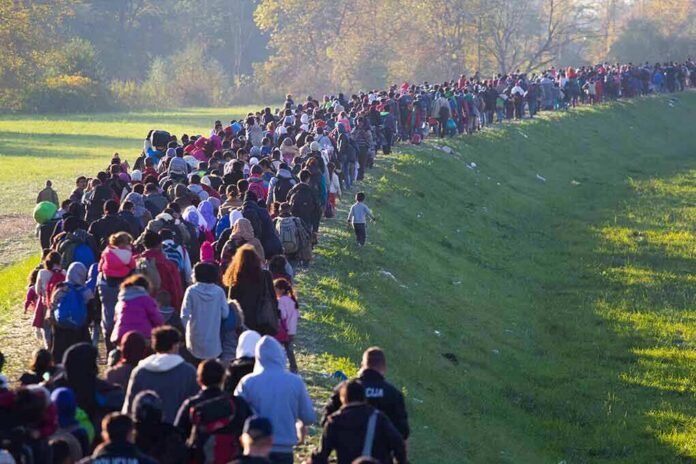
A new migrant caravan of several hundred people is pushing north through Mexico, with many aiming for the United States as election season heats up.
Story Snapshot
- Reports say roughly 300–600 migrants left Tapachula and are moving north through Mexico.
- Organizers and travelers say the goal is to reach the United States for work and family reunions.
- Some migrants reportedly voiced support for Democrats in the midterms, according to an on-scene account.
- Caravan names and headcounts vary, but multiple outlets confirm the route and dates.
Documented Movement From Southern Mexico Toward The U.S.
Local outlets in Chiapas reported a large group leaving Tapachula on October 20, 2026. One account described about 500 people, including men, women, and children, heading toward central Mexico with some intent on the United States border. Other reports around the same period cited approximately 300 to 400 people, and noted groups joining as the caravan advanced. The caravan’s movement follows a known corridor used by past groups traveling from Central America into southern Mexico toward the north.
Earlier reports tracked related contingents forming in September and entering Mexico four days after departing San Pedro Sula, Honduras. Coverage described the group crossing at the Rodolfo Robles International Bridge and regrouping in Tapachula before pushing north. That same corridor saw arrivals from Honduras, El Salvador, and Guatemala. This steady flow confirms the route’s role as a gathering point where caravans assemble, rest, and plan their next stages toward interior Mexico and beyond.
Stated Goals: Work, Safety, And U.S. Destinations
Reporting from Tapachula said migrants organized under the “Sin Fronteras” label planned to travel north and seek ways to reach the United States. Participants cited economic need, better living conditions, and family reunification as motives. Local coverage described families with children and older adults who hope to reconnect with relatives already in the United States, including some previously deported family members. These accounts align with years of caravan patterns shaped by safety concerns, cost, and the lure of jobs up north.
Academic and policy studies note caravans emerge when travel alone becomes costly and dangerous, and when people believe policy shifts may improve their odds. Research cataloged dozens of caravan iterations between 2017 and 2022, showing how border enforcement, crime, and employment prospects influence timing and size. Analysts also point out that election cycles in the United States can shape narratives around caravans, even when on-the-ground drivers remain economic need and family ties.
Election-Season Angle And Reporting Caveats
A report attributed to on-scene journalist Julio Rosas said some migrants expressed hope that Democrats would win the midterm elections. That statement adds a political layer to a movement already moving north for work and reunions. However, the account did not list names or a full transcript, and local Mexican reporting focused instead on jobs, family, and basic needs. The caravan’s political leanings as a whole cannot be pinned down from one claim.
Headcounts and labels also vary across outlets. Reports referenced “Fe y Esperanza,” “Sin Fronteras,” and similar names, with estimates ranging from about 300 to more than 600 as people joined. The differences likely reflect rolling tallies on different days and possibly overlapping groups. What remains consistent is the direction of travel, the use of Tapachula as a staging point, and the stated aim by many to reach the United States if possible.
Why This Matters For Border Security And Policy
Caravans stress every part of the system. They test Mexico’s ability to manage large groups on highways and in shelters. They test American border capacity, vetting, and removal processes. They also raise real concerns for public safety when smugglers target families on the road. Local reports noted aid distributions in Tapachula, which help people survive the journey but also keep the flow moving northward when large groups remain on the streets.
Another Massive Migrant Caravan Marches Through Mexico Toward US Border – Migrants Say They Hope Democrats Win Midterm Elections (VIDEO)https://t.co/HcEe8hPuDC
— The Gateway Pundit (@gatewaypundit) October 21, 2026
For Americans who want a secure border, the lesson is clear. When policy signals look softer, more caravans form. When enforcement is strict, smugglers adapt and push people into caravans for safety in numbers. President Trump’s administration has pressed for tougher enforcement, faster removals, and tighter coordination with Mexico. The movement now under way shows why strong, steady rules and real consequences at the border matter for security, law, and compassion guided by order.
Sources:
thegatewaypundit.com, chiapas.quadratin.com.mx, diariodechiapas.com, elorbe.com, elcongresista.mx, yournews.com