

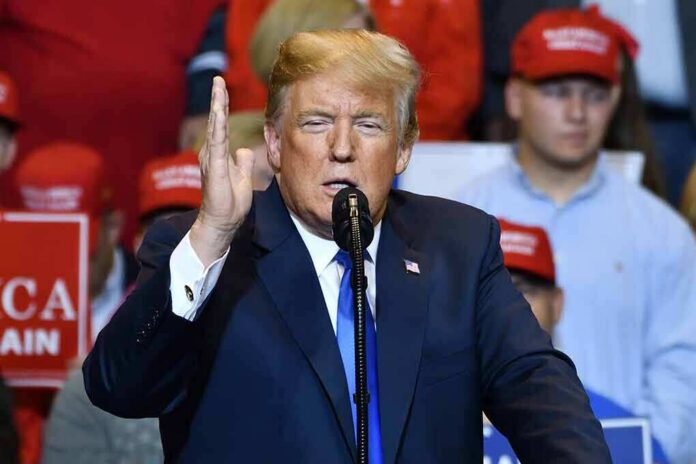
A 60-day U.S.–Iran framework pairs a ceasefire with a clear warning that bombing resumes if Tehran breaks its word.
Story Highlights
- White House says pressure produced a 60-day window to negotiate a final Iran deal.
- Framework halts new military operations and reopens the path to shipping and talks.
- President Trump vows the U.S. “goes back to bombing” if Iran cheats.
- Iran’s leaders face strict choices on nukes after years of U.S. warnings.
What The Framework Actually Does
Reuters and National Public Radio reported the White House transmitted a written framework to Congress in June 2026. The text, described as a memorandum of understanding, ends new offensive operations and commits both sides to avoid starting a war during a 60-day period to reach a final agreement. The measure aligns with shipping relief and a pause in direct strikes, but it is not a blank check. It is a test window with terms and a clock.
A June White House release framed the breakthrough as the result of “decisive American strength” and “unprecedented military and economic pressure”. That message echoes a long-standing U.S. posture under President Trump: talk if they comply, punish if they do not. The administration links any relief to concrete Iranian behavior, not vague promises. That approach reflects a core conservative view: peace is safest when backed by leverage and clear consequences.
Trump’s Red Line And The “Back To Bombing” Warning
CBS reported President Trump said the United States “goes back to bombing” if Iran fails to reach or honor a broader deal after the 60-day period. That warning is not theater. It fits years of statements that the United States will not allow Iran to get a nuclear weapon on any timeline. The framework’s ceasefire language gives space to negotiate, but it does not tie America’s hands if Tehran abuses the pause to stall or rearm.
Past remarks show the same pattern. In 2018, Trump warned he would withdraw from the Iran nuclear deal if its flaws were not fixed, and he did just that. Later coverage quoted him calling Iran’s rulers “crazy,” while stressing the grave risk of a nuclear strike on a city if the world looks away. The consistency matters: deterrence only works if the other side believes you will act. The framework carries that credibility forward.
Why Conservatives See Leverage, Not Appeasement
The White House argued the June understanding came after intense sanctions and military pressure, including measures that squeezed oil flows and challenged Iranian aggression. That pressure-first path rejects the old pattern of paying for promises. It lines up with an America First view: secure our people, protect our economy, and force compliance before any concessions. Reuters’ account of formal terms sent to Congress shows this is policy, not noise.
NPR’s published text says both sides agreed not to start any new war or military operation during the talks, and to use the window to finalize a broader deal. That is a ceasefire on a short leash. It helps shipping and energy markets without gifting Iran a shield from consequences. If Tehran cheats, the United States keeps freedom of action. If Tehran complies, the United States can lock in tougher limits and verification. Either way, America keeps the upper hand.
Tehran’s Counter-Messaging And The Reality Check
Iranian officials have pushed a counter-line that diplomacy and defense move together, rejecting a “deal or war” frame and blaming U.S. actions for setbacks. Outlets quoting Iran’s Foreign Ministry presented that view through named spokesmen, but those claims do not disprove the framework’s text or U.S. warnings. The written record we have is the White House release, the transmitted terms, and the public ceasefire language that binds behavior during the 60-day talks.
For readers worried about energy prices, border chaos, or global weakness, the lesson is simple. Strength and clarity are back. The United States set firm terms, put them in writing, and tied talks to conduct. That is how you keep Americans safe, deter terror sponsors, and avoid endless wars. If Iran abides, we get a safer world at lower cost. If Iran defies, the administration has stated the response. Deterrence only fails when warnings are hollow; here, they are not.
Sources:
youtube.com, iranintl.com, timesofindia.indiatimes.com, trumpwhitehouse.archives.gov, npr.org, thenationalnews.com, washingtonexaminer.com, tehrantimes.com