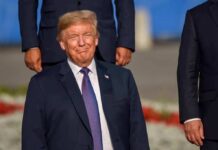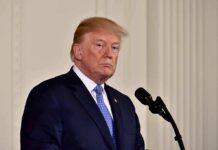

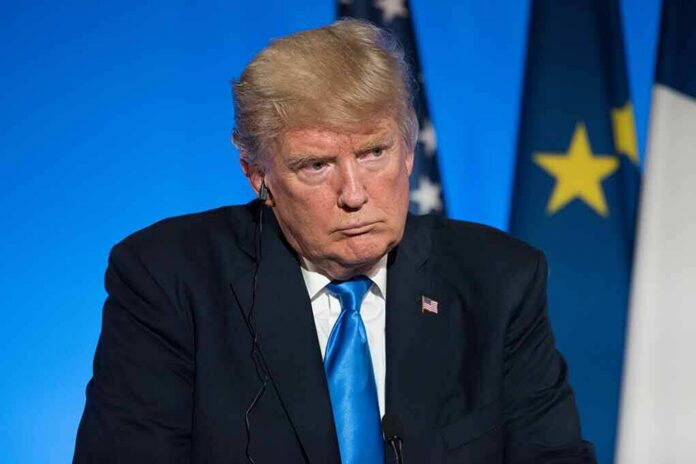
At the United Nations, President Trump tied American power to national gain, declaring that sovereignty comes first and victories bring leverage.
Story Highlights
- Trump rejected globalism and put national sovereignty at the center of U.S. policy.
- UN speeches framed world affairs as nation-to-nation deals, not rule-by-committee.
- Past UN addresses echoed “America First” on security, trade, and energy strength.
- Analysts note a consistent, transactional style across Trump’s UN messaging.
Trump’s UN Message: Sovereignty Over Globalism
President Trump used the United Nations stage to press a clear theme: nations answer to their people, not to global bodies. Trump said the United States would never hand its sovereignty to an unelected, unaccountable global bureaucracy. He stated that America rejects globalism and embraces patriotism, setting the tone for a sovereignty-first foreign policy that prizes borders, security, and national interest over top-down global rules. That message set a bright line for partners and rivals who expect deference to international institutions.
Trump’s language cast world politics as a contest of strong states, each guarding its people and resources. He urged responsible nations to confront threats directly and to stand tall against rogue regimes. That framing pushed back on the idea that committees and panels can solve hard problems better than accountable governments can. Analysts tracking the speech series observed heavy use of the word sovereignty and a steady defense of national decision-making power over multilateral pressure.
America First Outcomes and Leverage
Trump tied security and economic strength to real-world leverage. In prior UN remarks, he highlighted stronger defense budgets and insisted that America’s military and energy gains protect freedom while giving the United States bargaining power in trade and security talks. He linked these gains to a simple test: Does a deal help American workers, families, and allies who carry their share? If yes, the United States will stand shoulder to shoulder. If no, the United States will walk away and use targeted pressure to move outcomes.
That approach fits a transactional style that prizes results over process. Commentators and scholars have described Trump’s UN speeches as a consistent pattern: elevate nation over bureaucracy, set clear red lines, and demand reciprocal benefits in any agreement. Supporters say this ends the old habit of endless talks that weaken borders, shift jobs overseas, and tie U.S. hands. Critics of past globalism should note the continuity: the same themes appear year after year, showing a stable doctrine rather than a one-off line.
What This Means for Allies, Adversaries, and Energy
Allies heard a message to carry their own weight and respect borders. Trump praised independent nations working together by choice, not coercion. He favored fair trade that protects industry at home while rewarding honest partners abroad. He warned that hostile regimes face sanctions and isolation until they change course. This was not a retreat from the world, but an insistence that cooperation must be voluntary, mutual, and focused on concrete gains that voters can see.
President Trump to the world at the UN “to the victor belongs the spoils”. This organizing principle and doctrine seems to be replacing the rules based international order. This will
Not build a peaceful world and those in the UNGA Hall got the message. It was written on their… https://t.co/5P6RxEkUW7— Amal Mudallali (@AmbMudallali) September 23, 2026
Energy policy was central to the vision. Trump’s prior UN addresses tied American energy production to national strength, lower costs, and secure allies who prefer reliable supplies over unstable regimes. A strong U.S. energy sector cuts leverage from hostile exporters and keeps families from paying more at the pump and on utility bills. For conservatives frustrated by years of green mandates and high prices, this stance signals a reset: grow production, protect jobs, and use energy abundance to stabilize the world on fair terms.
Sources:
theamericanconservative.com, millercenter.org, trumpwhitehouse.archives.gov