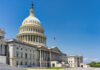
Democratic governors are under fire from their own base for sending National Guard troops to Washington, even as those same deployments help crack down on crime and protect federal workers in the nation’s capital.
Story Snapshot
- Democratic-led states sent Guard troops to D.C. for America 250 events but now face backlash from the left.
- Guard forces in Washington operate under a joint task force that supports local and federal law enforcement.
- The Trump administration cites falling crime and legal authority to defend the long-term Guard presence.
- Court fights and media spin show a deeper struggle over who controls the Guard and how it is used.
Democratic States Sent Troops, Then Complaints Started
Democratic governors in states like Minnesota and Michigan agreed to send their National Guard members to Washington for the America 250 celebrations, a major national event marking the country’s founding. Minnesota officials told reporters their troops were coming only for America 250 duties and not for any “political or executive” use. That careful language shows these governors knew their base was wary of Trump and of any mission that looked like policing. Yet they still chose to participate, knowing history shows states often send Guard units for big national moments.
Once the deployments began, critics on the left quickly claimed “mission creep.” A court filing from the District of Columbia’s attorney general argued that federal officials were exercising “pervasive control” over state Guard troops, leaving governors with no real say. The same filing cited emails from a brigadier general to support the claim that the Pentagon controlled day-to-day Guard operations. In simple terms, the lawsuit paints a picture of blue-state troops being used on Trump’s terms, not the governors’ terms, even though the states asked for Title 32 status so the federal government would pick up the bill.
Trump’s Team Says Crime Is Down and Laws Are Being Enforced
The Trump administration has framed these deployments as part of a clear public safety mission. A presidential action in June 2025 invoked federal law to call Guard troops into federal service to protect Immigration and Customs Enforcement personnel and federal property after credible threats of violence. Later reporting from the British Broadcasting Corporation (BBC) noted that overall crime in Washington fell after Guard forces arrived, and President Trump directly linked that drop to the Guard presence. For many conservatives, that result is simple: when you back law enforcement and bring in extra manpower, criminals think twice.
White House lawyers argue the President has constitutional authority to use federal forces in the District of Columbia without needing extra laws from Congress. Washington is not a state, and the local government has limited power over the District of Columbia National Guard compared with governors in the fifty states. That special status has long allowed presidents to direct the District of Columbia Guard in emergencies, including crowd control or arrests, once the secretary of defense signs off. Trump officials say today’s deployments follow that pattern and are focused on restoring order, not grabbing power from the states.
Courts and Media Challenge the Guard’s Role
Democratic attorneys general and activist groups have pushed back hard, turning the Guard issue into a long-running legal war. In 2025, United States District Judge Jia Cobb ruled that Trump’s crime-deterrence deployment in Washington was illegal because federal law did not clearly allow sending troops for general “deterrence of crime.” A later Supreme Court case, Trump v. Illinois, blocked a separate use of the same statute to send Guard units into Illinois, finding no proof of “rebellion or danger of rebellion.” Those rulings gave Trump’s critics talking points, even though appeals and new legal theories continue.
Many people think that the KKK was made up of a bunch of in-bred southerners.https://t.co/XnILE8HEYn
If you don't care about truth, then that is a possibility.
———————————————————-
William Joseph Simmons started the 2nd Iteration of the… pic.twitter.com/XNOOLuEEdj— John Val John (@38_741) July 8, 2026
National and local media often frame the Washington deployments as routine support for big events like America 250, and they highlight that Guard troops have long helped with parades, traffic, and crowd safety. At the same time, outlets like Politico and public radio networks focus on the “occupation” language from the District of Columbia attorney general and other Democrats, suggesting Trump is misusing the Guard for policing. This mix of narratives can confuse ordinary citizens. They hear “standard celebration support” in one story and “illegal military occupation” in another, even though much of the evidence centers on how Guard units coordinate with law enforcement, not on clear proof of wrongdoing.
Deeper Fight Over Federal Power and State Control
Behind this Washington dispute lies a long, serious fight over who really controls the National Guard. The Guard is unique: in the states, governors normally command it, but federal law lets presidents “federalize” units in certain emergencies. Since Trump’s second term began, at least six major legal challenges have been filed by Democratic-led states over Guard deployments to places like Los Angeles, Chicago, Portland, and Washington. These lawsuits claim state troops were pulled into immigration enforcement or street policing without the clear consent of governors, raising worries about the Tenth Amendment and basic checks and balances.
For conservative readers, the stakes are clear. On one side, we have a President using the tools available to fight crime, protect immigration officers, and keep federal workers safe in a city that has struggled with violence. On the other side, we see blue-state officials and activists trying to tie his hands in court while they quietly rely on his deployments for major national celebrations. The key question going forward is whether future rulings will respect both the President’s duty to “take care that the laws be faithfully executed” and the states’ rightful role in guiding their Guard units, without letting partisan media turn every troop movement into a crisis.
Sources:
youtube.com, afro.com, abcnews.com, instagram.com, politico.com, brennancenter.org, movementlawlab.org, whitehouse.gov, protectdemocracy.org, npr.org, britannica.com, pbs.org