
FIFA’s sudden red card reversal for U.S. striker Folarin Balogun has fueled fresh outrage over how much influence President Trump may have with world soccer’s top brass.
Quick Take
- President Trump said he asked FIFA for a review of Balogun’s red card.
- FIFA then used Article 27 to suspend the one-game ban for one year.
- The United States men’s national team lost 4-1 to Belgium after the reversal.
- Fans online rushed to blame a so-called “Trump curse,” but no proof backs that claim.
Trump Call and FIFA Reversal
Reports say Trump called FIFA President Gianni Infantino and asked for a review of Balogun’s red card. FIFA later invoked Article 27 of its Disciplinary Code, which lets its judicial bodies suspend sanctions for a probationary period. Reuters said the rule had never been used mid-competition in this way, which made the decision stand out immediately.
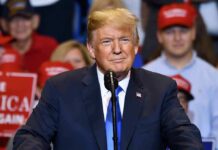
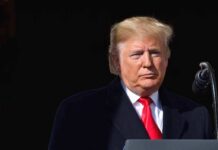
Trump also publicly took credit for the move. He said he asked for a review because he did not think it was a foul, and he thanked FIFA for reversing what he called a great injustice. That message gave critics and supporters alike a clear reason to connect the reversal to Trump’s direct pressure, even though the record does not prove causation.
Why the “Trump Curse” Talk Took Off
The talk of a “Trump curse” spread because the United States then lost 4-1 to Belgium after Balogun was cleared to play. That sequence made for an easy internet story, especially for viewers already hostile to Trump. But the loss alone does not prove any curse, and no statistical evidence in the research package links Trump’s involvement to the result.
The cleaner reading is simpler. Trump pushed for a review. FIFA used a broad rule to suspend the ban. Then the United States lost anyway. That chain may look strange, but strange does not mean supernatural or political cause. It only shows how fast a sports result can get folded into a partisan narrative when a high-profile president gets involved.
What the Facts Do and Do Not Show
The strongest evidence in the package supports a narrow point: Trump did speak out, FIFA acted, and the ban was lifted. The weaker claim is that Trump’s call forced FIFA’s hand. The research does not provide call logs, internal FIFA records, or direct proof that his phone call changed the outcome. It also shows that U.S. Soccer was actively involved in the challenge process.
I mean they got the president involved who has a lot of power lol if that ain’t cheating then idk what it is?? Why didn’t Bosnia try to overturn their players red card in the group stage? Ok then Trump has hella power, USA cheated as I said but they ain’t win!
— John (@TMbros_) July 7, 2026
That matters because Article 27 gives FIFA broad room to act without a detailed public explanation. Rules experts said the decision was highly unusual, but unusual is not the same as corrupt. For readers who care about fair play and clear rules, the real issue is FIFA’s lack of transparency. That is a governance problem, not proof of a Trump-driven curse.
Why Conservatives Should Care About the Bigger Pattern
This story is bigger than one match. It shows how elite sports groups, global officials, and political stars can mix in ways that leave ordinary fans with no clear answers. FIFA’s wide discretion raises the same kind of concern many readers already have about powerful institutions: decisions can be made behind closed doors, then sold to the public with little explanation. That breeds mistrust fast.
For Trump supporters, the episode also cuts against the lazy “curse” spin pushed online. The facts here point to a president who tried to help the U.S. team, not sink it. Balogun’s reinstatement may even have improved the team’s odds, which makes the curse claim weaker on its face. The real controversy is whether FIFA’s process was fair, consistent, and open to scrutiny.
Sources:
mediaite.com, givemesport.com, nbcsports.com, facebook.com, api.spoleg.com, digitalhub.fifa.com, x.com