
Nigel Farage’s Reform UK is leveraging Trump-style populism to challenge Britain’s political establishment, pledging to reverse decades of decline through border control, tax cuts, and an end to woke policies—a movement that has establishment parties scrambling as polls show double-digit leads.
Story Snapshot
- Farage’s “Make Britain Great Again” slogan mirrors Trump’s MAGA, promising to halt illegal migration in two weeks and scrap net zero climate targets
- Reform UK leads polls by 10-15 points despite holding only 5 parliamentary seats, attracting Conservative defectors and working-class voters
- Party proposes UK-style “Department of Government Efficiency” inspired by Elon Musk to slash public spending and lower taxes
- Manifesto pledges include exiting European Court of Human Rights for deportations, reopening North Sea energy production, and zero NHS wait times
Populist Surge Challenges Two-Party System
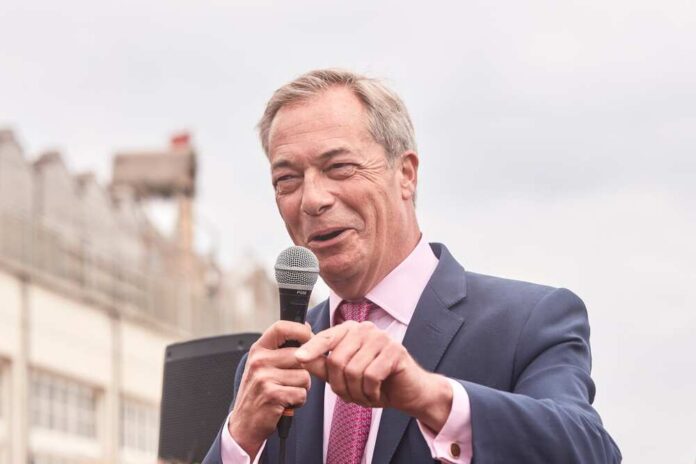
Nigel Farage delivered a standing ovation at Reform UK’s annual conference, promising to “make Britain great again” and positioning his party as the only force capable of addressing what he calls public “anger and despair.” The Clacton MP, who won his seat with 46 percent of the vote in July 2024, told supporters that Reform UK would end illegal migrant boat crossings within two weeks, reinstate stop-and-search policing, and abandon net zero emissions targets. His rhetoric deliberately echoes Donald Trump’s successful MAGA playbook, signaling a coordinated transatlantic populist strategy that has establishment politicians concerned about their electoral futures.
Reform UK’s rise reflects deep frustration with Britain’s political class among voters who feel betrayed by both Labour and Conservative governments. With net migration hitting 685,000 in 2024, NHS waiting lists at 7.5 million, and energy costs up 50 percent since 2021, Farage’s message resonates with working-class communities who believe elites prioritize globalist agendas over British citizens. The party’s “Our Contract with You” manifesto proposes tuition-free STEM education, 50 percent public ownership of utilities, and proportional representation to break the stranglehold of first-past-the-post voting. These policies blend traditional conservative economics with populist appeals that cut across old partisan divides.
Conservative Defections Signal Establishment Panic
At a West Sussex rally, Farage announced that Conservative councillors were defecting to Reform UK, highlighting the fragmentation of Britain’s right-wing vote. Deputy Leader Richard Tice amplified the “Make Britain Great Again” chant, proposing county-level government efficiency departments modeled on the American “Doge” concept championed by Elon Musk and Vivek Ramaswamy. These defections suggest that Reform is no longer a fringe protest movement but a viable alternative for voters who believe the Conservative Party abandoned its principles. Farage referenced Margaret Thatcher’s 1979 turnaround during Britain’s Winter of Discontent, arguing that national revival is possible when leaders prioritize their own citizens over international commitments.
The party’s immigration stance proves particularly appealing to Red Wall voters who supported Brexit but feel promises weren’t delivered. Reform pledges immediate withdrawal from the European Court of Human Rights to enable deportations without judicial interference, reopening North Sea oil and gas production for energy independence, and redirecting foreign aid spending to domestic priorities like policing and housing. These positions directly challenge Labour Prime Minister Keir Starmer’s EU “reset” strategy, which Farage characterizes as surrendering sovereignty regained through Brexit. Reform MPs walked out of Prime Minister’s Questions to protest what they called Starmer’s evasive responses on immigration enforcement.
Fiscal Promises Face Reality Check
Reform UK’s economic platform promises tax cuts funded by slashing public spending through government efficiency initiatives. The party claims scrapping net zero targets would save an estimated £30 billion annually, money they argue should fund NHS improvements and infrastructure rather than subsidize renewable energy projects. Farage told 500 business leaders at a Washington DC event that Reform would win the next general election, citing current polling that shows the party leading establishment rivals by double digits among working-class voters. However, critics note that achieving zero NHS wait times while cutting overall spending presents logistical contradictions that fiscal reality may not accommodate.
The party’s success depends on translating polling strength into parliamentary seats under Britain’s electoral system, which historically disadvantages smaller parties. In 2024, Reform secured 14 percent of the national vote but only five seats, while Labour won a landslide with a similar vote share distributed more efficiently. Reform’s push for proportional representation would eliminate this disadvantage but requires winning power under current rules first. Upcoming local elections will test whether Conservative defections and Trump-inspired momentum can deliver the councillor gains needed to build organizational infrastructure for a general election campaign. The next national vote must occur by January 2029, though political instability could trigger an earlier contest.
Will Nigel Farage and Reform UK Make Britain Great Again?https://t.co/Bmp4ZCvkda
— RedState (@RedState) May 10, 2026
Britain’s political establishment faces a dilemma that mirrors challenges across Western democracies: voters increasingly reject traditional parties they view as corrupt, out-of-touch, and unwilling to address immigration, economic stagnation, and cultural divisions. Whether Farage can actually “make Britain great again” remains uncertain, but his ability to channel widespread frustration into electoral momentum demonstrates that populist movements offering clear alternatives to managed decline resonate with citizens who believe their governments prioritize elite interests over the common good. The coming months will reveal whether this transatlantic populist wave represents a temporary protest or a fundamental political realignment.
Sources:
Nigel Farage Reform UK Prime Minister Make Britain Great Again – GB News
Nigel Farage Trump Richard Tice Reform Doge – The Independent