
President Trump’s revived “New Monroe Doctrine” is redefining the Western Hemisphere as America’s exclusive sphere—and that shift is already colliding with Latin American sovereignty, China’s economic footprint, and Washington’s own credibility.
Quick Take
- Trump has framed a post-Venezuela policy push as a modernized Monroe Doctrine, signaling tougher U.S. control over hemispheric security and economics.
- Supporters see a hard-nosed defense of American interests; critics warn it conditions Latin American sovereignty on compliance with U.S. priorities.
- China’s expanding trade and infrastructure ties in Latin America are a central target of the new approach.
- The doctrine’s “security” definition is widening—moving beyond military threats into supply chains, energy, and infrastructure.
From a 19th-Century Warning to a 21st-Century Power Play
President James Monroe’s 1823 doctrine originally warned European powers against further colonization in the Americas, presenting the hemisphere as distinct from Old World conflicts. The United States lacked the muscle to enforce it at first, but later reinterpretations—especially in the late 19th and early 20th centuries—nudged it toward intervention. That history matters now because the “New Monroe Doctrine” debate is less about a single speech than about how Washington chooses to wield power in 2026.
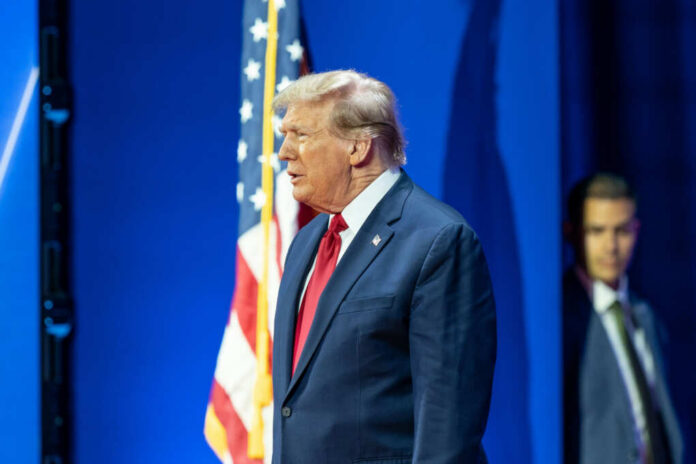
President Trump’s second-term version, sometimes described as the “Donroe Doctrine,” is tied in reporting to a U.S. operation that removed Venezuela’s Nicolás Maduro and to Trump remarks framing hemispheric dominance as an American right. The new framing also arrives amid broader “America First” instincts—less interest in global commitments, more emphasis on direct control of nearby strategic space. Limited public detail on operational timelines makes it hard to evaluate tactics, but the strategic message has been clear.
Venezuela as the Proof-of-Concept—and the Controversy
Venezuela has become the signature case used to justify the doctrine’s revival. In the research provided, Maduro is described as deposed and the Venezuelan government is referenced as being designated a terrorist organization—steps that, if implemented as described, can widen legal and operational options for cross-border enforcement and military planning. For conservatives, the appeal is straightforward: fewer hostile regimes exporting instability near U.S. borders. The risk is that “success” encourages a template for frequent intervention.
Latin American governments, however, have long treated Monroe-style doctrines as a pretext for U.S. meddling. Analysts cited in the research argue the updated version effectively makes sovereignty conditional—pressuring governments to align with U.S. priorities on immigration, drugs, and geopolitical partnerships. That is where many Americans across the political spectrum get uneasy: the same federal government that struggles to secure the border, control spending, or deliver competent disaster response is claiming it can responsibly redesign an entire hemisphere’s political order.
China Is the Main Target, Even When Venezuela Is the Headline
China’s role is central to the new doctrine’s logic. Research sources describe Beijing’s deepening Latin American ties through infrastructure and investment, and they portray Trump’s approach as explicitly aimed at blocking Chinese influence in regional trade and critical projects. That aligns with a “re-hemisphering” argument: if U.S. supply chains are vulnerable, shifting production and sourcing closer to home reduces exposure to hostile powers. It’s a strategic rationale many conservatives understand after years of dependence on foreign manufacturing.
Still, excluding China is easier to announce than to execute. Latin American countries often pursue Chinese capital because it arrives quickly and with fewer governance conditions than Western institutions impose. If Washington’s pitch becomes purely coercive—“choose us or else”—it could backfire, pushing partners to hedge rather than commit. The research also highlights foreign criticism that the new doctrine is “old wine in new bottles,” suggesting the U.S. risks rebranding interventionism as security while expecting gratitude that may never materialize.
“Security” Now Means Trade Routes, Energy, and Infrastructure
A major shift in the reporting is that “security” is expanding beyond military threats to include economics—ports, telecom, energy, and supply chains. Chatham House is cited describing an “economic tilt,” while other sources argue the doctrine increasingly treats the hemisphere’s commercial decisions as strategic terrain. For Americans frustrated by inflation and high energy costs, the idea of securing nearby resources and stabilizing regional supply routes can sound like basic common sense. The tradeoff is larger federal power projection, with higher costs and higher stakes.
The New Monroe Doctrine: In This World, It’s Just Ushttps://t.co/jxkeRcKIPD
— PJ Media (@PJMedia_com) April 25, 2026
The deeper question is whether Washington can apply this doctrine consistently and lawfully, or whether it becomes another politicized slogan that changes with each administration. Conservatives want accountability and results; liberals worry about discrimination and militarization. Both camps increasingly distrust “expert” justification when outcomes don’t match promises. If the New Monroe Doctrine becomes a blank check for executive action without clear limits, it will intensify that bipartisan suspicion that the federal government serves elites first—and ordinary citizens last.
Sources:
Trump’s ‘Monroe Doctrine’ History, Explained
The Monroe Doctrine: The United States and Latin American Independence
The United States’ “New Monroe Doctrine”
The economics of the ‘new Monroe Doctrine’