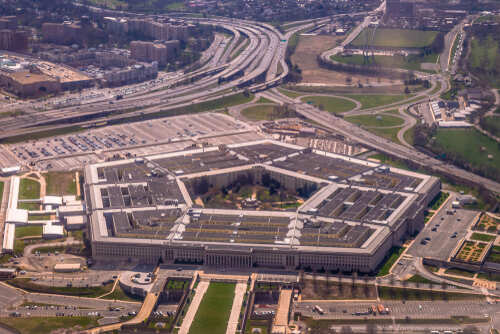
A federal judge’s conflicting rulings on Pentagon press restrictions reveal a disturbing battle over whether government officials can control what information reaches the American people about their own military.
Story Snapshot
- Judge Paul Friedman ruled twice against Pentagon press restrictions, calling them unconstitutional attempts to control the narrative
- Defense Secretary Pete Hegseth’s policy required journalists to pledge not to seek unauthorized information, treating access as a revocable privilege
- Major outlets including CBS News abandoned Pentagon workspaces after revised restrictions mandated constant escorts
- Pentagon officials vow to appeal despite judicial findings they violated court orders and the First Amendment
Constitutional Showdown Over Press Access
U.S. District Judge Paul Friedman delivered a scathing rebuke to the Pentagon in April 2026, blocking revised media restrictions he characterized as an unconstitutional attempt to circumvent prior court orders. The judge accused Defense Secretary Pete Hegseth’s team of trying to “dictate information so the public hears only what the Secretary and Trump Administration want.” This marks the second time Friedman struck down Pentagon efforts to restrict journalist access, ordering officials to submit a sworn compliance declaration by April 16. The ruling underscores growing concerns that government agencies are prioritizing message control over transparency.
Policy Changes Force Media Exodus
The controversy began in late 2025 when the Pentagon implemented credential requirements forcing journalists to pledge they would not seek unauthorized information from officials. After Friedman’s March ruling invalidated key provisions, the Pentagon issued a revised policy that eliminated dedicated workspaces for approximately 50 media outlets and mandated constant escort supervision. CBS News and other major outlets responded by abandoning their Pentagon facilities entirely, choosing remote coverage over operating under restrictions they viewed as oppressive. This exodus demonstrates how bureaucratic overreach creates practical barriers to reporting, limiting the public’s access to critical defense information.
First Amendment Rights Versus Security Claims
The New York Times filed suit in December 2025 after reporter Julian Barnes faced credential restrictions under the new policy. Friedman’s March 20 ruling restored Barnes’ credentials and rejected Pentagon arguments that media access constituted a revocable privilege rather than a constitutional right. The judge emphasized that the First Amendment protects journalists’ ability to ask questions, drawing parallels to landmark cases like the Pentagon Papers. Pentagon spokesperson Sean Parnell countered that the policies balance legitimate security needs with press access, announcing plans to appeal despite judicial findings of non-compliance with earlier orders.
This clash reveals a fundamental disagreement about government transparency in 2026. While Pentagon officials invoke security concerns and statutory compliance requirements, critics see a pattern of administrative agencies using bureaucratic mechanisms to shield themselves from scrutiny. The Freedom Forum noted the policy violated longstanding norms by attempting to bar unsanctioned reporting, effectively giving government officials veto power over what journalists could investigate. For Americans across the political spectrum frustrated with government opacity, this case exemplifies how unelected bureaucrats increasingly operate beyond public accountability, regardless of which party controls the White House.
Implications for Government Accountability
The short-term impact forces journalists into escorted access arrangements that complicate spontaneous reporting and informal source relationships essential to investigative journalism. Long-term consequences could prove more significant if appellate courts uphold Friedman’s characterization of Pentagon access as a constitutional right rather than administrative privilege. Such precedent would limit future restrictions across federal agencies, potentially curbing the administrative state’s ability to control information flow. Conversely, a Pentagon victory on appeal could embolden other departments to implement similar credential requirements, fundamentally altering how Americans learn about government operations funded by their tax dollars.
Federal Judge Temporarily Allows Pentagon To Enforce Press Restrictions https://t.co/zGGeAy3KCI
— zerohedge (@zerohedge) April 14, 2026
The litigation continues as the Pentagon prepares its appeal, with compliance deadlines passing and contradictory reports about temporary enforcement allowances adding confusion to an already complex situation. What remains clear is that this dispute transcends typical partisan divisions, touching core questions about whether the people or their government ultimately control access to public information. As both conservative and liberal Americans increasingly question whether Washington serves their interests, fights over basic transparency like press access to the Pentagon underscore why so many citizens feel their government operates as an insular elite answering to no one.
Sources:
CBS News – Judge rules Pentagon must restore press access
Fox5 Atlanta – Judge rules Pentagon violated order to restore press access
Politico – Pentagon press access NYT hearing
Freedom Forum – Pentagon media policy ruling