

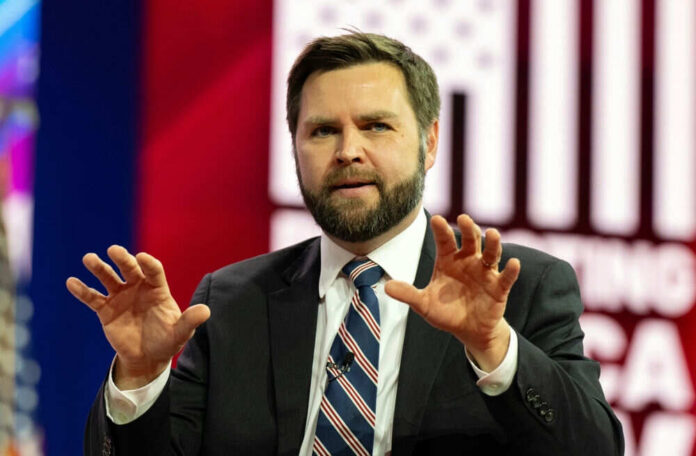
Vice President JD Vance just turned the government’s UFO transparency push into a spiritual debate—while Americans are already exhausted by war, secrecy, and Washington distractions.
Quick Take
- JD Vance told podcaster Benny Johnson he was “obsessed” with UFO files when he took office but hasn’t had time to dig in deeply yet.
- Vance said he doubts UFOs are “aliens,” adding that he believes they may be “demons,” describing it through a Christian lens.
- President Trump, in February 2026, publicly directed federal agencies to identify and release UAP/UFO/“alien” related files, reigniting demands for transparency.
- Available reporting says there is still no confirmed public release of new files tied to Trump’s directive, and no agency timeline has been verified.
Vance’s Comment Lands During a Trust Crisis
Vice President JD Vance made the remarks on Benny Johnson’s podcast, saying he became “obsessed” with UFO files after entering office but has been too busy to review them in depth. Vance also promised he would “get to the bottom” of the files during his remaining time in office. The interview quickly spread because Vance framed the issue in religious terms, saying he doesn’t think the phenomenon is alien.
That framing matters because it shifts the public conversation away from document disclosure and toward worldview arguments. For voters who care about government accountability, the central issue remains straightforward: what has the federal government collected, what can safely be declassified, and when will Americans see it? So far, reporting indicates talk is outpacing action, with no confirmed batch of newly released UFO files publicly attributed to the February directive.
Trump’s February Directive Reopens the Transparency Question
President Trump’s February 2026 Truth Social post instructed federal agencies to identify and release government files tied to UFOs, UAP, and “aliens,” calling the subject “extremely interesting” in cited reporting. The move revived a promise conservatives have heard before—declassify and level with the public—while many voters now view Washington as reflexively secretive. The sources provided do not confirm what agencies have produced or whether a timetable exists.
That gap—between a high-profile directive and verifiable follow-through—creates room for rumors, political opportunism, and media sensationalism. It also gives skeptics a familiar frustration: Washington can mobilize quickly for foreign ventures and spending bills, but slows down when asked to disclose what it knows. With the country already strained by overseas conflict and domestic cost pressures, credibility depends on measurable steps, not viral clips.
What Official History Says: “No Evidence” Doesn’t End the Debate
Background cited in the reporting points to a long arc of public interest, intensified by the post-2017 surge of UAP coverage and subsequent congressional attention. The research summary notes that a Pentagon report in March 2024 attributed many sightings to ordinary explanations such as balloons, drones, or aircraft, and said no evidence of extraterrestrial technology had emerged. That official posture keeps the burden of proof high while leaving open questions about misidentification and classification.
For many conservatives, “no evidence” is not the same as “full transparency.” Classified programs, intelligence methods, and defense capabilities can justify secrecy—but secrecy also enables bureaucratic self-protection. If the government has mundane explanations, releasing documentation should be easier. If the government has sensitive explanations, Americans still deserve clarity about what is being withheld and why. The sources provided do not include new technical findings beyond the cited background.
Faith, Pop Culture, and the Risk of Political Misreads
Vance’s “demons” remark drew attention because it sounded like a conclusion rather than a question. In the interview, he framed his view as rooted in Christian understanding of spiritual realities, suggesting that what people call “aliens” may be something else. Supporters who share that faith lens may find it credible, while others will dismiss it as speculative. Either way, the comment can drown out the practical question of document review and declassification.
Media treatment also complicates the picture. The research notes a headline mismatch in one report compared with the article’s own description of Vance’s statement, signaling how easily this topic gets distorted for clicks. When coverage is sloppy, it becomes harder for the public to separate what was actually said from what was implied. On an issue that already attracts hoaxes and hype, precision matters, especially when the speaker is the vice president.
What Happens Next: Declassification or Another Dead End
The reporting presented here indicates Vance said he intends to spend time on the UFO files, but it does not show evidence he has begun a comprehensive review or that agencies have delivered a public release. That leaves citizens with a familiar pattern: big talk, unclear process, and no posted checklist of what will be released, what will remain classified, and what oversight exists. Transparency efforts succeed only when agencies are forced into deadlines.
With America’s attention divided by war and economic stress, UFO disclosure can look like a sideshow—or it can become a test case for whether the federal government still answers to the public. Conservatives who are tired of expensive foreign commitments and Washington’s unaccountable bureaucracy will likely judge this story less by theories and more by receipts: actual documents, clear redactions, and a verifiable timeline. The current research includes no confirmed release date.
Sources:
JD Vance says he was ‘obsessed’ with UFOs, believes aliens are actually ‘demons’
JD Vance says he’s ‘obsessed’ with UFOs, calls aliens ‘demons’