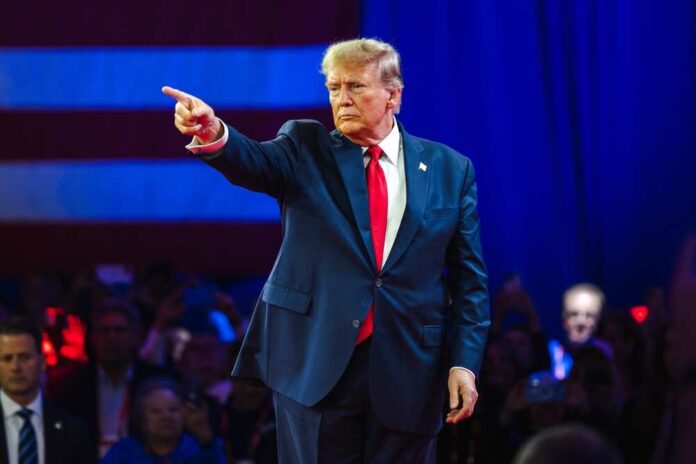
A new federal policy threatens local autonomy by pushing for the death penalty in D.C.
Story Overview
- President Trump announces federal push for the death penalty in D.C.
- Policy challenges local abolition of capital punishment since 1981.
- Move framed as a response to rising crime rates in the capital.
- Legal and ethical challenges are anticipated from civil rights groups.
Trump’s Announcement and Its Implications
On August 26, 2025, President Donald Trump declared his administration’s intention to enforce the death penalty for murder cases in Washington, D.C. This marks a significant shift in federal law enforcement policy, as the nation’s capital abolished the death penalty in 1981. Trump’s announcement, made during Cabinet remarks, is framed as a necessary response to rising crime rates and perceived failures of local justice systems. This move is expected to spark legal challenges and debates over federal intervention in local criminal justice.
Historically, federal law allows for capital punishment, but its application in D.C. has been rare and contentious. The Trump administration’s decision comes amid broader patterns of federal intervention in Democratic-led cities, following previous federal crackdowns in Portland and Chicago. The administration argues that strong deterrence measures are essential to address violent crime, positioning this policy as a critical step for public safety.
Watch; Trump Announces That His Admin Will Seek The Death Penalty For DC Murders
Stakeholders and Challenges
The announcement has drawn attention from various stakeholders, including the Department of Justice, which would be responsible for prosecuting capital cases, and the D.C. Government, whose officials are likely to oppose federal overreach. Civil rights groups are expected to challenge the policy on legal and ethical grounds, citing concerns over the death penalty’s disproportionate impact on marginalized communities. The policy also poses a potential conflict with Congress, which holds legislative authority over D.C. criminal law, highlighting the tension between federal and local governance.
Trump’s push for the death penalty is part of a broader law-and-order messaging strategy, aiming to project strength on crime. However, this federal intervention in local criminal justice raises questions about the balance of power and the protection of civil liberties. The move is likely to mobilize both pro- and anti-death penalty constituencies, further polarizing political debates over crime and punishment.
Legal and Social Ramifications
The legal feasibility of enforcing a federal death penalty in D.C. remains contested, given the district’s unique status and existing abolition of capital punishment. The policy’s long-term implications include setting a precedent for federal intervention in local justice systems and impacting the national discourse on the death penalty.
The immediate effects of the announcement include heightened political debates, potential legal challenges, and increased federal-local tensions. Economically, the policy could lead to increased costs for federal prosecutions and death penalty cases. Socially, it may have a chilling effect on local governance and further polarize public opinion. As discussions continue, the administration’s actions are defended by the White House as necessary for maintaining public safety.
Sources:
ABC News: Trump Admin Live Updates
CNN: Washington DC death penalty