America just got a stark Easter warning from the first American pope—stop chasing another Middle East war before it swallows the country’s unity, treasury, and credibility.
Story Snapshot
- Pope Leo XIV used his first Easter Sunday address to urge leaders to lay down weapons and pursue peace through dialogue, widely read as a rebuke of the Trump administration’s Iran war posture.
- The message lands as many MAGA voters—already exhausted by energy costs and intervention fatigue—argue over U.S. involvement and open-ended commitments tied to Israel.
- The White House defended public calls for prayer and framed wartime prayer as normal during national crises, even as religious leaders questioned whether the war can be morally justified.
- Archbishop Timothy Broglio, who leads the Catholic Archdiocese for Military Services, said he struggles to portray the conflict as something the Lord could endorse, stressing war must be a last resort.
A Pope’s Easter Address Collides With Washington’s War Messaging
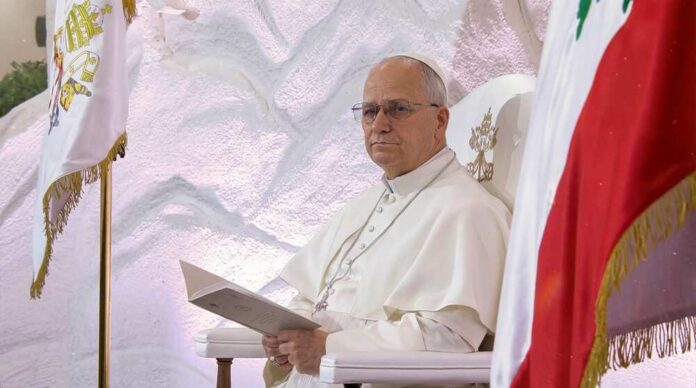
Pope Leo XIV delivered his inaugural Easter Sunday message from St. Peter’s Basilica during Holy Week 2026, calling on those with weapons to lay them down and urging “peace” pursued through dialogue rather than force. The pontiff did not name President Trump, but his timing overlapped an active U.S.-Israel campaign against Iran described in coverage as escalating. As the first American-born pope, Leo’s moral pushback carries unusual political weight at home.
Earlier in the week, Leo signaled he wanted an “off-ramp” from the conflict and urged world leaders to return to dialogue and reduce violence. Those remarks reinforced a pattern: the pope’s public emphasis on de-escalation, and his warning that societies can grow accustomed to violence. That framing hits American audiences differently in 2026, when many voters remember decades of “limited” operations that turned into years-long commitments with unclear endpoints.
MAGA’s Split: Loyalty, Israel, and the Fear of Another Endless War
Within Trump’s conservative coalition, the Iran conflict is fueling a real debate: how to back national strength without getting pulled into another regime-change-style quagmire. Many older supporters who fought to reverse left-wing cultural pressure at home now feel boxed in by foreign policy momentum they thought Trump would resist. The friction is not abstract—higher energy costs, a fragile pocketbook, and deep skepticism toward “nation-building” shape how voters hear every new threat and deadline.
The available reporting also highlights how quickly rhetoric can raise the stakes. Axios reported Trump threatened Iranian critical infrastructure if the Strait of Hormuz was not reopened by a deadline, a scenario that would directly tie the conflict to global energy flows. For conservatives focused on American household stability, anything that risks spiking oil prices lands as more than geopolitics—it becomes kitchen-table economics. Limited public details make it hard to judge strategy, but the risks of escalation are clear.
White House Response: Prayer, Patriotism, and Competing Moral Claims
Press Secretary Karoline Leavitt defended the administration’s posture by arguing that presidents and military leaders have long turned to prayer during crises and that there is nothing wrong with urging prayer for service members. That response speaks to a traditional American instinct: honor troops, support families, and recognize the gravity of combat. Yet the pope’s intervention also underscores a separate claim—that moral leadership requires actively resisting a cycle of violence, not merely sanctifying it with religious language.
Military Catholics and the “Last Resort” Standard
Archbishop Timothy Broglio, who oversees Catholic ministry for U.S. service members, acknowledged leaders may possess insights that justify action while still warning he finds it difficult to portray the war as something the Lord could endorse. Broglio’s emphasis that war should “always” be a last resort echoes classic just-war concerns many Christians recognize. In practical terms, it raises the question voters keep asking: what is the objective, what is the endpoint, and who defines “victory”?
https://twitter.com/WhiteHouse/status/1273563674156843
For conservatives who value constitutional limits and distrust Washington’s permanent-security mindset, the deeper concern is mission creep—new authorities, secrecy, and massive spending justified by emergency. The pope’s Easter message does not settle America’s strategic choices, but it does spotlight an accountability gap: citizens are being asked to accept major risks with limited transparency about goals and duration. If the administration wants unity, it will need more than slogans; it will need clear, measurable aims and a credible off-ramp.
Sources:
Pope Uses Christianity’s Holiest Day to Take Down Trump
Pope Leo XIV, Trump and Iran war messages: Catholic Church