

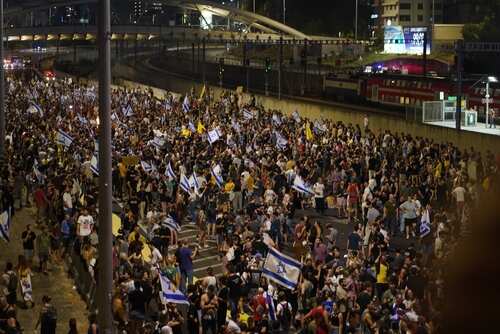
Israeli protests against the Gaza war highlight mounting pressure on the government to prioritize humanitarian concerns over military escalation.
Story Overview
- Nationwide protests in Israel demand a ceasefire and hostage release.
- Organized by families of hostages, the protests gain significant moral support.
- The government faces increased pressure amidst ongoing military operations.
- Police use force to control protests, reflecting deep societal divisions.
Nationwide Protests Demand End to Gaza War
On August 17, 2025, Israelis staged a coordinated nationwide strike and protests, calling for an immediate ceasefire in Gaza and the release of hostages held by Hamas. This action, led by hostage and bereaved families, included road blockades and business closures, highlighting public frustration after nearly two years of conflict. The demonstrations reflect growing concerns about the safety of hostages and the potential risks of further military escalation.
As protesters gathered in major cities like Tel Aviv, police responded with water cannons and arrests to maintain public order. Authorities faced challenges as demonstrators blocked highways and gathered outside officials’ residences, demanding government actions to secure a hostage deal and ceasefire. The protests marked a significant escalation in civil dissent, with widespread participation disrupting daily life and drawing international attention.
Nationwide strike erupts across Israel demanding hostage deal, end to Gaza war https://t.co/iR3WOUIBbO pic.twitter.com/wHldDQq99r
— New York Post (@nypost) August 17, 2025
Background of the Gaza Conflict
The ongoing Gaza war, which began in October 2023, has led to thousands of casualties and significant destruction. The conflict escalated after failed ceasefire talks and hostage videos released by militant groups, intensifying public concern for those captured. The Israeli government’s announcement of renewed military operations in densely populated Gaza areas has exacerbated fears for the hostages’ lives, contributing to the current unrest.
Deepening divisions within Israeli society over the government’s handling of the war and hostage crisis have fueled calls for a negotiated settlement. The protests reflect mounting public impatience after 22 months of conflict, with increasing demands for a change in strategy.
Watch:
Impact and Implications of the Protests
The protests have significantly disrupted daily life, increasing political pressure on the government and sparking public debate. In the short term, business closures and transportation disruptions have economic implications, while socially, the protests have mobilized civil society and increased polarization. Politically, the government’s policy is under intensified scrutiny, with potential consequences for domestic stability and international relations. The movement’s leadership by hostage and bereaved families lends it unique moral weight, increasing public resonance and challenging official narratives. This situation presents a critical moment for Israeli policymakers as they navigate domestic and international pressures.
Sources:
Protesters in Israel Stage Nationwide Strike to Demand Ceasefire and Release of Hostages in Gaza