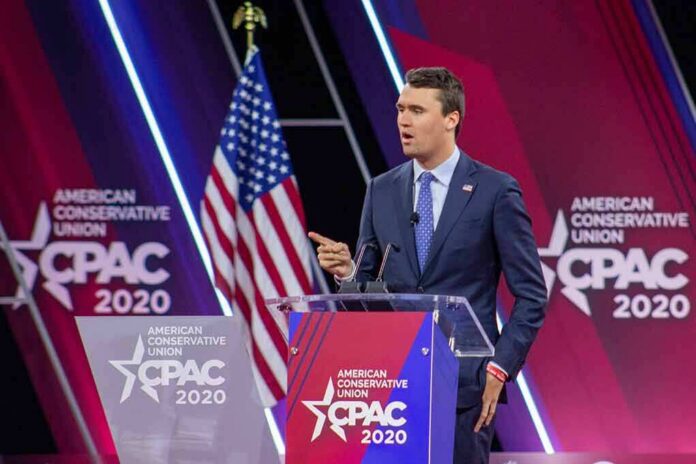
Candace Owens named Erika Kirk as Charlie Kirk’s “biggest betrayer,” escalating a high-stakes fight over his legacy and Turning Point USA.
Story Highlights
- Candace Owens publicly alleged that Erika Kirk betrayed Charlie Kirk and misled supporters.
- Owens tied her claims to control of Turning Point USA after Erika became chief executive officer.
- A wrongful-death legal push became a flashpoint as Owens said Kirk’s parents drove it, not Erika.
- Private meetings between Erika and Owens failed to end the feud and fueled more questions.
Owens Names “Biggest Betrayer” And Puts Erika Kirk At The Center
On social media and her show, Candace Owens said Charlie Kirk was “betrayed” by people close to him and singled out his widow, Erika Kirk, as the “biggest betrayer.” Reporting captured Owens’s post promising to “name names and provide evidence,” and identifying Erika directly during later commentary. Owens framed the break as moral and institutional, saying narrative control around Kirk’s memory, his last messages, and public statements strayed from what he stood for, and that supporters deserved clarity.
Owens’s claims landed hard because Erika stepped into leadership of Turning Point USA after Charlie’s assassination. National coverage noted Erika’s rise to chief executive officer, which placed her in charge of the movement her husband built. That change raised the stakes of any dispute over what Charlie wanted the group to do. Allegations now touch the core of an influential conservative organization with real sway over student outreach, events, and fundraising, not just a private family matter.
Turning Point USA Leadership And The Fight Over Legacy
Coverage described a broader split between Owens and Turning Point USA leadership since Charlie’s death. The discussion centered on who defines his vision, how his final days are told, and how the group speaks to the base. With Erika as chief executive officer, decisions about events, messaging, and partnerships now run through her office, which Owens says risks reshaping the mission Charlie set. That is why her accusation resonates for many grassroots conservatives who worry about drift in large groups.
Political-media history shows these fights often follow a major loss. After a leader dies, factions battle for the story, the brand, and the audience. Researchers and past cases show public accusations can drive attention, donations, and power, while silence can leave a vacuum for rivals to fill. That pattern does not decide who is right here, but it explains why the rhetoric is sharp, the timelines are fast, and the arguments reach beyond a family dispute into the future of a national organization.
Wrongful-Death Push Becomes A Flashpoint In The Feud
Owens said the wrongful-death action linked to Charlie’s killing came from his parents rather than Erika or Turning Point USA. She framed this as proof that media spin wrongly cast Erika as driving the legal fight, and that the public deserved accurate attribution. Those claims matter because lawsuits can shape records and leverage, and because conservative donors and supporters judge leaders by how they pursue justice and steward a fallen leader’s name.
Reports also documented a private meeting between Erika and Owens as tensions rose. That sit-down did not end the rift. Instead, it appeared to harden positions and prompt new rounds of statements and episodes from Owens, keeping the story in the headlines. The meeting confirmed that both sides engaged directly, but neither side abandoned its framing. For conservative readers, that signals a long conflict with real implications for volunteers and campus chapters.
Claims About Messages, Motives, And Movement Direction
Owens argued that Erika misrepresented parts of Charlie’s final communications and public posture, and that this misled supporters about what he wanted the movement to do next. Owens suggested Erika “owned the lies” in a meeting, a claim reported in coverage of their exchanges. Other reporting tracked Owens’s continuing criticism of Erika’s conduct and influence, including how public remarks and strategic choices shape the next phase of Turning Point USA’s outreach and alliances.
Public profiles further noted that Owens’s break with Turning Point USA predated some of the sharpest attacks, and that Charlie and Owens had tension before his death, as described by an advisory board member in media interviews. That timeline gives context to why this dispute is not cooling. The fight mixes grief, branding, and big-platform politics. For conservatives focused on winning cultural battles, the core concern is simple: keep the mission on track and faithful to Charlie’s stand for faith, free speech, borders, and the Constitution.
Erica Kirk does not begin as the most powerful person in the room.
She becomes powerful because her husband dies.
In the wake of his death, Erika inherits more than grief. She inherits his name, his followers, his influence, and control over a multimillion-dollar nonprofit… pic.twitter.com/cXvCCnqaIp
— Julie (@MeOhMyTruth) September 14, 2026
Sources:
youtube.com, timesofindia.indiatimes.com, yahoo.com, cnn.com, independent.co.uk, washingtonpost.com, eastidahonews.com, npr.org