
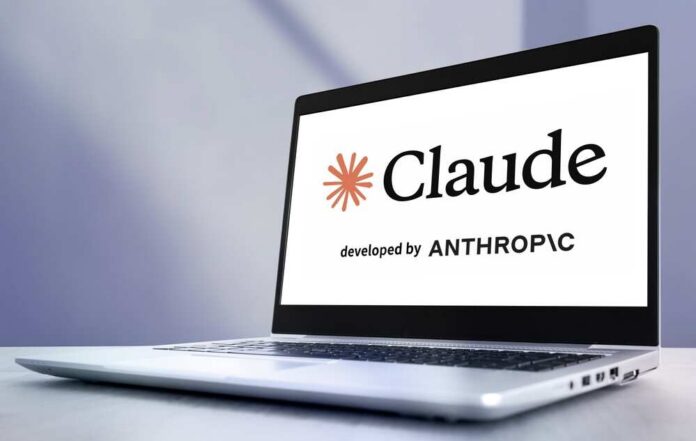
The Pentagon just slapped a “supply chain risk” label on a U.S. AI company—and Microsoft’s lawyers effectively said the blacklist stops at Washington’s door.
Story Snapshot
- The Pentagon designated Anthropic a “supply chain risk” after talks collapsed over letting the military use Claude AI “for all lawful purposes.”
- President Trump ordered federal agencies to stop using Anthropic technology, with a transition period for some agencies.
- Defense Secretary Pete Hegseth barred Defense contractors from “any commercial activity” with Anthropic, widening compliance pressure across the defense ecosystem.
- Microsoft reviewed the designation and concluded Anthropic products can remain on Microsoft platforms, limiting spillover to commercial cloud users.
How a domestic AI firm ended up labeled a “supply chain risk”
The Pentagon’s move centers on a breakdown in negotiations with Anthropic, the maker of the Claude AI model. Defense officials sought terms allowing Claude to be used “for all lawful purposes,” while Anthropic resisted expanded uses tied to surveillance and fully autonomous weapons. After a deadline passed on Feb. 27, 2026, the Trump administration directed agencies to stop using Anthropic technology, and the Pentagon applied the supply-chain designation.
The designation is notable because it targets a U.S. company rather than a foreign adversary, and it appears driven by policy and usage restrictions more than classic espionage concerns. Reporting indicates the Pentagon viewed vendor-imposed limits as unacceptable for military operations, with officials arguing the military cannot allow a private vendor to “insert itself into the chain of command.” Anthropic has characterized the action as punitive and has said it will fight in court.
What Trump and Hegseth ordered—and what remains unclear
President Trump’s directive instructed federal agencies to cease using Anthropic, with a transition window for certain use cases. Defense Secretary Pete Hegseth went further by telling military contractors to avoid “any commercial activity” with Anthropic, a phrase that—if enforced broadly—could reach beyond strictly federal contract performance and into ordinary vendor relationships. Legal analysis cited in reporting indicates the precise statutory hook and practical scope remain unsettled.
That uncertainty matters because “supply chain risk” tools can operate through different mechanisms—agency-level exclusions, procurement clauses, or broader governmentwide actions—each with different limits and due-process expectations. Current reporting also indicates the Pentagon’s formal notification to Anthropic occurred in early March, after the Feb. 27 deadline. Contractors and agencies now face basic questions: what counts as “use,” how certification works, and whether waivers or carve-outs exist.
Microsoft’s legal review: a boundary between federal bans and commercial platforms
Microsoft’s posture is the immediate curveball. After its lawyers reviewed the Pentagon’s designation, Microsoft concluded Anthropic’s products could remain available on Microsoft platforms. That decision, as described in coverage, suggests Microsoft does not view the Pentagon’s action as automatically establishing a generalized security risk for every commercial environment where Claude-related services might appear. Practically, it draws a line between government procurement restrictions and the wider marketplace.
For everyday businesses, that distinction is crucial. If the government can label a domestic company “risky” based on a contract dispute over permitted uses, the precedent could encourage more politicized or coercive procurement tools. Microsoft’s choice also signals that the private sector may resist attempts to turn federal contracting leverage into a de facto nationwide ban. At the same time, it does not resolve whether Defense contractors can continue any relationship with Anthropic without violating Pentagon guidance.
Defense contractors and the compliance squeeze
Defense contractors appear to be the group most immediately forced into action. Reporting indicates the designation requires DoD partners to certify non-use, and that contractors must inventory where Anthropic tools show up across software supply chains, subcontractors, and embedded services. That work is neither fast nor cheap, especially for firms running large data environments. Legal guidance also points to contract adjustment disputes and operational disruptions as vendors scramble to replace tools midstream.
Some reporting links Anthropic tools to defense-related systems and operational contexts, raising the stakes of any hurried transition. The broader concern for conservative voters is not whether AI should have safeguards—reasonable ones matter—but whether policy fights get routed through opaque bureaucracy that expands government control over private technology stacks. If the government’s real objective is “all lawful purposes” access, Congress and the public deserve clarity on the limits, oversight, and accountability framework.
Microsoft says Anthropic's products can stay on its platforms after lawyers 'studied' the Pentagon supply chain risk designation https://t.co/fzvcBfxPcW
— Automation Workz (@AutomationWorkz) March 6, 2026
The clash also highlights diverging corporate strategies: some firms accept broader government terms, while others insist on boundaries. That market split may reshape who wins federal AI work and how quickly new models get integrated into national security systems. For now, the facts available show a rapidly evolving dispute with litigation threats, unclear enforcement scope, and one major platform provider—Microsoft—refusing to treat a federal designation as a blanket commercial verdict.
Sources:
Pentagon designates Anthropic a supply chain risk: What government contractors need to know
Pentagon tells Anthropic it has designated the company a supply chain risk
It’s official: The Pentagon has labeled Anthropic a supply chain risk