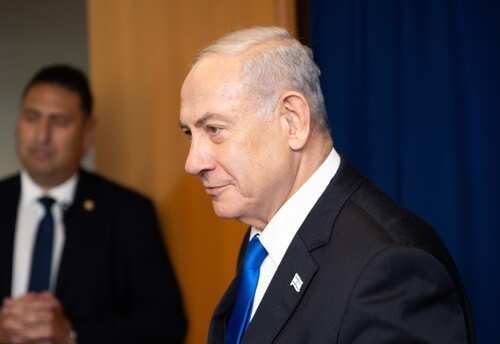
Israel’s recent warning to Iran not to test its military readiness amid escalating tensions over ballistic missiles and nuclear capabilities highlights the precarious nature of Middle Eastern geopolitics.
Story Highlights
- Israel warns Iran against testing military capabilities amid nuclear tensions.
- The Israeli Security Cabinet authorizes Operation Iron Strike.
- Potential U.S. military intervention looms as tensions rise.
- Regional destabilization risks increase with military posturing.
Israel’s Military Posture Against Iran
In the aftermath of the June 2025 Twelve-Day War, Israel has adopted a firm stance against Iran’s military maneuvers. Prime Minister Benjamin Netanyahu has explicitly warned Iran not to test Israel’s military readiness, particularly in light of Iran’s ongoing nuclear and ballistic missile development programs. This stern warning comes as both countries are poised for potential renewed conflict, with nuclear capabilities being a core concern.
The Israeli Security Cabinet has authorized Operation Iron Strike, a strategic military initiative aimed at countering Iran’s military advancements. This operation is seen as a necessary step to maintain regional security and deter further Iranian aggression. The authorization follows Iran’s missile and air defense exercises, which were conducted in multiple cities, signaling Tehran’s heightened readiness for conflict.
Watch:
Potential U.S. Military Intervention
Reports of potential U.S. military intervention in Iran have added another layer of complexity to the situation. With President Trump at the helm, the U.S. is reportedly coordinating closely with Israel to counter Iranian regional influence and prevent nuclear proliferation. The potential for U.S. involvement underscores the seriousness of the current tensions and the possible escalation into a broader conflict.
European officials have indicated that U.S. military action could occur within 24 hours, further increasing the risk of direct conflict. This development has prompted the Israeli Defense Forces (IDF) to closely monitor the situation, although no changes to Home Front defense guidelines have been reported.
Regional and Global Implications
The ongoing tensions between Israel and Iran have significant implications for regional stability and global security. Renewed conflict could potentially trigger a response from Iran-backed groups such as Hezbollah and Houthi forces, leading to further destabilization across Lebanon, Syria, Iraq, and the Red Sea. This potential conflict expansion poses a grave threat to regional peace.
Additionally, the current situation raises concerns about nuclear proliferation and the future of diplomatic solutions to Iran’s nuclear program. The risk of military escalation, coupled with internal political instability in Iran, creates a volatile environment where miscalculations could lead to renewed warfare with far-reaching consequences.
Sources:
Brookings Institution: The Road to the Israel-Iran War
Critical Threats: Iran Update January 5, 2026
Understanding War: Middle East Iran Update January 13, 2026