
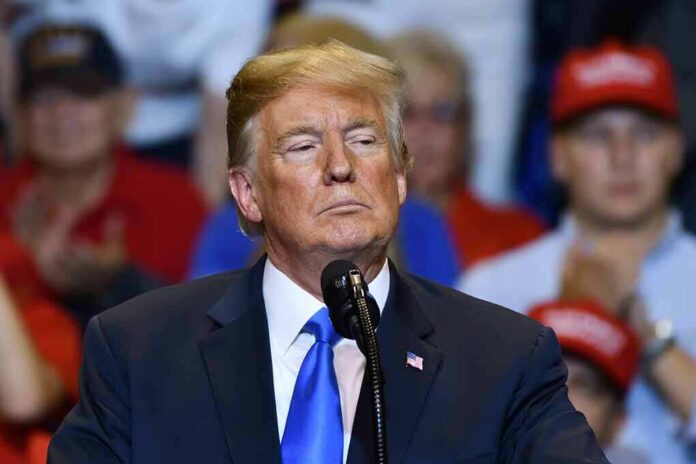
President Trump moved to cut major U.S.–South Korea military drills after Seoul declined to back his Iran push, drawing a sharp new line on allied burden-sharing.
Story Highlights
- Trump told the Pentagon to “substantially reduce” joint exercises with South Korea.
- Trump linked the cut to Seoul’s refusal to join actions aimed at Iran’s nuclear program.
- The reduced drills affect the Ulchi Freedom Shield exercise, a key readiness event.
- Critics say the move strains alliances; the administration frames it as fair burden-sharing.
Trump’s Directive And The Iran Link He Drew
Reuters reported that President Trump instructed the Pentagon to “substantially reduce” combined drills with South Korea and tied the decision to Seoul’s refusal to participate in U.S. efforts targeting Iran’s nuclear program. Trump’s post argued the exercises are costly and send the wrong signal, while he pressed allies to step up when America asks for help. The White House has pushed a simple standard: allies that enjoy U.S. protection should contribute when major threats arise.
Trump’s message fits a broader approach that conditions U.S. commitments on partner support. He has also challenged North Atlantic Treaty Organization members over Iran-related help, saying they were tested and failed, according to Reuters coverage of his meeting with the alliance’s chief. Supporters see this as overdue accountability after years of America carrying the load. Detractors argue it risks friction with partners who prefer separate lanes for regional missions.
What Changes For The Ulchi Freedom Shield Drills
South Korea and the United States had planned the Ulchi Freedom Shield drills for August, focused on countering drones, navigation jamming, and cyber threats tied to North Korea’s evolving tactics. These exercises are a core tool to keep both militaries ready to “fight tonight,” as described in a Congressional Research Service review of the alliance’s training goals. A reduction therefore matters. It touches planning, tempo, and the steady practice that keeps two forces moving as one on short notice.
The decision also lands amid North Korean missile activity and loud propaganda blasts against the exercises, which Pyongyang routinely denounces. Critics warn that scaling back for Iran-related reasons could look misaligned with the drills’ main goal: deterring the North. The record so far shows no formal treaty duty requiring South Korea to join Iran actions, a point analysts say invites debate over the exact policy tie Trump drew this week. That remains a live question as the Pentagon adjusts schedules.
The Burden-Sharing Logic And The Pushback
Scholars call this bargaining pattern “conditional pressure”: Washington signals it may limit parts of its security role unless allies shoulder more of the burden, then reassures when they do. Research on alliance politics says the tactic can work, but it also carries risks if partners see the pressure as unfair or off-mission. Trump’s move sits squarely in that debate. It seeks leverage by using a high-value tool—the drills—to get help on a separate front with Iran.
Media critics frame the cut as straining alliances rather than sharpening strategy. Reuters described wider tensions with partners unsettled by hard lines on trade and security asks. Still, the administration’s case is clear: American taxpayers cannot forever fund protection while some allies say “no thanks” when the United States asks for help on urgent threats. The next test will be simple. Do adjustments to the drills change Seoul’s calculus—or will Washington need new levers to reach its goals?
Sources:
theatlantic.com, reuters.com, cnn.com, unn.ua, congress.gov