

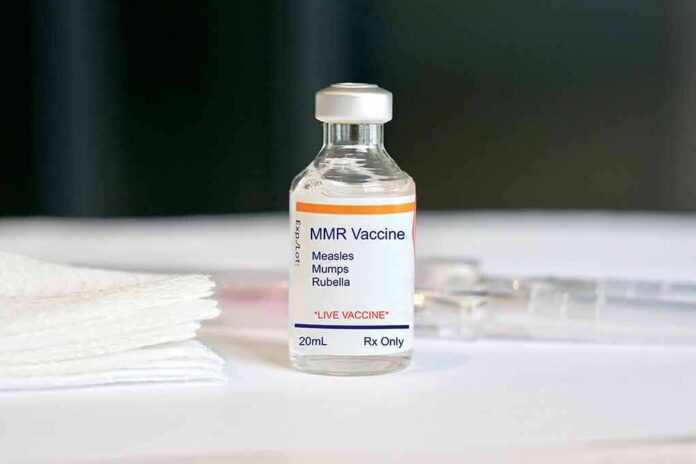
The United States has lost its measles elimination status after 26 years, as sustained outbreaks returned nationwide.
Story Snapshot
- National kindergarten measles, mumps, and rubella coverage fell below the 95% goal for prevention.
- Confirmed measles cases surged in 2025 and 2026, most tied to large outbreaks.
- Texas outbreak data show most patients lacked documented vaccination.
- Health officials define elimination by stopping endemic spread for 12 months.
What Changed: Coverage Slipped Below the Protection Threshold
The Centers for Disease Control and Prevention reported that kindergarten coverage for the measles, mumps, and rubella vaccine was 92.7% in the 2023–24 school year, below the 95% level linked to stopping outbreaks. The agency also recorded a drop from 95.2% in 2019–20 to lower levels in recent years, leaving large groups of young children at risk. Small gaps can fuel spread because measles is highly contagious. Communities with lower rates become soft targets for the virus.
National averages also hide local weak spots. In the Texas outbreak area, kindergarten coverage ranged from the high seventies to mid-nineties, well under the protection line in several communities. When a virus lands in a pocket with many unprotected people, it can spread fast. That pattern is exactly what health officials warn about. Families who keep shots up to date help form a wall that blocks chains of spread before they take root.
Outbreak Reality: Cases Spiked and Clustered Among the Unvaccinated
The Centers for Disease Control and Prevention counted 2,289 measles cases in 2025, with 90% linked to outbreaks; in 2026, it reported 5,412 cases and dozens of new outbreaks, with 96% tied to outbreaks. This is not a few isolated travel cases. It is sustained spread in clusters with too many unprotected people. During the Texas investigation, 201 of 207 patients had no documented measles, mumps, and rubella vaccination or had unknown records, highlighting the risk in these groups.
Health workers also found that state and local coverage gaps tracked with where the virus hit hardest. Texas statewide coverage sat near the low nineties, but several affected areas were much lower. That local picture matters more than the national mean. Households in low-coverage zones face higher odds of exposure, more school exclusions, and more disruption. Parents in these areas should check records now and talk to trusted doctors about closing gaps.
Why Status Was Lost: The Elimination Rule and Ongoing Importations
The Centers for Disease Control and Prevention defines elimination as no endemic transmission for at least 12 months, with strong tracking systems in place. The recent surge shows the country could not hold that line. Measles still arrives from abroad through travel, but importations only spark large outbreaks when they hit communities with weak protection. When those chains continue long enough, the country no longer meets the elimination test, which is what happened here.
Officials stress that most spread followed outbreaks rather than single household cases. That pattern points to clustered susceptibility as the driver inside our borders. One caveat is that some case records list vaccination status as unknown, which blends access issues and missing documentation with true non-vaccination. Even so, the weight of the evidence shows that gaps in protection made spread easier and faster, especially in certain locales.
What Families Can Do Now: Practical Steps to Protect Kids and Schools
Parents should confirm two doses of measles, mumps, and rubella for school-age children, and one dose for toddlers as recommended, with the second dose later. Schools should follow state laws on vaccine requirements and exemptions. Local leaders should target outreach to neighborhoods where coverage lags far below 95%. Quick diagnosis and isolation reduce spread in clinics. These simple steps protect children, keep classrooms open, and limit costly quarantines tied to outbreaks.
🚨 Measles is back in the headlines, and it's a good time to check your family's protection. 🚨
The United States is facing a significant resurgence of measles, with more than 5,400 confirmed cases reported in 2026.
Measles is one of the most contagious viruses and can lead to… pic.twitter.com/3ZT6TqjZvV
— Wolfson Children's Hospital (@WolfsonChildren) November 14, 2026
Conservatives expect common sense, not mandates without guardrails. The path forward is clear: focus resources where coverage is low, fix record-matching so “unknown” does not hide the ball, and keep travel screening sharp. Strong local action respects community choice while guarding public health. America beat measles before by pairing parental responsibility with transparent data and clear rules. We can do it again, town by town, without heavy-handed federal overreach.
Sources:
msn.com, cdc.gov, tools.cdc.gov