

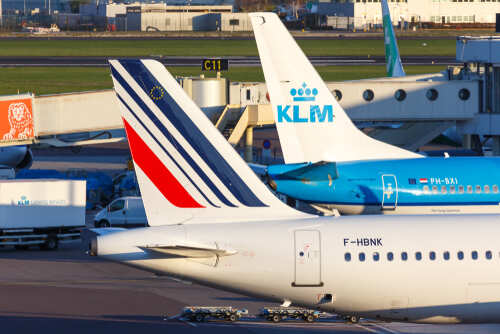
Massive new data breaches targeting travel industry giants expose the dangers of outsourcing American customer data to vulnerable third-party platforms.
Story Highlights
- Air France and KLM suffered a major data breach in July 2025 when hackers accessed a third-party customer service platform.
- No financial or passport data was taken, but personal information and loyalty program details of customers were exposed.
- The breach is part of a global wave of cyberattacks exploiting external service providers, including incidents tied to the ShinyHunters hacker group.
- Experts warn that increased reliance on outside vendors and AI-driven attacks leave industries—and consumers—vulnerable to new threats.
Third-Party Platform Breach: What Happened and Why It Matters
In late July 2025, Air France and KLM detected unauthorized access to a third-party customer service platform, triggering immediate concern throughout the airline and travel sector. Hackers gained entry to databases containing names, emails, phone numbers, loyalty program details, and recent transactions of customers. Although no financial information or sensitive travel documents were compromised, the breach highlights the growing risks of outsourcing customer data management to external vendors. The incident underscores how global companies, including major airlines, remain exposed to cyberattacks that bypass in-house controls and target weaker, less scrutinized supply chain partners.
Air France and KLM breach tied to hacker group:
Air France and KLM are warning customers about a new data breach that hit their customer service platform. Hackers accessed personal details including names, emails, phone numbers, loyalty program informat… https://t.co/qCGmHmxUBV— Elwin Sidney (@ElwinSidney) August 18, 2025
Air France and KLM acted quickly by cutting off the attackers’ access, notifying customers, and alerting regulatory authorities in France and the Netherlands. The exposed data—while not including passwords or payment information—can be weaponized for phishing or social engineering scams, putting affected individuals at risk. This reflects a broader trend in the industry, where reliance on external partners for customer service, loyalty programs, and CRM introduces shared risks that are often underestimated by corporate leadership.
Watch: Air France & KLM Data Breach EXPOSES Travelers’ Personal Information
Global Hacker Groups and the Rise of AI-Driven Social Engineering
This breach is not an isolated incident. It forms part of an escalating campaign by sophisticated hacker groups, notably the ShinyHunters, who have targeted multiple global brands through similar third-party platforms. Recent attacks have struck companies such as Google, Chanel, and Qantas, utilizing advanced AI-powered tools for convincing impersonation and deepfake attacks. The aviation sector’s dependence on external vendors for critical operations creates an attractive attack surface for cybercriminals seeking to monetize personal data or resell it on the dark web.
Broader Implications: Eroding Digital Trust and the Path Forward
The Air France–KLM breach illustrates the broader vulnerability of the travel and hospitality sector—and the risks to everyday Americans whose personal data is increasingly held by unaccountable third parties. As attacks become more sophisticated, relying on AI and social engineering, traditional detection and prevention methods are proving inadequate. The fallout includes the potential for fraud, identity theft, loyalty point theft, and a general erosion of public trust in digital airline services.
Limited data about the third-party provider’s identity and technical specifics of the breach remain, reflecting the industry’s reluctance to publicly name vendors or disclose full details. Nonetheless, the consensus among cybersecurity professionals and industry observers is that without stronger third-party risk management—and a return to prioritizing American data sovereignty—these attacks will continue to threaten companies and consumers alike.
Sources:
Air France and KLM disclose data breaches impacting customers
Air France and KLM confirm customer data exposure in third-party breach
Third-party breaches: Google, Chanel, Air France, KLM
Air France-KLM breach tied to hacker group