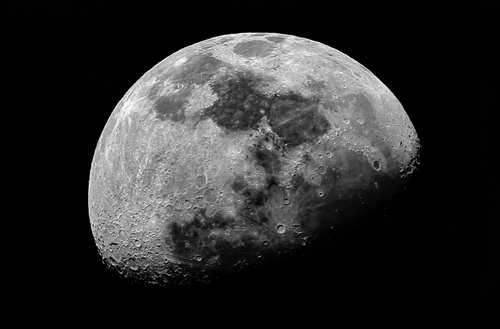
Scientists have confirmed that Earth’s own atmosphere is causing rust to form on the Moon’s surface, challenging decades of assumptions about our celestial neighbor’s geological isolation.
Story Overview
- India’s Chandrayaan-1 mission detected rust (hematite) on the Moon in 2020, despite the lack of water and oxygen
- Laboratory experiments confirmed oxygen ions from Earth’s “wind” are reaching the Moon and causing oxidation
- The discovery reveals a direct geochemical connection between Earth and Moon that scientists never anticipated
- Future sample-return missions are planned to validate this groundbreaking finding
Unexpected Discovery Challenges Lunar Science
The Moon has rusted, and Earth bears responsibility for this unexpected phenomenon. Scientists discovered hematite, a form of iron oxide commonly known as rust, on the lunar surface through India’s Chandrayaan-1 mission in 2020. This finding stunned researchers because rust formation typically requires both water and oxygen—elements considered virtually absent on our airless, arid satellite. The discovery forced scientists to reconsider fundamental assumptions about lunar geology and Earth-Moon interactions that have guided space exploration for decades.
Watch: Why is the Moon Rusting? Scientists Say Earth is to Blame | Vantage on Firstpost | N18G
Earth Wind Delivers Oxygen to Moon
Research published in September 2025 in Geophysical Research Letters provided definitive evidence explaining this lunar rusting mystery. Ziliang Jin and his team at Macau University of Science and Technology conducted laboratory experiments demonstrating how oxygen ions escape Earth’s upper atmosphere and travel to the Moon via “Earth wind.” This phenomenon occurs when the Moon passes through Earth’s magnetotail, exposing it to particles from our planet’s atmosphere. The oxygen ions then react with iron-rich lunar soil, particularly near the poles where trace amounts of water ice exist.
International Collaboration Unveils Truth
The breakthrough resulted from collaboration between India’s ISRO, NASA, and international research institutions. Chandrayaan-1’s instruments, including NASA-provided equipment, detected hematite concentrations primarily near the Moon’s polar regions. Laboratory simulations confirmed that conditions matching the Moon’s exposure to Earth wind could indeed produce the observed oxidation. This represents a paradigm shift in understanding planetary interactions, revealing the Moon serves as a “geological archive” of Earth-Moon processes previously unknown to science.
The implications extend beyond academic curiosity, potentially affecting future lunar mining strategies and resource utilization plans. Scientists now recognize that Earth’s influence on the Moon is far more direct and ongoing than previously understood. Sample-return missions are being planned to confirm the terrestrial origin of oxygen found in lunar rust, which could revolutionize our understanding of planetary evolution and atmospheric escape processes throughout the solar system.
Sources:
The Moon is rusting and Earth is to blame
Why is the Moon turning rusty? Is Earth to blame?
Moon rust mystery solved by Earth’s atmospheric escape
Moon rusting explained by Earth’s magnetotail interactions
Mysterious Moon rust explained by oxygen from Earth