

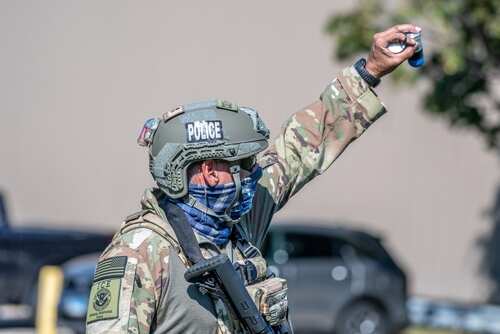
Allegations of deadly bounties on ICE agents highlight the escalating threats against federal law enforcement, with the Trump administration urging immediate action.
Story Highlights
- Claims of bounties on ICE agents by cartels and gangs spark national security concerns.
- The Trump administration uses threats to justify increased federal enforcement measures.
- Reported assaults on ICE agents have dramatically increased, though data verification is lacking.
- No public evidence has been released to substantiate the bounty allegations.
Allegations of Deadly Bounties on ICE Agents
In recent months, senior U.S. officials, including Homeland Security Secretary Kristi Noem, have publicly claimed that organized criminal groups such as cartels and gangs have placed bounties on Immigration and Customs Enforcement (ICE) agents. These claims suggest cash rewards for kidnapping or killing specific agents. The Trump administration has amplified these allegations to justify heightened security measures and increased enforcement actions to protect ICE personnel.
The narrative surrounding these threats emphasizes the significant danger faced by ICE agents, with reports of a sharp rise in assaults against them. However, the underlying data and verification of these bounty claims remain unclear. Despite repeated assertions by officials, no concrete evidence has been publicly released to confirm these allegations, raising questions about the validity of the claims and the motivations behind them.
Watch: Bounties are being Put on the Heads of ICE Agents!
Impact on Immigration Enforcement and Public Trust
The Trump administration has seized upon these claims to bolster its immigration enforcement agenda, citing the dramatic increase in reported assaults on ICE agents. These statistics, some claiming over a 1,000% rise in assaults, have been used to justify deploying additional federal resources and implementing protective measures for ICE officers. However, federal court data shows a much smaller increase of 25% in assault charges against federal officers in 2025, highlighting discrepancies in the narrative.
The lack of transparency and concrete evidence surrounding these claims risks eroding public trust in federal law enforcement. Critics argue that the narrative of organized, lethal targeting by external groups may be exaggerated and politically motivated, especially in the absence of independent verification. The situation underscores the need for greater transparency and scrutiny of official claims to ensure that policy decisions are based on facts rather than rhetoric.
Continued Political and Social Ramifications
The claims of bounties and the subsequent federal response have significant implications for immigration policy and law enforcement. Short-term, ICE agents may receive increased protection, and operations could become more secretive, potentially straining relations with immigrant communities. Long-term, the sustained emphasis on threats could lead to permanent increases in enforcement budgets and powers, further polarizing the political landscape.
Experts and civil liberties advocates stress the importance of transparency and accountability in enforcement actions. They warn against the potential for overreach and the chilling effect on dissent and community relations. As the situation develops, maintaining public confidence will require independent verification of claims and careful scrutiny of the federal response.
Sources:
ICE Agent Assault Claims Data Lacking – CPR News
Feds Charge Keyboard Warriors Who Threatened ICE Deportation Officer & Wife on Instagram – Fox News