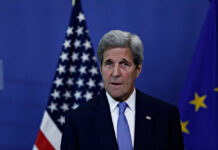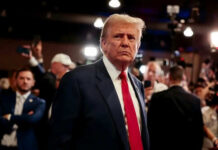


Sen. John Fetterman just handed Democrats a public problem: he backed President Trump’s Iran strikes while his party raced to curb Trump’s war powers.
Quick Take
- Sen. John Fetterman (D-PA) defended President Trump’s strikes on Iran, openly breaking with many Democratic leaders.
- Administration briefings to Congress are scheduled as lawmakers prepare war powers votes in the Senate and House.
- Democratic leadership is demanding evidence and congressional authorization, while Fetterman rejects limits and mocks critics.
- Oil-price pressure and broader cost-of-living concerns are emerging as key domestic risks tied to the operation.
Fetterman Breaks Ranks as Trump’s Iran Operation Tests Washington
Sen. John Fetterman’s support for U.S. strikes on Iran has put him at odds with many Democrats at a moment when President Donald Trump’s foreign-policy authority is headed for a congressional showdown. Reports describe the operation as killing Iranian Supreme Leader Ayatollah Ali Khamenei and other senior figures, with the strike timeline described as moving “ahead of schedule.” Public evidence supporting claims of an imminent Iranian threat has not been released, sharpening the debate.
Congress is now pivoting from reaction to process. Administration leaders are scheduled to brief lawmakers, with a full congressional briefing expected to follow as votes approach on war powers resolutions. Democratic leaders, including Sen. Chuck Schumer and House Democratic leadership, are pressing the argument that military action of this magnitude requires congressional approval. The situation sets up a direct test of executive authority and legislative oversight in real time.
What Fetterman Actually Said—and Why It Matters
Fetterman has framed his stance as a security-first position against Iran’s nuclear ambitions and regional aggression, and he has used unusually sharp language for a Democrat criticizing his own side. Coverage of his media appearances and social posts describes him calling opponents of the strikes “Ayatollah’s apologists,” while signaling a “hard no” on limiting Trump through war powers measures. The political impact is less about tone than about votes: his posture highlights a widening split inside the Democratic coalition.
The split is not coming out of nowhere. Fetterman previously pointed to his support for destroying Iranian nuclear facilities and has portrayed that posture as consistent. At the same time, other lawmakers—Democrats and some Republicans—have emphasized caution, preferring sanctions, allied coordination, and other options before widening conflict. That contrast matters because it separates two questions Washington often blends together: whether Iran is a threat, and whether the president can expand hostilities without Congress signing off.
Iran’s Internal Unrest and the Risk of Escalation Abroad
Iran entered this chapter amid major internal turmoil. Reports cite late-December 2025 protests over rising prices and a collapsing currency, followed by a harsh crackdown with hundreds killed and thousands arrested, according to the Human Rights Activists News Agency. That unrest helps explain why Tehran’s leadership is sensitive to perceived weakness and why outside pressure can cut two ways—either destabilizing the regime or triggering retaliation meant to rally domestic control through conflict.
Iranian officials have warned of retaliation against U.S. and Israeli targets while also keeping open channels for dialogue through intermediaries. That combination is typical for high-stakes standoffs: threats for deterrence, diplomacy for leverage. What remains unclear from available reporting is the administration’s full intelligence case for timing and scope. Without publicly released evidence of an imminent attack, opponents argue the constitutional bar for unilateral action has not been met, even if many Americans agree Iran poses a real danger.
Oil Prices, Inflation Pressure, and the Home-Front Reality
Americans do not experience foreign policy only on a map; they feel it at the pump and the grocery store. Coverage notes concerns about rising oil prices adding strain to cost-of-living pressures. Lawmakers are already linking the Iran situation to domestic economics, including discussions of trade and market impacts. For a conservative audience still frustrated by years of inflation and spending excess, the practical question is whether Washington can deter Iran without triggering another round of price shocks for working families.
Fetterman Chooses Country Over Party After Iran Operationhttps://t.co/cWE7LiRFd5
— PJ Media (@PJMedia_com) March 4, 2026
The next pivot point is Congress itself. War powers votes in the Senate and House are expected to test party unity and expose where each lawmaker draws the line between deterrence and overreach. Reports suggest the votes are likely to fail, but the process still matters for the constitutional balance: even unsuccessful resolutions can force disclosures, tighten timelines, and define political accountability. For now, Fetterman’s break with his party has made him the clearest symbol of a larger fight over security, authority, and consequences.
Sources:
Iran protests, Senate, Fetterman, intervention, federal government
Fetterman needles Democrats over Iran strikes opposition
Fetterman blasts Iran strike critics ‘Ayatollah’s apologists’: ‘Let’s see who grieves this garbage’