
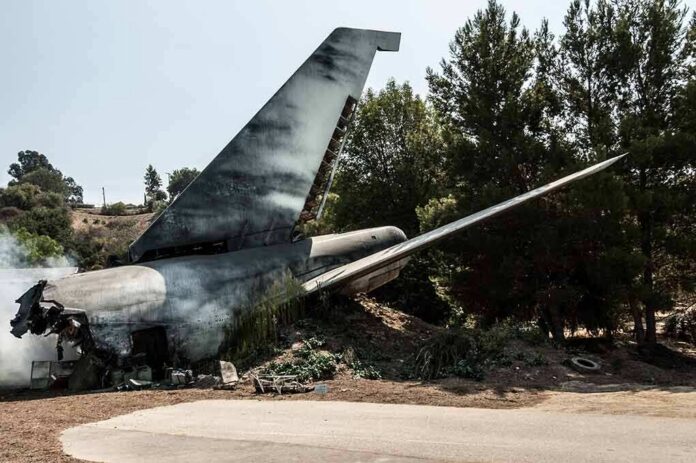
A Texas Air National Guard F-16 crashed during training in Michigan, but the pilot ejected and survived, officials said.
Story Highlights
- Texas Air National Guard confirms the F-16 pilot ejected safely and is receiving medical care.
- The jet went down during a routine training mission out of Alpena, Michigan.
- Authorities reported evacuations and hazardous-material precautions after the crash.
- Investigators are working to find the cause, a process that can take weeks.
Pilot Survives Michigan F-16 Crash During Routine Training
Texas Military Department officials said an F-16 from the 149th Fighter Wing crashed Thursday in rural Michigan during a routine training exercise, and the pilot ejected safely. The service said the pilot was taken to a local hospital for treatment and is expected to recover. The aircraft had launched from the Air National Guard’s Combat Readiness Training Center in Alpena for the mission before it experienced trouble and went down away from populated areas, according to reporting from unit statements.
Local authorities and military responders moved quickly to secure the site and protect nearby residents. Police and emergency crews set perimeters, managed traffic, and advised temporary evacuations while hazardous-material teams checked the wreckage and air quality. Officials emphasized that the ejection worked as designed and that no other injuries were immediately reported tied to the crash response, based on initial public updates and unit briefings.
What Officials Have Confirmed And What Comes Next
Public affairs officers said the cause of the mishap remains under investigation, which is standard after any military aviation crash. A formal Accident Investigation Board will review flight data, maintenance logs, weather, and pilot actions, and then issue findings. That process often takes weeks or months. Early updates focus on life safety and basic facts, like the pilot’s condition and the training status of the flight, rather than the root cause, which comes later in the report.
The Air and Space Forces community has noted recent F-16 losses without evidence of a fleet-wide safety defect. Officials have said there are no broad safety alarms with the Fighting Falcon despite several incidents in recent years, many tied to isolated mechanical issues or pilot error. The service continues routine training because readiness matters and the risks, while real, are managed through strict procedures and proven survival systems like the ACES II ejection seat.
Why The Ejection Worked And How Training Protects Communities
Accident records show the F-16’s ejection system gives pilots a fighting chance when seconds count. In multiple investigations, boards documented successful “Mode 1” ejections close to the ground, when the seat’s sequencing deploys fast to save a life. The Michigan crash followed that pattern: a dangerous situation, a quick decision, and a system that did what it was built to do so a trained pilot could live to fly again.
🚨 US F-16 CRASHES NEAR KEY NATO AIR BASE IN GERMANY, PILOT EJECTS SAFELY
SPANGDAHLEM, GERMANY – Training flights can continue almost immediately, but every squadron operating similar aircraft will now face added scrutiny of maintenance procedures, flight records and recent… pic.twitter.com/zSwrb2uGDx
— The Content Factory (@tcf_updates) September 23, 2026
Training over designated areas and coordinated routes also limits risk to people on the ground. The Alpena Combat Readiness Training Center exists for that purpose: to give pilots real practice while keeping the community safe. Thursday’s response showed that design in action. Crews secured the scene, checked for hazardous materials, and shared timely updates. President Trump’s administration will expect a clear, public accounting from investigators, continued community care, and swift fixes if maintenance or procedures need improvement.
Sources:
cnn.com, abcnews.com, theguardian.com, stripes.com