
The European Court’s ruling against Russia for violations in Ukraine, including a pivotal judgment on the MH17 tragedy, has reignited discussions on justice and accountability.
At a Glance
- The European Court of Human Rights holds Russia accountable for abuses in Ukraine.
- Historic judgment impacts outcome of MH17 discussions.
- Russia plans to ignore the ruling, per Dmitry Peskov.
- Moscow’s actions are accused of blatant disregard for international law.
Historic Ruling
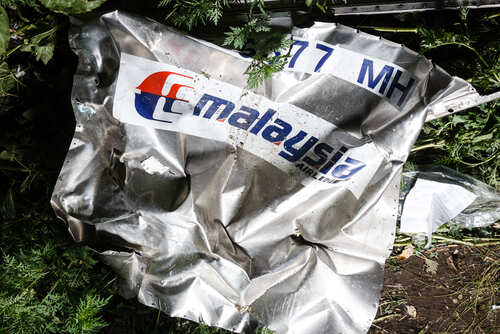
In a decision that history books might describe as ‘unprecedented,’ the European Court of Human Rights (ECHR) declared Russia guilty of widespread human rights violations in Ukraine. The court’s judgment highlights the downing of Malaysia Airlines Flight MH17 in 2014 as a watershed incident. Ukraine labeled the ruling ‘historic,’ yet Russia, through spokesperson Dmitry Peskov, dismissed it, stating, “We won’t abide by it, we consider it void.” Families of the MH17 victims view this verdict as a crucial piece in their pursuit of justice.
Watch a report: European court finds Russia was behind downing Flight MH17, other violations
The ECHR found Russia responsible for heinous acts that extended beyond military conduct, including murder, torture, and rape. The court accused Russian forces of utilizing sexual violence strategically to undermine Ukrainian resistance, classifying such brutal tactics as tantamount to torture. These findings are a heavy indictment, underscoring Moscow’s egregious violations of international norms.
European Human Rights Court finds Russia committed violations in Ukraine
European Human Rights Court finds Russia committed violations in Ukraine and was behind downing the flight MH17
Key points based on material by Molly Quell for the Associated Press:
🔸Human Rights Violations in Ukraine: The European Court of Human Rights (ECtHR) has, for the… pic.twitter.com/QVNDDHGWSK
— UkraineWorld (@ukraine_world) July 9, 2025
Aftermath and Accountability
The implications of this ruling are profound—it’s the first time an international court has held Russia accountable for such actions in Ukraine. The court emphasized the ‘flagrant’ ignorance Moscow exhibited towards the established international legal order post-World War II. Furthermore, Russia’s duties under the European Convention on Human Rights remained, even after its expulsion from the Council of Europe in 2022. Financial compensation deliberations remain, casting doubt on enforceability due to Russia’s withdrawal from the Council.
Peskov’s dismissive stance only underscores the sentiment that Russia might be taking ‘its cavalier attitude’ toward civilian safety to an extraordinary level, leaving many to wonder how long the international community will tolerate such disregard. Amidst this chaos, Ukraine plans to establish an international court to prosecute senior Russian officials for their roles in the invasion, escalating the pursuit of legal justice further on the international stage.
European court makes history by finding Russia guilty of systematic human rights violations in Ukraine since 2014 and MH17 plane downing.
Russian war crimes include:
♦️killings of civilians and Ukrainian soldiers
♦️torture
♦️arbitrary detention
♦️forced displacement through… pic.twitter.com/QaTUq3RnZf— Euromaidan Press (@EuromaidanPress) July 9, 2025
Breaking through the Disregard
The judgment represents a bold blueprint for holding rogue regimes accountable for crimes that echo the depravity of past global conflicts. The court’s standing indictment of Russia’s actions, equating acts of sexual violence to instruments of torture, speaks volumes of the resolve required to reckon with authoritarian overreach. While the likelihood of any immediate, tangible consequences seems unrealistic due to Russia’s unyielding defiance, this decision may spur hope for long-term accountability.
Despite the cavalier rejection of the ruling by Moscow, the international community remains watchful. The families of MH17 victims, like Thomas Schansman, find solace in the new developments, continuing their individual pursuit of justice and closure. Only time will tell if these bold legal steps can penetrate the thick fog of impunity that shields those operating beyond the reach of law and order.