
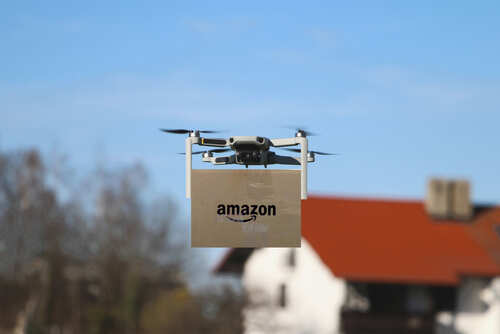
Amazon’s drone delivery program faces renewed scrutiny after a crash involving two drones and a crane, raising concerns about public safety.
Story Highlights
- Amazon resumes drone deliveries after a brief pause following a crash in Arizona.
- The FAA and NTSB launched investigations into the incident.
- Amazon implements new safety protocols to prevent future accidents.
- Ongoing concerns about drone safety and regulatory oversight emerge.
Amazon Drone Crash Raises Safety Questions
On October 1, 2025, two Amazon MK30 delivery drones collided with a stationary crane in Tolleson, Arizona. The incident prompted immediate investigations by the Federal Aviation Administration (FAA) and the National Transportation Safety Board (NTSB). While no injuries were reported, one drone did catch fire upon hitting the ground, raising alarms about the safety and reliability of Amazon’s drone delivery program. The company quickly responded by pausing all drone operations in the area to conduct an internal review.
Amazon delivery drones crash into crane, prompting NTSB, FAA investigation https://t.co/G0eAsCtp2o
— Satguy 141 (@satguy01) October 4, 2025
Amazon announced the resumption of drone deliveries on October 3, 2025, just two days after the incident. The company introduced enhanced visual landscape inspections to better monitor for obstacles like cranes. “We’ve completed our own internal review of this incident and are confident that there wasn’t an issue with the drones or the technology that supports them,” stated Amazon spokesperson Terrence Clark. These claims, however, do not fully address concerns about autonomous flight in complex environments.
Regulatory Oversight and Public Safety
The involvement of both the FAA and NTSB underscores the serious nature of the crash. These agencies hold significant regulatory authority over airspace and drone operations, and their investigations are crucial for ensuring public safety. The findings could lead to stricter regulations and additional requirements for commercial drone operations. In the meantime, Amazon’s quick decision to resume operations with minimal downtime indicates their confidence in addressing immediate safety concerns, though it may not satisfy all stakeholders.
Local residents in Tolleson, AZ, are understandably concerned about the safety of drone operations, especially given the area’s active construction sites and logistics infrastructure. The potential for more incidents remains a real worry, and the community is eager for assurance that Amazon and regulatory bodies are taking steps to prevent future accidents.
Watch: Amazon resuming drone deliveries following Arizona crashes
Broader Implications for Drone Technology
This incident is not just an isolated event but part of a larger narrative concerning the challenges of autonomous drone deliveries. The crash highlights ongoing issues with obstacle detection and avoidance, particularly in dynamic environments like construction zones. Experts in the field emphasize the importance of robust fail-safes and real-time environmental awareness in drone navigation. These technical challenges must be addressed to maintain public confidence in drone delivery systems.
The rapid developments in drone technology have caught the attention of both industry and regulatory bodies. As Amazon continues to pioneer autonomous delivery, other companies and regulatory agencies will be watching closely to see how these challenges are addressed. The outcome of the FAA and NTSB investigations could set precedents that influence future industry standards and regulatory frameworks for autonomous delivery systems.
Sources:
Amazon to Resume Drone Deliveries Near Phoenix After Crashes