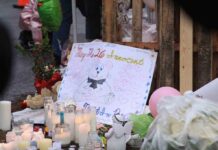


Bryan Kohberger’s savage stabbing of four University of Idaho students—revealed in newly unsealed autopsies—exposes the brutal reality of a criminology student’s calculated evil.
Story Highlights
- Gruesome autopsy details show over 50 defensive wounds on Xana Kernodle, 20+ stabs on Kaylee Goncalves, proving fierce victim resistance against Kohberger’s KA-BAR knife.
- Moscow Police released 300+ documents hours after Kohberger’s 2026 life sentence, confirming DNA on a left-behind knife sheath as the pivotal evidence.
- Crime scene horrors included blood-soaked walls, unrecognizable faces, and severed arteries like Ethan Chapin’s jugular, validating swift law enforcement closure.
- The case sets precedent for post-conviction transparency, reinforcing accountability in a nation prioritizing law and order.
Crime Scene Brutality Exposed
On November 13, 2022, Bryan Kohberger invaded the off-campus home at 1122 King Road in Moscow, Idaho. Four University of Idaho students—Kaylee Goncalves, Madison Mogen, Xana Kernodle, and Ethan Chapin—died from multiple stab wounds inflicted while asleep. Moscow Police found the kitchen door ajar, walls and floors smeared with blood, and victims pale, rigid, with faces rendered unrecognizable by the violence. Two roommates survived unharmed upstairs. The attack’s home invasion style, without forced entry, shocked the small college town.
Autopsy Reports Detail Victim Struggles
Latah County Coroner and Spokane County Medical Examiner reports list precise injuries. Xana Kernodle suffered over 50 defensive stab wounds on her hands, indicating a desperate fight in her room. Kaylee Goncalves endured 20-plus stabs causing brain bleeds, lung, and liver lacerations. Ethan Chapin’s jugular and subclavian vein were severed. Madison Mogen faced similar arterial damage. All wounds matched a sharp, single-edged, non-serrated KA-BAR knife, applied with extreme force and intentionality. Experts note the rarity of such methodical brutality in stabbings.
Unsealed records in Idaho student murders detail victims' injuries, final movements https://t.co/CnlqownpaH
— Fox News (@FoxNews) January 27, 2026
Investigative Breakthroughs Seal Conviction
A tan leather KA-BAR knife sheath, left on a bed, contained touch DNA matching Kohberger, confirmed via his discarded Q-tip. The 30-year-old Washington State University criminology PhD student lived nearby. Witnesses reported his facial scratches and knuckle injuries in October-November 2022, resembling fingernail marks from a struggle; he claimed a car accident. Earlier sightings included a tall white male buying a black ski mask at Walmart and a nervous man near the area. Prosecutors secured his early 2026 guilty plea, avoiding the death penalty.
The Idaho Department of Corrections transferred Kohberger to Maximum Security Institution. His Wednesday sentencing prompted immediate release of investigation files by Moscow Police Chief.
Watch:
Justice Served and Lasting Impact
The document dump—police narratives, autopsies, summaries—validates three years of investigative rigor. Families gain closure amid renewed grief from graphic details, while University of Idaho communities face lingering security concerns. Long-term, the case bolsters DNA forensics reliability and post-conviction transparency precedents. Under President Trump’s America, where law enforcement triumphs over predators, this outcome reassures patriots that justice prevails without delays or soft-on-crime policies eroding public safety.
Sources:
KOMO: Moscow police release chilling details of University of Idaho murders
CBS: Bryan Kohberger police documents strange incidents Idaho murders