
ABC News is branding a former president’s push for a partisan redistricting referendum as a “news exclusive,” right as Virginia’s vote could decide control of Congress.
Quick Take
- Barack Obama urged Virginians to vote “yes” on an April 21, 2026, referendum that would let Democrats redraw congressional maps.
- ABC News distributed the message as an “exclusive” video release days before the election, after more than 1 million early votes were already cast.
- The proposed map changes could shift 3–4 U.S. House seats in Virginia, a major factor with Republicans holding a slim House majority.
- Opponents circulated mailers and ads accused of twisting Obama’s past anti-gerrymandering remarks to imply he opposed the “yes” campaign.
Obama’s “Yes” Message Targets the House Majority Math
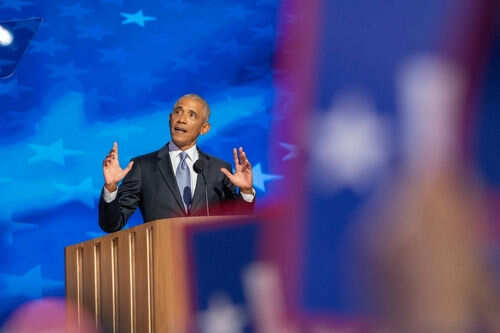
Barack Obama’s new video focuses less on Virginia’s technical map-drawing rules and more on national consequences. He tells voters the referendum is a way to “push back” against Republicans he says are trying to gain an “unfair advantage” ahead of the 2026 midterms, and he frames a “yes” vote as leveling the playing field for the whole country. The timing matters because Republicans currently hold only a slim U.S. House majority.
Virginia’s referendum is scheduled for April 21, 2026, and reporting indicates more than 1 million Virginians had already voted early before the late push of the video release. That dynamic creates a familiar modern-election reality: persuasion campaigns now often land after a sizable share of the electorate has already locked in ballots. With so few House seats separating the parties, even a single state’s map fight becomes a national proxy battle.
A Mid-Decade Redistricting Arms Race Comes to Virginia Voters
The immediate backdrop is a tit-for-tat redistricting cycle. A 2025 mid-decade redistricting effort shifted nine Virginia seats in a Republican-friendly direction, and Democrats later regained control of the state legislature and advanced a counter-map. The referendum would grant approval for that new Democratic plan, which is described as reconfiguring four seats. That escalation reflects a broader trend: both parties increasingly treat district lines as movable pieces whenever power changes hands.
For conservatives who value stable rules, the deeper concern is not which party wins a particular cycle, but whether constant remapping erodes public confidence in elections. When maps can be rewritten midstream, voters can reasonably wonder whether representatives are choosing voters more than voters are choosing representatives. That skepticism now spans ideological lines, especially among Americans who already believe the system favors well-connected political players over ordinary citizens trying to get ahead.
Misleading Ads, Counter-Messaging, and the Trust Gap
The campaign has also featured an information war that complicates basic accountability. Coverage describes “shadowy” anti-redistricting groups using mailers, texts, and imagery to suggest Obama opposed the very referendum he is now endorsing. One report says the messaging relied on selectively presented quotes from Obama’s earlier criticisms of gerrymandering, creating confusion about his stance. Supporters of the referendum responded by insisting the “yes” side is aimed at stopping partisan “rigging.”
Based on the available reporting, the clearest verifiable point is that Obama is explicitly urging a “yes” vote now, regardless of how opponents frame his older remarks. What remains less clear from the current source set is who funded the competing campaigns, how the ads were targeted, and which claims were reviewed by neutral election authorities. That missing transparency is precisely what fuels the “deep state” style suspicion many Americans hold—left and right—about politics being run through opaque influence operations.
Why ABC’s “Exclusive” Label Is Becoming Part of the Story
ABC News’ decision to package the video as an “exclusive” has become a political flashpoint of its own, because it blurs the line between straight reporting and distributing high-value campaign content. Networks routinely air candidate ads and cover endorsements, but an “exclusive” presentation can make a political message feel like a breaking-news product rather than what it is: a strategic appeal designed to move votes days before Election Day. That perception matters in a polarized media environment.
For viewers who already believe legacy media favors Democrats, the optics reinforce a long-running complaint that gatekeepers shape narratives, not just report them. For liberals who worry about Republican gerrymandering and voter suppression, the same clip is likely seen as legitimate civic advocacy from a former president. Either way, the dispute highlights a bipartisan reality: as trust in institutions declines, the messenger can become as controversial as the message.
ABC News Runs Obama’s Campaign Video for VA Gerrymandering as a News ‘Exclusive’https://t.co/4xkbsKgTAu pic.twitter.com/JIuyIuMHpr
— Twitchy Team (@TwitchyTeam) April 18, 2026
Virginia voters will ultimately decide whether they want this specific redistricting change, but the larger question is whether Americans can rebuild confidence in a system where mapmaking is openly treated as a weapon. With the House majority at stake and early voting already substantial, the referendum has become a test of power politics—and a reminder that governance can feel secondary to permanent campaigning. The final result, and any legal or legislative follow-on, will determine how far this redistricting arms race spreads.
Sources:
Anti-redistricting campaign twists Obama’s words in latest misleading attack ad