
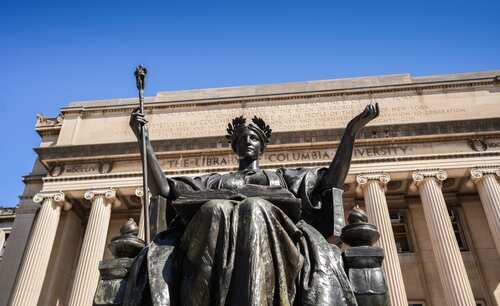
Columbia University’s $221 million settlement with the Trump administration has sent Ivy League institutions into a frenzy, raising questions about their very survival.
At a Glance
- Columbia agreed to a $221 million settlement over civil rights investigations.
- The settlement requires Columbia to reform DEI policies and admissions practices.
- Federal funding is restored, but comes with increased oversight and monitoring.
- Ivy League schools are now in “survival mode,” according to Ohio State’s president.
Trump Administration’s Bold Move
In an unprecedented step, the Trump administration has taken a firm stand against what it perceives as discriminatory practices at Columbia University. The $221 million settlement is a monumental sum, marking it as the largest antisemitism-related settlement in U.S. history. This hefty price tag comes with a clear message: elite universities can no longer operate above the law or hide behind the veil of academic autonomy. The settlement mandates Columbia to dismantle certain DEI initiatives, reform its protest policies, and eliminate racial preferences in admissions and hiring. For those of us who have watched universities spiral into leftist indoctrination centers, this is a long-overdue reckoning.
Elite universities are not above the law. Columbia University will pay $221 million to resolve our claims of past discrimination.
Thank you to @TheJusticeDept attorneys who negotiated this deal. Thank you to our partners @EdSecMcMahon and @SecKennedy. Above all, thank you to… https://t.co/gRtaElLpQf
— Attorney General Pamela Bondi (@AGPamBondi) July 24, 2025
The Trump administration’s decisive intervention is a breath of fresh air for those who value equal opportunity over enforced diversity quotas. The settlement not only restores federal research funding but also places Columbia under the watchful eye of an independent monitor. This oversight ensures compliance with civil rights laws, offering a new model of accountability for other Ivy League institutions that may be tempted to flout federal standards.
Watch: Why Columbia University agreed to a $221 million settlement
Ripples Across the Ivy League
The shockwaves from Columbia’s settlement are being felt across the Ivy League. Ohio State University President Ted Carter has bluntly stated that these schools are now in “survival mode.” With federal funding suspended for most Ivy League schools except Penn and Dartmouth, the stakes couldn’t be higher. These institutions are scrambling to reassess their policies, fearing similar repercussions. This isn’t just about Columbia; it’s a wake-up call for the entire higher education sector. The message is clear: comply with federal law or face the financial consequences.
For too long, Ivy League schools have operated with a sense of untouchability, prioritizing their progressive agendas over the academic and civil rights standards they claim to uphold. Now, with the administration’s hammer coming down, these universities must confront the reality that they are not above accountability.
Implications for Academic Freedom and DEI Policies
Critics of the settlement have raised concerns about its impact on academic freedom and diversity policies. Columbia’s leadership has acknowledged the need for reform but has stopped short of admitting any wrongdoing. Some faculty members express relief at the restoration of funding, yet remain wary of the increased federal oversight and its implications on DEI efforts. Legal scholars are already debating the constitutionality of such settlements, particularly when it comes to admissions and hiring practices.
Supporters, however, argue that this settlement is a necessary corrective to ensure compliance with civil rights laws and to protect vulnerable student populations. The requirement for Columbia to provide detailed demographic data to federal authorities is seen as a move towards greater transparency and fairness in university operations.