

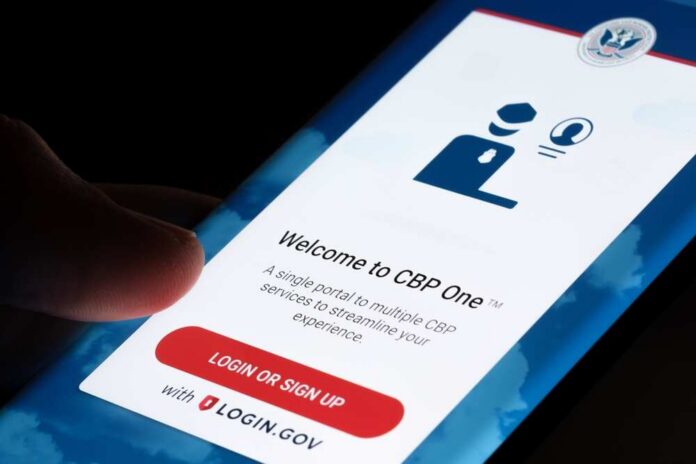
A legal immigration pathway meant to bring order to the border is now leaving some families convinced that “following the rules” offers no protection at all.
Quick Take
- A Venezuelan family who entered legally through the Biden-era CBP One app later faced arrest and about a month of detention after a court dismissal in El Paso.
- The Justice Department later acknowledged the dismissal policy used in those cases was erroneous, but the family’s case was reset for 2027 with ongoing ICE check-ins.
- The family says detention conditions and their daughter’s health crisis pushed them to abandon the U.S. process and return to Venezuela in April 2026.
- The episode highlights how rapid policy swings can undermine trust in legal channels—fueling frustration on both right and left about a system that feels inconsistent and unaccountable.
A “rules-based” entry ended with an ICE arrest after court
José, 40, his wife Carolina, and their 14-year-old daughter entered the United States legally in 2024 after securing an appointment through the CBP One app, then received parole that allowed them to live and work while pursuing asylum. They settled in Las Cruces, New Mexico, and prepared for immigration court. In June 2025, at a first hearing in El Paso, their case was dismissed without testimony, and ICE arrested them immediately afterward.
Reports describe the dismissal as part of a broader Trump-administration approach that, in practice, set up quick enforcement actions against people who had been moving through the legal process. The Department of Justice later said the policy was applied in error, a notable admission in a system where mistakes can have life-changing consequences. The family was taken to the South Texas Family Residential Center in Dilley, a facility operated by private contractor CoreCivic, and held there for roughly a month.
Detention, Flores limits, and the human cost of uncertainty
During detention, the family says their daughter’s condition deteriorated sharply, including depression and vomiting—symptoms that turned what might sound like an administrative dispute into an immediate parental crisis. Their attorney invoked the 1997 Flores settlement, which generally limits how long minors can be held in immigration detention, and the family was released on July 5, 2025. They were bused to Laredo and eventually returned to Las Cruces to try to restart their lives.
After release, the family’s immigration case did not simply disappear; they received a new court date set for 2027 and were required to check in with ICE quarterly. That kind of limbo can be hard to square with the promise of an orderly legal pathway. Conservatives often argue that compliance should matter and illegal entry should not be rewarded; this case is drawing attention precisely because the family’s account centers on legal entry, compliance, and still experiencing abrupt enforcement after a procedural turn.
CBP One’s legacy: managed entry meets policy reversal
The family’s story sits at the crossroads of two competing border strategies. The CBP One program expanded under the Biden administration as a managed channel, with reporting suggesting more than 900,000 people used app-based appointments to request entry and receive temporary parole while cases moved through a backlogged system. After President Trump returned to office, his administration moved to end that parole status and urged affected migrants to leave voluntarily or face arrest.
A federal judge later ordered reversals for certain app users from a specific period, underscoring that the courts are still refereeing big policy changes. But the broader trend remains: when programs are created quickly, expanded massively, and then reversed, families and communities experience the whiplash in real time. For the public, these swings reinforce the belief that Washington prioritizes messaging and power struggles over predictable rules that ordinary people—citizens and migrants alike—can understand.
Why the family chose to leave—and what the episode signals
By April 2026, the family decided the risk of another detention outweighed the chance of building a future in the U.S., even with a court date years away. They flew to Miami and then took one-way flights back to Venezuela, describing disillusionment and fear. José’s reported question—how someone can do everything right and still be treated this way—captures a broader legitimacy problem for immigration enforcement when process errors and shifting directives collide with real lives.
A Venezuelan family followed the rules to enter the U.S. After being arrested and detained for a month, they’re leaving. https://t.co/sxng7m6BC2
— Texas Tribune (@TexasTribune) April 19, 2026
Other reporting has described similar patterns affecting Venezuelan families, including cases where detention disrupted employment and housing and where parole terminations changed expectations overnight. None of that settles the bigger policy argument about how many people should be admitted or how asylum should be reformed, but it does underline a practical point: a system that mixes mass-scale programs, overloaded courts, and rapid reversals can produce outcomes that feel arbitrary. That perception feeds the shared left-right suspicion that government institutions protect themselves first—and fix problems last.
Sources:
Venezuelan family, migrants flee ICE after following rules