
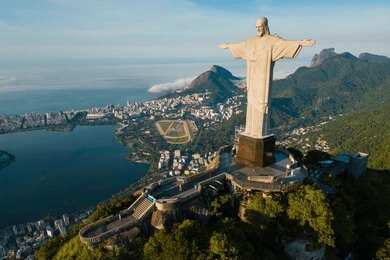
The words “SOS Venezuela” flashing across Rio’s Christ the Redeemer show how global elites turn real tragedy into a political light show instead of fixing the broken systems that left Venezuelan families so exposed.
Story Snapshot
- The Christ the Redeemer statue in Brazil was lit with “SOS Venezuela” and quake images after deadly June 24 earthquakes.
- Reports confirm massive loss of life and injuries in Venezuela, yet on-the-ground needs still far outpace global aid.
- No clear organizer statement explains who chose the message or what political agenda, if any, it was meant to push.
- The event fits a pattern where global campaigns use disaster symbols during big celebrations but rarely fix root problems.
Christ the Redeemer Becomes a Screen for Venezuela’s Pain
Video from Rio de Janeiro shows the iconic Christ the Redeemer statue turned into a giant projector screen, pulsing with the message “SOS Venezuela” alongside the Venezuelan flag and images of destruction. The Associated Press report describes the display as a tribute to victims of the powerful earthquakes that hit Venezuela on June 24, with crowds gathered and filming the spectacle from below. A related Reuters Connect item confirms similar imagery, framed as honoring those struck by the quakes. This was not a subtle gesture; it was meant to be seen worldwide.
For many conservatives, this kind of display raises mixed feelings. On one hand, ordinary Venezuelans just suffered a major disaster, and public support is right. On the other hand, we have watched for years as global media and activist groups use sacred symbols and massive monuments to push narratives that often drift from simple compassion into political theater. Christ the Redeemer is a Christian symbol, not a billboard for whatever message international elites want to beam out next. Yet once again, the monument became a backdrop for a scripted “SOS” campaign.
The Deadly Earthquakes and a Strained, Broken System
The June 24 earthquakes themselves were real, violent, and deadly. Geological and news reports describe back-to-back quakes measuring around magnitude 7.2 to 7.5, striking Venezuela and collapsing buildings in and around Caracas. Early counts mentioned dozens of deaths and hundreds of injuries, but later assessments from humanitarian groups and doctors speak of more than 2,290 deaths and over 11,000 injured, with fears of a deeper medical crisis. Videos from Venezuelans show families running from shaking apartment blocks and later sleeping in parks and open streets after losing their homes.
Doctors warn that hospitals are overwhelmed and short on supplies, especially in poorer areas where infrastructure was weak even before the quakes. Aid appeals describe elderly people, infants, and single mothers now living outdoors without steady access to food, water, or medicine. This is the kind of real humanitarian breakdown that hits hardest when a country’s institutions are already fragile from years of mismanagement and corruption. The pattern matches what analysts have seen in other crises: when government fails, any natural disaster becomes far worse than it had to be.
Symbolic “SOS” Campaigns vs. Real Help on the Ground
While Christ the Redeemer shined with “SOS Venezuela,” there is still no public, detailed statement from the display’s organizers spelling out who they are, what they want, or how the event connects to concrete relief. Reports mention a tribute and solidarity, but they do not name an organizing group or its plan for helping victims. That gap matters. Without clear accountability, highly produced “SOS” imagery can become more about feelings for global audiences than about results for people under the rubble. It is easy to light a statue; it is harder to rebuild homes and clinics.
Scholars who study humanitarian messaging note that many high-profile campaigns launched during big events or celebrations link disasters to broader crisis narratives, sometimes stretching facts to fit a preferred story. Past “SOS Haiti,” “SOS Syria,” and “SOS Ukraine” campaigns were criticized for dramatic visuals that did not match the follow-through in aid or respect for local voices. The Venezuela projection fits that pattern: powerful images at a famous site, timed to draw maximum attention, but still little clarity about who is actually in charge of helping victims or how the campaign avoids becoming another global branding exercise.
What This Means for American Conservatives Watching from Afar
For Trump-supporting Americans, this story touches several familiar concerns. First, it shows again what happens when leftist, big-government economics and corruption hollow out a country. When disaster strikes, citizens pay the price while elites trade in symbolism. Venezuela’s long crisis of misrule left its power grid, hospitals, and housing far too weak to withstand major quakes, turning a natural event into a national catastrophe. That should remind us why strong local institutions and honest government matter more than flashy global gestures.
🇧🇷 🇻🇪 Rio's Christ the Redeemer lights up in solidarity with Venezuela victims
The famed Brazilian monument was lit up in Venezuelan colours to honour the victims of the deadly twin earthquakes that struck the country on 24 June. The message "SOS Venezuela" was projected onto… pic.twitter.com/dIkN2GnhmP
— AFP News Agency (@AFP) July 3, 2026
Second, the Christ the Redeemer projection shows how global media often favors emotional images over serious talk about responsibility. Viewers see “SOS Venezuela” and feel sympathy, but they rarely hear how socialist policies, censorship, and crony deals helped create the fragile conditions on the ground. Instead of turning monuments into moving billboards, the international community would do better to back real reforms, local-led rebuilding, and transparent aid. For American conservatives, the lesson is clear: honor the victims, demand accountability, and never let grand displays distract from the hard work of fixing broken systems.
Sources:
youtube.com, yahoo.com, reutersconnect.com, mastodon.social, facebook.com, world.new7wonders.com, miyamotointernational.com, eos.org, csis.org, apnews.com, pmc.ncbi.nlm.nih.gov, reliefweb.int