
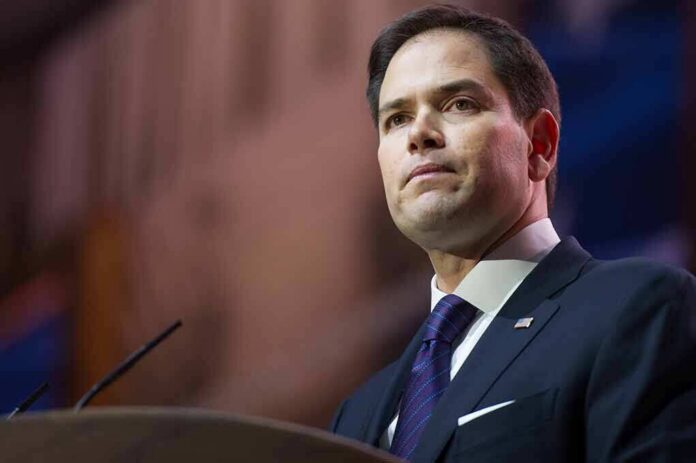
Secretary of State Marco Rubio said there is no imminent threat to Washington, pushing back on alarming dirty-bomb headlines while stressing confidence in U.S. intelligence and homeland defenses.
Story Highlights
- Rubio said he is not concerned about an “imminent attack” on Washington, D.C.
- He cited daily threat streams and strong confidence in U.S. intelligence systems.
- The White House said there were no credible homeland threats at that time.
- CNN’s own report described Iran’s planning as options, not evidence of imminence.
Rubio Publicly Rejects Claims of Imminent Attack
On November 18 in Manila, Secretary of State Marco Rubio was asked if he feared an imminent attack on Washington. Rubio answered, “I am not,” and added, “I don’t think there’s any imminent threat.” He explained that the United States sees threat streams every day, most of which do not pan out. He said he trusts the nation’s intelligence and early warning systems to flag real danger in time to act, keeping citizens and leaders protected.
Rubio’s comments followed days of media churn after a report said Iran was developing plans for a possible dirty-bomb strike in Washington. The report cited unnamed officials and described specific locations, but it also stated the activity looked like option-building, not a final decision to attack. That distinction matters. Planning that keeps options open is not the same as a live plot. Rubio aligned with that view on imminence while still taking vigilance seriously.
White House and Intelligence Posture Emphasize Vigilance, Not Panic
The White House said officials were tracking potential risks but had found no credible threat to the homeland at that time. That message backed Rubio’s stance that Americans should stay alert but not panic. These signals reflect how national security works: teams constantly scan for danger, assess new data, and judge what is real and what is noise. Daily, they weigh if capability, timing, and intent line up to signal a true threat window.
CNN’s account itself reported disagreements within the intelligence community about Iran’s capability and intent. Sources debated whether Tehran had the personnel in place or had decided to move. Even so, some details led agencies to run contingency planning. That is normal, not proof of an attack clock. Good security plans for what could happen while leaders wait for firm signs that something will happen. Rubio’s “no imminent threat” line fits that official risk picture.
Why This Matters to Readers Who Expect Strength and Clarity
Americans are tired of fear-based leaks and anonymous sourcing that spark chaos, then fade. Rubio’s clear words cut through the noise. He said most daily threats do not check out and that our systems work to catch the ones that do. That approach respects the public and avoids handing enemies a win through panic. It also sets a higher bar for media claims that lean on secrecy without sharing evidence the public can test.
Under President Trump, the mission is simple: protect the homeland, crush real plots, and keep life normal for families. That requires vigilance without theater. It means strong borders, tough intel work, and fast action when signs cross the line into a probable attack. It also calls for discipline when reports are thin or split. The job is to be ready, not rattled. Rubio’s message speaks to that standard: confidence, clarity, and constant watch.
Open Questions and What Accountability Looks Like
Some reports described specific sites and possible materials. Rubio did not address each detail in public. That is common when facts are classified and investigations are active. The right next steps are process checks, not rumor wars. Congress can seek briefings. Agencies can document how they judged capability and intent, and whether protective postures changed. That is how accountability works without exposing sensitive sources or playbooks to our adversaries.
🚨 JUST IN: MARCO RUBIO DISMISSES IMMINENT IRANIAN ATTACK FEARS AND RULES OUT LINKED CYBERATTACKS.
US Secretary of State Marco Rubio has addressed two major concerns:
🇺🇸 Iran threat: Rubio says he sees no “imminent threat” to the United States following reports of a possible…
— Fact Checker (@FactCheckero1) November 18, 2026
America has learned hard lessons from both panic and complacency. Most warnings do not become attacks, yet we cannot shrug off real threats. The balance is firm: verify, act fast when signs align, and do not let enemy bluster or media hype drive our posture. Rubio’s statement fits that balance and matches the White House line. Stay alert. Trust the system to separate noise from danger. Demand facts before fear. And keep America strong by refusing to be spooked.
Sources:
mediaite.com, washingtonexaminer.com, iranintl.com