
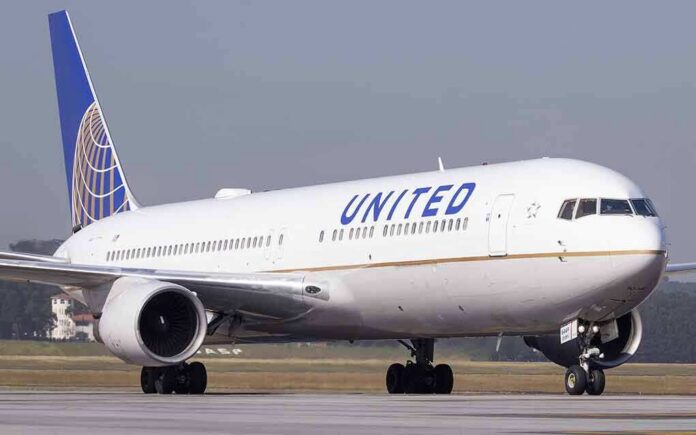
A twice-deported Honduran national on United Flight 2174 triggered a hijacking alert after allegedly rushing the cockpit and claiming he had a bomb, authorities say.
Story Highlights
- United Flight 2174 sent a highest-level hijacking alert after a reported cockpit rush.
- Deputies identified the suspect as 34-year-old Rony Gomez-Alberto and arrested him after landing.
- Homeland Security said the suspect tried to enter the cockpit and now has an immigration detainer.
- Reports say he was twice deported, in 2011 and 2014, before this alleged offense.
Airline Issues Highest Hijack Alert After Cockpit Threat
United Flight 2174 from Newark to New Orleans sent a Level 4 threat alert, the top warning used for hijacking events, after crew reported an attempted cockpit breach mid-flight. The flight carried 46 passengers and six crew members. The Jefferson Parish Sheriff’s Office said the plane landed safely at Louis Armstrong New Orleans International Airport, where law enforcement met the aircraft. No explosive device was found on board based on public reports to date. Authorities described the event as a bomb-threat incident.
Local officials identified the passenger as 34-year-old Rony Gomez-Alberto. Jefferson Parish deputies detained him on the tarmac and booked him on state charges, including communicating false information of planned arson and terrorizing. News outlets citing parish authorities described felony bomb-threat and disorderly-conduct counts tied to his alleged claim and actions on the aircraft. The arrest followed pilot and crew notifications that placed the flight under hijack-response protocols until landing.
Homeland Security Links Case To Attempted Cockpit Entry And Immigration Detainer
The Department of Homeland Security said Immigration and Customs Enforcement lodged a detainer after the flight, identifying Gomez-Alberto as a criminal illegal alien from Honduras. A Homeland Security spokesperson stated he attempted to gain entry to the cockpit during the flight. The department said the suspect had been deported twice before this incident, which added urgency to federal tracking and custody requests following his local arrest in Louisiana.
Coverage citing Homeland Security detailed two prior removals after illegal border entries. Reports said authorities deported him following encounters near El Indio, Texas, in 2011 and near Columbus, New Mexico, in 2014. Those removals frame this latest arrest as an alleged illegal reentry case that now intersects with aviation security offenses. These details explain why federal and local agencies coordinated closely after the aircraft landed without further incident.
Why Crews Treat Bomb Claims And Cockpit Rushes As Highest-Risk Events
Airline crews and law enforcement treat bomb threats and cockpit rushes as immediate aviation-security events. Since the attacks on September 11, crews escalate fast because they cannot know a threat’s truth in flight. Federal criminal guidance separates bomb or false-threat crimes, interference with crew, and attempted aircraft piracy, which can apply even before an aircraft is airborne if a person attempts to seize control by force or intimidation. That layered framework shapes rapid response and charging paths after landing.
Federal aviation data show unruly-passenger cases surged in recent years, then eased but remain far above pre-2020 levels. The Federal Aviation Administration has referred hundreds of the worst cases to the Federal Bureau of Investigation. These facts show why a Level 4 alert is not routine bluster; it triggers coordinated action on the ground, even when a plane lands safely. That posture protects pilots, crew, and passengers when a claim or action could signal a real attack.
What Comes Next: Charges, Custody, And Jurisdiction
Local prosecutors will decide how to pursue the listed state offenses tied to terrorizing and false bomb information. Federal prosecutors could also review interference or attempted piracy statutes depending on evidence of intent and actions near the flight deck. The United States Department of Justice manual explains that attempted aircraft piracy involves trying to seize control through force or intimidation, even if the takeover fails or the plane is not yet in flight at the moment of the act.
Passenger arrested on United Airlines flight from Newark to New Orleans after making a bomb threat and attempting to breach the cockpit. The aircraft landed safely, and authorities took the suspect into custody. pic.twitter.com/7cPMLiYboL
— Mayegun News Hub (@GreatMayegun30) November 11, 2026
Immigration and Customs Enforcement will seek custody if the suspect is released from local jail, based on the detainer. Prior deportations and alleged illegal reentry may factor into federal custody and removal decisions, independent of any aviation charges. Officials have not released detailed affidavits or audio describing the exact words used on board. The available reporting from authorities and the airline, however, supports the timeline of a bomb claim, a cockpit approach, and a safe landing with an arrest.
Sources:
thegatewaypundit.com, wwltv.com, foxnews.com, nypost.com, timesofindia.indiatimes.com, justice.gov