

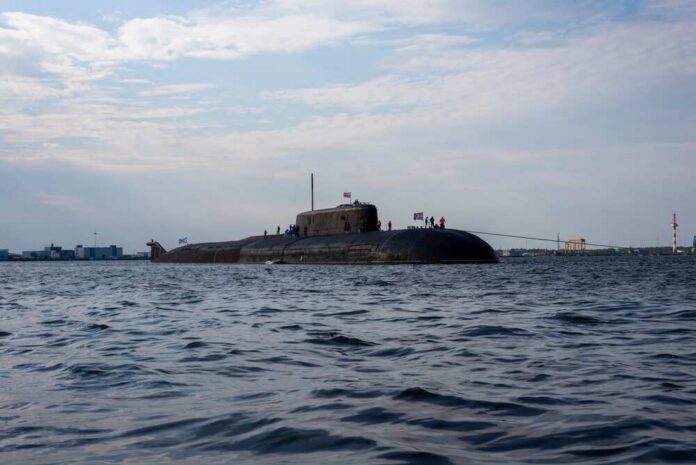
The U.S. Navy now warns that America’s ballistic missile submarines can be struck by cheap drones and anti-tank rockets while on the surface, exposing the backbone of our nuclear deterrent to low-cost attacks.
Story Highlights
- Navy sources say surfaced ballistic missile subs face new risks from drones and anti-tank rockets.
- Leaders are seeking better protection methods but offer no firm timelines or budgets.
- Uncrewed systems and sonar tactics are in testing, but key gaps remain.
- Adversaries are hiding missiles and drones in cargo containers, complicating defense.
Navy Issues Warning About Surfaced Submarine Vulnerability
Reports say the U.S. Navy is concerned that ballistic missile submarines are vulnerable to drones and anti-tank rockets while sailing on the surface. Posts from defense reporters repeated the warning and said the service is searching for better protection options. These claims focus on exposure during surface transits and in port, not while deep underwater. The warning matters because these submarines carry nuclear missiles and anchor our strategic deterrent. A cheap drone strike near home waters would be a strategic shock.
The Military Times post states the Navy is “searching for better methods” to protect these subs, but it shares no specific programs, budgets, or delivery dates. That gap points to a familiar Pentagon problem: known threats move fast, while procurement crawls. A NatSecPulse summary backs the core fear but also offers little technical detail on the rocket threat itself. Without test data or scenarios, the claim stands as a caution flag rather than a proven vulnerability case.
What We Know About Current Defenses And Their Limits
Navy training materials and explainers say sonar systems listen, classify sounds, and help crews sort real threats from ocean noise. Those tools work best against submarines and undersea targets. They help less when a quadcopter lifts off a pier or a small boat launches a short-range rocket at a surfaced boat. That is the crux of the Navy’s concern: the threat is cheap, quick, and often close. Early warning and active defenses must be at the point of exposure, not miles away.
U.S. Naval efforts pair small submersibles carrying special operators with uncrewed underwater vehicles to extend eyes and reach. These trials show promise for scouting and screening in chokepoints. However, program leaders admit major hurdles in communication and coordination underwater, and say reliable teaming is still years away. That means today’s layered defense still has seams during pier operations, channel transits, and surface runs, when a fast drone or a surprise launcher could matter most.
Adversaries Are Blending In With Everyday Cargo
A research paper warns that China, Russia, and Iran are hiding missiles and drones in cargo containers that look like normal shipping boxes until they fire. This tactic complicates guard duty near ports and sea lanes. It can mask a launcher until the last minute, which shrinks the defender’s decision window. This trend pairs with the drone surge to create a cheap, mobile, and hard-to-spot threat mix. It is designed to stretch defenses thin and create doubt about safe harbor.
Surface exposure is the common weak point. Submarines are hardest to find when deep, but they must surface for some phases of operations. Moving through a narrow channel or sitting in a crowded port stacks risks. A small drone with a shaped charge or a short-range rocket fired from unexpected cover can punch far above its price. The Navy’s warning signals that the cost curve now favors the attacker near home waters and bases.
Balancing The Warning Against Submerged Strength
Analysts often note that modern American submarines are extremely quiet and hard to find underwater. Some coverage says the newest ballistic missile class uses drive systems and tiles to cut noise even more. Those strengths matter in the open ocean. But they do not cancel the surface problem that Navy sources raised. The new alarm is focused on the “last mile” from pier to deep water, where stealth gives way to speed, traffic, and human error.
US Navy fears ballistic missile subs can be hit by drones, anti-tank rocketshttps://t.co/Uk0CpveAWY
— NOSI – Naval Open Source Intelligence (@nosintel) July 10, 2026
Conservatives should ask hard questions that match common sense. Where are the concrete fixes, the funding lines, and the near-term fielding plans? The service is testing new teaming and sensors, but program leads admit major gaps and long timelines. Sonar and classic undersea weapons do not stop a pop-up quadcopter or a disguised container on a nearby pier. Congress should demand rapid base defense upgrades, point-defense kits for surfaced transits, and clear deadlines.
What Comes Next And What To Watch
Watch for live-fire tests that measure damage from drone-launched shaped charges against surfaced submarine mock-ups. Look for port security drills that fuse cameras, radio-frequency tools, and jammers to spot and stop drones before launch. Watch procurement notices for hard-kill options on tugs and escort boats. Until firm dates and systems appear, the warning stands: our most vital deterrent is at risk when it is most visible, and the bad guys know it.
Sources:
facebook.com, x.com, natsecpulse.com, reddit.com