

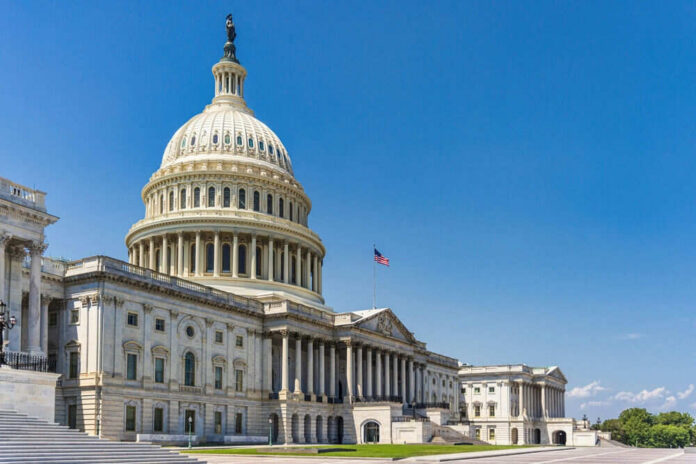
The Supreme Court’s Trump v. Slaughter ruling just stripped “independent” agencies of their shield and handed the elected President full power to fire their leaders at will.
Story Snapshot
- The Court ruled 6–3 that Federal Trade Commission removal protections violate the Constitution’s separation of powers, backing President Trump’s firing of Rebecca Slaughter.
- Chief Justice John Roberts overruled the 1935 Humphrey’s Executor precedent, ending 91 years of agency insulation from direct presidential control.
- Justice Clarence Thomas joined almost all of the majority and pushed a return to a strong, unitary executive answerable to voters.
- The decision reshapes the “administrative state,” letting presidents clear out hostile commissioners and install officials who follow their agenda.
Supreme Court Backs Trump’s Firing And Rejects “Independent” Power Centers
On June 29, 2026, the United States Supreme Court ruled 6–3 in Trump v. Slaughter that President Donald Trump acted lawfully when he fired Federal Trade Commission Commissioner Rebecca Slaughter without cause. The case asked whether a law that protected commissioners from removal except for “inefficiency, neglect of duty, or malfeasance in office” could block the President’s decision. The Court said no and held that the Federal Trade Commission’s for-cause removal rule violates the Constitution’s separation of powers. This reversed the lower courts, which had ordered Slaughter back into office and tried to stop the firing with an injunction.
Chief Justice John Roberts wrote the majority opinion and said Federal Trade Commission commissioners exercise executive power in the President’s name, so they must stay directly accountable to him. The opinion declared that Congress cannot shield leaders of executive agencies from presidential removal by giving them special job protections. The Court explained that past decisions had already chipped away at the old limits, and if anything remained of Humphrey’s Executor, “we overrule it.” Justice Clarence Thomas joined the majority in all but one section, making clear his strong support for a robust presidential removal power rooted in the Constitution’s text and structure.
Humphrey’s Executor Overruled: 91 Years Of Agency Independence Swept Away
For nearly a century, Humphrey’s Executor v. United States had blocked presidents from firing Federal Trade Commission members unless they met narrow legal grounds like inefficiency or neglect. That 1935 ruling became the main support for “independent” agencies, where unelected commissioners could resist direct presidential control. Trump v. Slaughter swept that framework aside. Roberts’ opinion said the old logic had not stood the test of time and had been undermined by later cases that favored stronger executive authority. By overruling Humphrey’s Executor, the Court removed the key legal tool used to keep powerful regulators separate from the elected President.
The ruling fits a wider trend where the Court has slowly cut back on special protections for agency heads and emphasized a single, unitary executive branch. Legal scholars note that recent decisions, including ones involving the Consumer Financial Protection Bureau and other boards, moved in the same direction, limiting how Congress can insulate officials who carry out federal law. In Trump v. Slaughter, the Court effectively endorsed that unitary executive theory, confirming that officials who wield the President’s power are his subordinates and must be removable at will. Justice Clarence Thomas has long argued for this view, seeing it as closer to the original meaning the Founders had in mind.
What The Decision Means For Trump’s Agenda And Future Presidents
Legal analysts say Trump v. Slaughter will reshape the modern administrative state and change how agencies like the Federal Trade Commission, National Labor Relations Board, and Equal Employment Opportunity Commission operate. Presidents will now have far more freedom to remove commissioners appointed by past administrations and replace them with officials who match their policies and respect constitutional limits. Supporters argue this brings back a clear chain of command from the lowest officer up to the President and then to the American people, instead of allowing a “headless fourth branch” of government to grow on its own.
This is big news! The Supreme Court case Trump v. Slaughter (docket 25-332), decided on June 29, 2026, in a 6-3 ruling allows the president to fire individuals from "independent" agencies. This is exactly what he just did.
🚨BREAKING: President Trump just FIRED all members of… https://t.co/jA7wWvmDr7
— Utah Citizens for the Constitution – Jen Brown (@UtahCitizens) July 10, 2026
Critics, including Justice Sonia Sotomayor in dissent, warn the ruling expands presidential influence over regulators and could let future presidents pressure agencies for political goals. But for many conservatives, the decision is a long-awaited correction to decades of unaccountable bureaucratic power. They see it as a victory for the Constitution’s separation of powers, which places executive authority in one elected President, not in semi-independent boards deeply tied to past leftist agendas. With Humphrey’s Executor gone, the courts have signaled that Congress may no longer use job protections to create shadow centers of power beyond voter reach.
Sources:
reason.com, supremecourt.gov, media.cadc.uscourts.gov, facebook.com, law.cornell.edu