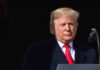


A thaw in Trump’s aggressive rhetoric with Colombia signals a shift to potential diplomacy, yet skepticism remains about his true intentions.
Story Highlights
- Trump’s threats of military action against Colombia now pivot towards diplomacy.
- President Petro accepts a White House invitation, indicating a move from confrontation to dialogue.
- Petro warns of the gap between words and actions in U.S. policy.
Trump’s Diplomatic Shift with Colombia
After months of aggressive exchanges, President Donald Trump has shifted his approach towards Colombia, moving from threats of military action to initiating a direct phone call with Colombia’s left-wing President Gustavo Petro. The conversation reportedly ended with Trump inviting Petro to the White House. This marks a significant change in tone, given Trump’s previous rhetoric, which included harsh criticisms of Petro’s policies and implications of possible U.S. intervention in Colombia.
The heated exchanges were initially spurred by disagreements over drug policy and U.S. actions in Venezuela. Trump had accused Petro of being lenient on narcotrafficking, linking it to the capture of Venezuelan President Nicolás Maduro by U.S. forces. The thaw in relations may indicate a strategic pivot, although it remains unclear whether this is a genuine diplomatic effort or a calculated move to relieve international tensions.
Trump Now Turning Tensions into Talks with Colombia's President Petro https://t.co/599liKJCk8
— Expeditious Feed (@Expeditiousfeed) January 9, 2026
Petro’s Response to U.S. Relations
Gustavo Petro, a former guerrilla fighter and leftist leader, has been critical of U.S. interventions in Latin America, emphasizing Colombian sovereignty in the face of external threats. In response to Trump’s invitation, Petro has expressed a willingness to engage in dialogue but remains cautious. He has publicly noted the difference between diplomatic words and actual policy actions, highlighting the need for genuine cooperation rather than mere rhetoric.
While the invitation to the White House could de-escalate tensions, Petro’s supporters in Colombia continue to mobilize, demonstrating widespread concern over potential U.S. intervention. This domestic pressure may influence Petro’s negotiating stance as he seeks to balance national sovereignty with the necessity of maintaining a stable relationship with the U.S.
Watch:
Implications for U.S.-Colombia Relations
The shift from confrontation to potential dialogue could lead to a recalibration of U.S.-Colombia relations. Analysts suggest that this might prompt renegotiations on drug policy, emphasizing development and public health over militarized interdiction. The broader regional implications include a re-evaluation of U.S. unilateral actions in Latin America, as the Maduro operation sets a precedent of cross-border intervention.
As the situation develops, the outcome of Trump and Petro’s meeting will be closely watched. It could either reinforce regional stability through cooperative frameworks or exacerbate tensions if perceived as insincere or strategically manipulative.
Sources:
Trump–Colombia tensions thaw after months of heated exchanges