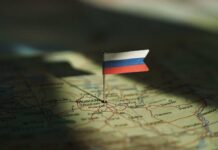
China’s authoritarian regime has seized 60,000 maps for accurately depicting international borders.
Story Highlights
- Chinese authorities confiscated 60,000 maps that correctly showed Taiwan as separate and omitted Beijing’s fabricated territorial claims
- The seizure targeted maps that failed to display the “nine-dash line,” China’s disputed claim over nearly the entire South China Sea
- Nine democratic nations including the Philippines and Vietnam actively oppose China’s aggressive maritime expansion
- This censorship demonstrates how authoritarian regimes manipulate truth to justify territorial aggression against sovereign nations
Communist China Enforces Territorial Fiction Through Map Censorship
Chinese customs officials in Shandong Province confiscated 60,000 maps during an export inspection, declaring them threats to “national unity, sovereignty, and territorial integrity.” The real threat these maps posed was their accuracy in depicting international borders without Beijing’s fabricated territorial claims. This heavy-handed censorship operation exemplifies how authoritarian regimes distort reality to justify aggressive expansionism against democratic neighbors.
Watch: China Seizes 60,000 “Problematic” Maps Over Taiwan, West Philippine Sea Claims | Spotlight | N18G
Beijing’s Nine-Dash Line Faces International Opposition
The seized maps failed to display China’s infamous “nine-dash line,” the arbitrary boundary Beijing uses to claim nearly the entire South China Sea. Nine countries including the Philippines, Vietnam, Malaysia, Indonesia, and Brunei rightfully oppose this fabricated territorial grab. These democratic nations understand that appeasing China’s manufactured claims would surrender their sovereign maritime rights to communist authoritarianism, setting a dangerous precedent for global territorial disputes.
State-Mandated Geography Reveals Authoritarian Control
Chinese law requires all published maps to conform to state-sanctioned geographical standards, meaning accurate depictions of Taiwan as an independent nation or honest maritime boundaries face automatic confiscation. This legal framework transforms cartography into propaganda, forcing mapmakers to participate in Beijing’s territorial fiction or face government punishment. The incident demonstrates how totalitarian regimes systematically corrupt objective information to advance political objectives.
Implications for Free Nations and Global Sovereignty
China’s map censorship campaign signals broader threats to international law and sovereign nation recognition. By criminalizing accurate geographical representations, Beijing attempts to normalize its territorial aggression through information warfare. Free nations must recognize this tactic as part of China’s broader strategy to undermine democratic sovereignty through manufactured legitimacy, requiring unified international resistance to preserve territorial integrity worldwide.
Sources: