

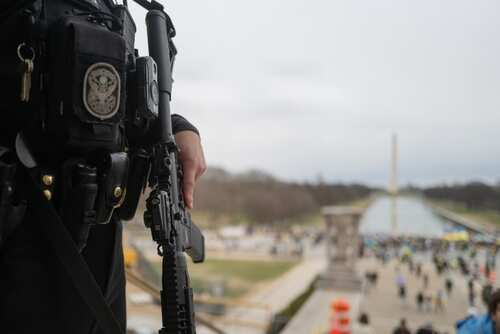
Federal intervention in Washington, D.C. policing under President Trump has led to a dramatic drop in crime rates, sparking debates over local governance and federal authority.
Story Highlights
- President Trump federalized D.C. police, deploying National Guard troops.
- Reported crime rates in D.C. plummeted shortly after this intervention.
- Federal takeover marks unprecedented control over a major city’s police force.
- Political tensions rise between federal and local authorities over crime reporting.
Federal Intervention and Its Immediate Impact
On August 11, 2025, President Donald Trump took the bold step of federalizing Washington, D.C.’s police department, a move that involved deploying National Guard troops and placing law enforcement directly under federal control. This action was taken in response to what was described as “out-of-control” crime in the nation’s capital. Within the subsequent 11 days, significant reductions in crime were reported, including declines in carjacking, motor vehicle theft, and violent crimes.
Data from the Metropolitan Police Department (MPD) and reviewed by various sources such as Breitbart News confirmed double-digit percentage drops in major crime categories compared to the previous 11-day period. Trump has praised the intervention’s success and criticized local officials for allegedly misrepresenting crime statistics. He pledged continued efforts to make Washington, D.C., “totally safe,” highlighting his administration’s commitment to public safety.
One week after federal control, D.C. crime plummets: robbery ↓46%, carjacking ↓83%, overall crime ↓8%. Proof that ending soft-on-crime policies works. Broken cities must follow Trump’s lead to restore law & order. pic.twitter.com/xLwwaZeGqC
— CaldwellInstitute (@CaldwellSafety) August 20, 2025
Political Dynamics and Community Impact
President Trump’s decision to federalize the police has sparked significant political debate, particularly with D.C.’s Mayor Muriel Bowser, who opposed the intervention and is accused by Trump of manipulating crime data. This federal control has created tension with local officials, who argue for city autonomy and question the long-term efficacy of such interventions. However, residents and businesses in D.C. have welcomed the reported improvements in safety, although they remain uncertain about governance and future crime trends.
The intervention has also set a potential precedent for federal involvement in urban policing, raising concerns about local autonomy and prompting discussions about the balance of power. The economic impact could be positive, with expectations of increased tourism and commerce if safety continues to improve.
Watch: ‘BREATHTAKING’: Inside the crime drop in DC amid Trump’s initiative
Long-term Implications and Expert Insights
While the immediate drop in crime has been celebrated by federal officials, experts caution against attributing the decline solely to federal intervention. The Council on Criminal Justice notes that while D.C.’s crime rates have decreased, they remain higher than the national average.
The preliminary nature of the crime data means figures are subject to change, and allegations of data manipulation have yet to be independently verified. The long-term impact of federal control over D.C.’s police force will be closely monitored, with implications for both local governance and national policing policy.
Sources:
Crime in Washington D.C.: What You Need to Know
Metropolitan Police Department Daily Crime Reports
White House: D.C. Crime Is Out of Control