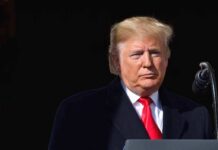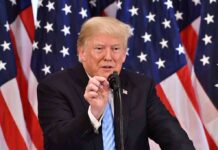
President Trump just put Capitol Hill on notice: oppose the SAVE America Act, and don’t expect his endorsement—because election integrity is now a top-line litmus test heading into 2026.
Quick Take
- Trump vowed he will “never” endorse any lawmaker—Republican or Democrat—who votes against the SAVE America Act.
- The House passed the bill in February 2026, but the Senate faces a filibuster hurdle with Republicans holding 53 seats.
- Supporters say the bill strengthens proof-of-citizenship enforcement for federal elections; critics warn millions could struggle to produce documents.
- ABC’s fact-check notes Trump has linked the bill to other issues not clearly contained in the bill text, including restricting mail-in voting.
Trump Raises the Stakes on the SAVE America Act
President Donald Trump escalated pressure on Congress Tuesday, posting on Truth Social that he will not endorse any lawmaker who votes against the Safeguarding American Voter Eligibility (SAVE) America Act. The bill would require proof of U.S. citizenship for federal voter registration and tighten voter ID expectations for federal elections. Trump framed the measure as historically consequential and urged voters to push senators as Senate Republicans prepared a test vote.
Trump’s warning lands at a moment when many grassroots conservatives remain furious about years of loose election rules, mass mail voting expansions, and a Washington class that often treats citizen concerns as an inconvenience. His endorsement threat is also a blunt reminder of where power sits in today’s GOP: the White House and voters want clarity, not process excuses. Even supporters acknowledge the math is difficult, making the coming vote as much a messaging fight as a legislative one.
What the Bill Does—and What It Doesn’t Clearly Say
Backers describe the SAVE America Act as a direct attempt to enforce an existing principle: only U.S. citizens should vote in federal elections. The legislation’s focus is proof of citizenship during registration for federal contests, paired with stricter identity requirements. At the same time, reporting and fact-checking around the debate highlight a key limitation for readers trying to sort signal from noise: Trump has publicly tied the bill to limits on mail-in voting, but that connection is disputed.
ABC News’ review underscores the broader problem in political messaging: slogans can outrun statutory language. The fact-check examined Trump’s claims about public support and what the bill would change, concluding that some statements were overstated or lacked precision—particularly around the idea that the legislation itself bans or broadly restricts mail voting. That distinction matters because election administration is already a trust issue; conflating separate policies can give opponents an opening to claim “overreach,” even when the underlying goal is straightforward.
The Senate’s Filibuster Wall and GOP Federalism Tension
Senate Republicans hold a 53–47 majority, which is not enough to clear a 60-vote threshold if Democrats filibuster. Senate Majority Leader John Thune has been described as realistic about the vote count and the prospects of changing Senate rules to force it through. That leaves supporters aiming for a “test vote” designed to put every senator on the record—fuel for campaign ads and primary challenges even if the bill stalls procedurally.
Internal Republican concerns also cut in a direction familiar to conservatives: federalism. Senators including Thom Tillis and Lisa Murkowski have raised objections centered on federal overreach and the risk of bureaucratic disruption to state-run elections. Those arguments resonate with voters who distrust Washington mandates. The political dilemma is obvious: many conservatives want stronger national standards to prevent loopholes, but they also want states protected from one-size-fits-all rules that create new administrative choke points.
Claims About Disenfranchisement Versus Public Support for Voter ID
Democrats, civil-liberties groups, and election-law critics argue that a strict proof-of-citizenship requirement could cause eligible Americans to be turned away if they lack readily available documents. The Brennan Center has been cited for estimating that 21.3 million Americans may not have citizenship documents on hand, with 3.8 million fully lacking them. That criticism is central to the fight: opponents say the burden falls on lawful voters, not hypothetical cheaters, and they label it a “show your papers” approach.
Supporters counter that confidence in elections is a prerequisite for consent of the governed, and that verifying citizenship is neither radical nor discriminatory when implemented with clear rules. Polling adds complexity. Pew Research data cited in coverage shows broad support for voter ID overall—83% in an August 2025 poll—though partisan gaps remain, including lower support among Democrats than Republicans. ABC also noted Trump’s claims about Democratic support were inflated compared with the cited poll breakdown.
Why This Fight Matters Beyond the Midterms
The SAVE America Act fight is not only about one bill; it is about who sets the rules for citizenship verification in federal elections and how aggressively Washington should intervene. Trump’s decision to attach endorsements to a specific vote is a political enforcement mechanism aimed at lawmakers who prefer to straddle the issue. For voters who watched years of institutional stonewalling on border enforcement and election concerns, the tactic signals that the administration is willing to use leverage, not just rhetoric.
BREAKING: Trump pledges not to endorse lawmakers who vote against SAVE America Act, saying the bill is 'one of the most IMPORTANT & CONSEQUENTIAL pieces of legislation in the history of Congress, and America itself' https://t.co/ikZTqJRY5Y pic.twitter.com/c6rWrYzEwT
— Fox News (@FoxNews) March 17, 2026
Still, the current record also shows limits: there is no widely agreed evidence in the cited reporting of a sweeping noncitizen voting “epidemic,” even as supporters argue loopholes and lax verification invite abuse. That makes the legislative debate hinge on prevention versus proof—whether Congress should close gaps before they are exploited, or demand stronger demonstrated harm before mandating new requirements. With Senate math tight and Democrats unified, the immediate outcome may be stalemate, but the political pressure campaign is already underway.
Sources:
Trump warns he won’t endorse lawmakers who oppose Save America Act
Fact check: Trump and the SAVE America Act amid push