
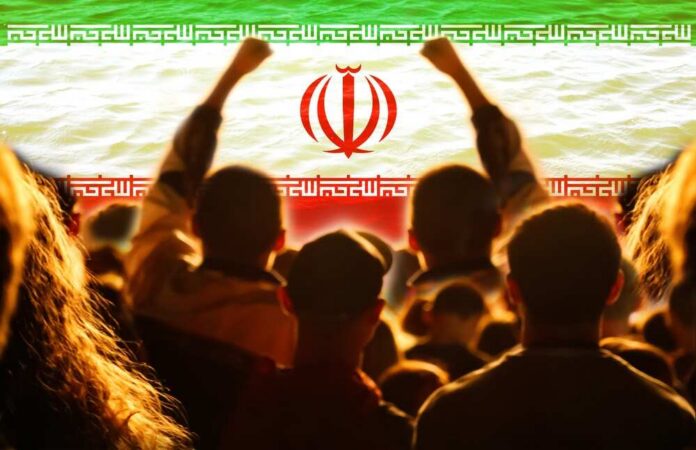
As Iranians risk their lives chanting “Death to the dictator,” the real scandal in the West is how quickly the usual progressive megaphones seem to go quiet.
Story Snapshot
- Iran’s late-2025 to early-2026 unrest grew from an economic revolt in Tehran’s Grand Bazaar into the largest anti-regime protest wave since 1979.
- Reports describe a brutal state crackdown, with sharply disputed death tolls ranging from the thousands to far higher estimates during peak violence.
- Internet blackouts and mass arrests have complicated verification, while independent groups and major outlets continue tracking casualties and detentions.
- Student protests persisted into late February 2026, including anti-Khamenei slogans and renewed campus confrontations with security forces.
Bazaar-Led Protests Turned Into a National Revolt
Iran’s latest protest wave began on December 28, 2025, when demonstrations broke out in Tehran’s Grand Bazaar as the rial reportedly collapsed to around 1.42 million per U.S. dollar and families felt inflation and subsidy cuts. Reporting described the unrest spreading quickly beyond the capital to other cities, and then into universities. The sequence matters: this wasn’t a niche dispute. It started with bread-and-butter economics and escalated into direct demands for regime change.
Several outlets and analyses emphasized why the bazaar’s involvement carried unusual political weight. The Tehran bazaar has historically functioned as a power center and a flashpoint in Iranian politics, including in the 1979 Revolution. As protests spread, chants reportedly shifted from economic grievances to explicit rejection of Supreme Leader Ali Khamenei. That evolution—merchant strikes, nationwide gatherings, and anti-regime slogans—helps explain why the regime treated the demonstrations not as a policy complaint but as an existential threat.
The Crackdown, the Blackout, and the Battle Over the Death Toll
Accounts across human-rights reporting and international coverage describe security forces responding with escalating force as protests expanded in early January. A key inflection point came around January 3, when reporting indicated Khamenei authorized a more aggressive crackdown. Amnesty International highlighted the use of unlawful force and said an internet blackout beginning around January 8 served to conceal abuses and hinder outside scrutiny. Those conditions make documentation difficult and give the regime more room to control narratives.
Casualty estimates remain a central dispute, and responsible coverage has to state that clearly. One independent monitor, HRANA, has been cited as confirming more than 7,000 deaths by mid-January, while the Iranian government has offered a much lower figure—just over 3,000 in some reporting. Other reports and summaries cite far higher numbers during peak violence on January 8–9, ranging into the tens of thousands. The underlying fact is consistent even when the numbers differ: the crackdown was severe, and verification is obstructed.
February Campus Protests Show the Movement Didn’t Disappear
By late February 2026, reporting described a “Phase II” centered on student protests, including chants like “Death to Khamenei” and visible anti-regime symbolism such as Lion and Sun flags. Accounts described security forces and Basij involvement, raids, arrests, and intimidation tactics around dorms. Even if the nationwide scale of late February looked smaller than early January’s peak, the persistence signals that the underlying grievances—economic collapse and political repression—remain unresolved.
So Where Is the Left’s Support—And What Can Be Proven?
The question conservative commentators keep asking—“Where is the left’s support for the Iranian people?”—is emotionally resonant, but the research base here has a limitation: most sourced material documents the protests and repression, not a measured audit of progressive politicians, activists, or media statements. What can be said with confidence is that major human-rights reporting and mainstream summaries focus on the crackdown, while claims about Western “silence” are more rhetorical than documented in the provided sources.
For Americans who value individual liberty and limited government, the clearest takeaway is not partisan theater but the reality of state power used against civilians: live-fire allegations, mass arrests, forced confessions, and communications blackouts. If U.S. leaders in 2026 want to stand for constitutional principles at home, they should recognize the same principles abroad—speech, assembly, due process—especially when a regime tries to erase accountability by shutting off the internet and controlling information.
An Iranian man left this comment on my YouTube channel. This is without a doubt the single best explanation of the reality facing Iranian people today👇
"As an Iranian, I can tell you the situation is no longer just political—it's existential. We are trapped between two…
— Cyrus Janssen (@thecyrusjanssen) February 28, 2026
In practical terms, the Iran story is also a warning for U.S. debates. When governments normalize censorship “for safety,” weaponize law enforcement to crush dissent, or label ordinary citizens as extremists, the end result is predictable: fewer rights and more fear. The Iranian people are showing what courage looks like under real tyranny. Americans should demand clarity from policymakers and media alike—starting with accurate facts, honest uncertainty where it exists, and zero tolerance for excusing violent repression.
Sources:
Timeline: How protests in Iran unfolded and grew
Why the Latest Iran Protests Started in the Tehran Bazaar
What happened at the protests in Iran?