Hollywood’s biggest merger fight just collided with Washington power politics—putting CNN’s future, antitrust enforcement, and public trust in the process under a brighter spotlight.
Story Snapshot
- Warner Bros. Discovery shareholders are set to vote March 20 on a deal after a bidding contest involving Netflix and Paramount-Skydance.
- Reports describe President Trump weighing in publicly on deal-related figures and outcomes, even as he said he “shouldn’t be involved” in the DOJ review.
- Netflix has walked away after Warner Bros.’ board deemed Paramount-Skydance’s latest offer a “superior proposal,” narrowing the path forward.
- Regulatory scrutiny remains active, including DOJ review and a California investigation, alongside competing political pressure from both parties.
A Blockbuster Deal Heads for a High-Stakes Vote
Warner Bros. Discovery’s sale process is approaching a decisive moment, with shareholders scheduled to vote March 20 after a fast-moving bidding battle that has pulled in Netflix and Paramount-Skydance. Warner Bros. Discovery holds major entertainment and news assets, including HBO and CNN, making any acquisition politically and economically sensitive. The latest reporting indicates Netflix has stepped back after the board characterized Paramount-Skydance’s most recent bid as a “superior proposal.”
Paramount-Skydance’s push has not been subtle. Paramount retained Makan Delrahim, a former Trump administration antitrust official, to steer regulatory strategy, a move that signaled early that Washington would matter as much as Wall Street. Larry Ellison provided a massive financial backstop for his son David Ellison’s effort, adding serious muscle to Paramount-Skydance’s ability to keep bidding. The combination of money, legal strategy, and timing has helped set the stage for a winner-take-most media outcome.
Trump’s Public Comments Complicate the DOJ Antitrust Narrative
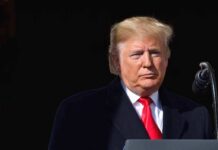
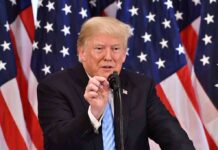
President Trump’s role has become a central part of the story because he has made public statements touching the deal, including commentary related to CNN and criticism aimed at a Netflix board member. At the same time, Trump told NBC News in early February that he “shouldn’t be involved” in the Justice Department’s review. That tension—between distancing language and highly visible commentary—has fueled claims from critics that politics is bleeding into a regulatory process intended to be neutral.
Democrats have seized on that contradiction, describing the merger fight as a case study in influence and media leverage. Their warnings focus on the idea that control of major media assets could shift based on proximity to political power rather than purely on price, performance, or competition policy. The strongest version of that allegation—a whistleblower claim that Trump promised the Ellisons control—has not been substantiated in the provided reporting, which instead documents public statements, relationships, and strategic hires.
State Scrutiny and Competing Pressure From Both Parties
Regulators and state officials have signaled that the shareholder vote is not the end of the road. California Attorney General Rob Bonta has said the transaction is “not a done deal,” and his office has continued its probe. Separately, a coalition of Republican attorneys general urged U.S. Attorney General Pam Bondi to scrutinize Netflix’s proposed acquisition path, pointing to market concentration concerns. Those cross-pressures underscore that consolidation fears are not limited to one party.
Paramount has also publicly argued the process is moving without statutory roadblocks, citing a key deadline that passed without pushback from the Justice Department. Even so, ongoing investigations indicate the government still has room to intervene depending on how the final structure looks and whether officials believe competition would be harmed. For consumers, the practical question is whether fewer major studios and platforms means fewer choices or higher prices—concerns that are frequently raised in large-scale consolidation fights.
What the Evidence Shows—and What It Doesn’t
The record described in the available sources supports several concrete points: the merger has become politically charged; Trump has publicly weighed in on deal-related matters; and Paramount-Skydance built a regulatory strategy staffed by figures with Trump-era antitrust experience. What the same record does not show is documentary proof of the most explosive claim—an explicit promised transfer of control—beyond allegations. With limited documentation in the provided materials, readers should separate verified events from claims still awaiting corroboration.
The larger issue for constitutional-minded Americans is not a preference for one streaming brand over another, but whether government power is seen as predictable and rule-bound when politically sensitive industries are involved. Antitrust enforcement is supposed to apply evenly, regardless of which executives are friendly with which politicians. As this vote arrives, the deal’s next chapter will likely be decided by shareholder math and regulatory findings—while the political noise continues to grow around CNN, consolidation, and who ultimately shapes the media landscape.
Sources:
Paramount deal, Warner, CNN, Trump comments, Susan Rice
‘Horrifying’: Hollywood blasts Trump’s role in studio sale
Paramount-Warner-Netflix, Larry and David Ellison, Donald Trump, Democrats’ reactions