

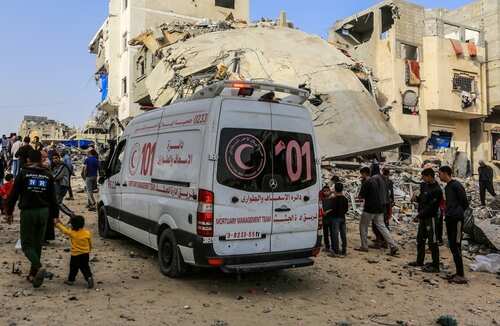
Gaza hospitals face imminent collapse amid relentless military strikes, threatening lives and sparking international concern.
Story Highlights
- Only 14 hospitals remain operational in Gaza, none at full capacity.
- Intense Israeli military operations lead to repeated hospital closures.
- Severe shortages of medical supplies and staff exacerbate the crisis.
- International organizations call for urgent humanitarian intervention.
Gaza’s Health System on the Brink of Collapse
The ongoing Israeli military operations in Gaza have brought the region’s health system to a breaking point. Since October 2023, intensified hostilities have targeted health infrastructure, severely limiting medical care availability. Recent attacks forced the closure of the European Gaza Hospital in May 2025, displacing waves of patients and further straining remaining facilities. As of September 2025, only 14 hospitals continue to operate, none at full capacity, directly impacting trauma and non-trauma care.
The situation is dire, with bed occupancy rates soaring past 200% in major hospitals, and essential drugs and consumables nearing depletion. The World Health Organization (WHO) reports critical shortages, with 52% of essential medicines at zero stock. The ongoing blockade exacerbates these challenges, restricting entry of vital supplies and humanitarian aid. Hospitals are overwhelmed, treating patients in corridors and on floors amidst the chaos.
Watch: Central Gaza facilities overwhelmed: Hospitals struggle to cope with influx of sick people
Humanitarian Response and Challenges
International organizations, including the WHO and United Nations, are urgently advocating for humanitarian access and medical evacuations. WHO spokespersons warn that the violence only increases the number of injured, reducing access to care. Despite these efforts, humanitarian aid reaches Gaza slowly, hindered by military operations and access restrictions. The urgent need for evacuation of over 15,000 critically ill patients remains unmet, highlighting the humanitarian crisis.
Local health authorities and NGOs continue to manage crisis response under extreme duress. Efforts are focused on maintaining essential health services, although resources and autonomy are limited by ongoing conflict and blockade. The Palestinian Ministry of Health struggles to coordinate emergency response with dwindling supplies and staff.
Implications for the Future
The ongoing situation poses severe short-term and long-term implications for Gaza’s population. Immediate risks include increased mortality from trauma and disease due to lack of access to adequate care. Long-term, the collapse of the health infrastructure could have lasting effects on public health, chronic disease management, and maternal and child health.
Economically, the destruction of health infrastructure and increased costs for emergency care pose substantial challenges. Socially, trauma and the loss of trust in institutions threaten community cohesion. Politically, this crisis invites international scrutiny and pressure on both Israeli and Palestinian authorities, potentially destabilizing the region further.
Sources:
UN News, September 2025: “Gaza: Four more hospitals shut amid ongoing Israeli offensive”