
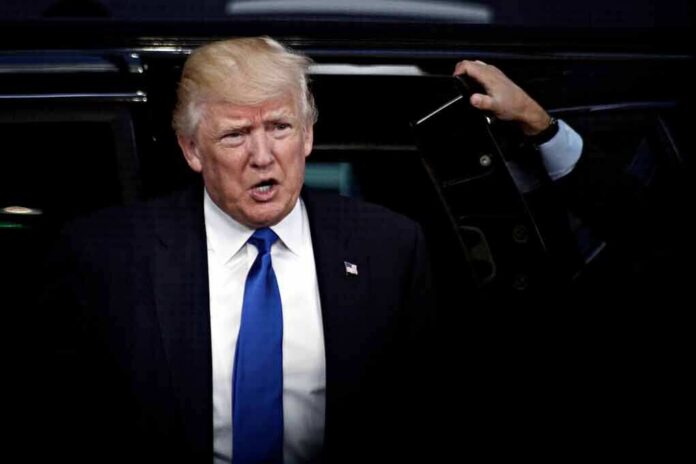
President Trump cut short NBC’s Meet the Press after blasting Kristen Welker and the network as biased while defending his claims about crooked elections.
Story Highlights
- Trump ended an NBC Meet the Press interview after clashes over election integrity claims.
- Welker pressed for evidence; Trump cited slow California counts and called NBC “crooked”.
- NBC and other outlets published fact-checks disputing Trump’s claims about fraud.
- California’s slow counts stem from mail voting rules that can delay results for days.
What Happened On Meet the Press
President Trump walked out of a taped Meet the Press interview after Kristen Welker pressed him on claims that elections were “rigged.” Reports say Trump linked current delays in California vote counting to broader election integrity concerns and called NBC “one-sided” and “crooked” before ending the exchange. CNBC quoted Trump saying, “The election was rigged, it was a dirty election and it’s happening again right now in California,” as Welker pushed for proof.
NBC and several outlets ran fact-checks soon after the broadcast. They argued there was no evidence that California’s vote counting reflected fraud and disputed Trump’s claims about the 2020 race. NBC said Trump repeated fraud claims without providing evidence, while the network cited audits and court rulings as counterpoints. These fact-checks shaped much of the media’s next-day framing and fueled the broader debate over press bias and election integrity.
Why California’s Count Takes So Long
California’s slower results come from rules that accept many mail ballots after Election Day if postmarked on time. Ballot verification steps can extend counting for days or weeks. Election law analyst Hans von Spakovsky has explained how these policies, plus signature checks and cure processes, slow final tallies without proving fraud on their own. These mechanics often irritate voters who expect fast results, and they leave space for partisan fights when margins are close.
Slow counts are not unique to one party’s states, but California’s scale makes delays feel larger. Millions of mailed ballots, high provisional usage, and large counties create backlogs. County workers must verify signatures, process late-arriving mail, and fix ballot errors with voters when allowed. These steps extend timelines yet are designed to protect valid votes. Confusion grows when media call races early while many ballots sit uncounted, which feeds distrust among viewers.
The Clash Over Media Fairness
Trump’s supporters see a double standard in how big outlets host and grill conservatives. They point to Welker’s rapid fact-check framing and argue it ignored real concerns about chain of custody, list maintenance, and ballot curing rules. They also argue NBC framed Trump’s claims as false within minutes, which to them proves the questions were asked to score points, not to inform. That tension drove Trump’s decision to end the interview.
NBC’s defenders say tough questions are necessary and that fraud claims must meet the burden of proof. They cite past audits and court findings to reject the idea of a “rigged” 2020 result and to push back on fresh California claims. Both views reflect a long struggle between populist conservatives and major media brands. The divide widens when interviews become arguments rather than fact-finding, and when anchors and guests talk past each other.
What This Means For Voters
Voters want secure elections and straight talk from the press. Clear rules, clean voter rolls, and fast, transparent counts build trust. States like California can improve public confidence by publishing daily processing numbers, explaining postmark rules, and posting chain-of-custody logs in plain language. That helps citizens separate slow counting from wrongdoing and limits the vacuum that fuels rumor and anger.
🇺🇸 U.S. Sen. @tedcruz has called on Donald Trump and his administration to arm protesters in 🇮🇷 Iran so the Iranian people can overthrow the Islamic Republic themselves. He said the goal should be supporting internal forces to change the government.
In an interview with NBC… https://t.co/7hOyDFGP0C
— Tina (@Tina34832552745) August 30, 2026
Media outlets can help by pressing all sides with the same intensity and by linking claims to documents viewers can read. Viewers deserve to hear the rules, not just the verdict. When anchors give space to explain procedures and then test claims against those facts, the audience learns. When interviews become gotcha sessions, people tune out, and distrust grows. The goal should be secure votes, fast counts, and fair questions—without the smug tone that alienates half the country.
Sources:
factcheck.org, bbc.com, nbcpalmsprings.com