
A young Columbia police officer is dead after a domestic violence call turned into a gunfight in a city park.
Story Highlights
- Police say Officer Christopher DeLong, 29, died after being shot at Southeast Park in Columbia.
- A second Columbia officer was wounded; the suspected gunman also died, according to the police chief.
- Chief W.H. “Skip” Holbrook said the call began as a reported domestic dispute.
- Domestic disturbance calls are among the most dangerous for officers, federal data show.
Police Confirm Deadly Turn During Domestic Dispute Call
Columbia Police Chief W.H. “Skip” Holbrook said two officers responded to a reported domestic dispute Saturday when gunfire broke out at Southeast Park. The chief reported that Officer Christopher DeLong, age 29, later died from his wounds. A second officer suffered injuries. The suspect also died at the scene, the chief said during an evening briefing. The department asked for prayers for the officer’s family and the wounded officer’s recovery.
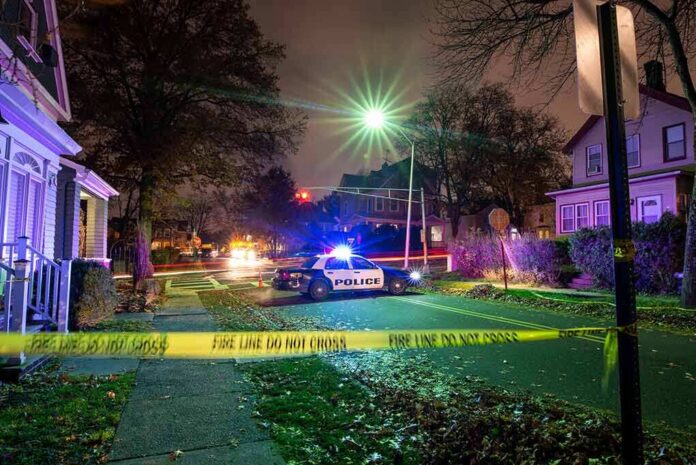
Local outlets identified the fallen officer as Christopher DeLong and reported that he served with the Columbia Police Department. The park area near Hazelwood Road was closed as investigators worked the scene and secured evidence. Reporters on the ground described a large police presence and a somber procession that followed the announcement of DeLong’s death. Officials have not released full timelines or all tactical details, which is standard early in such cases.
What Officials Say About The Suspect And The Second Officer
Police said the suspected gunman died at the scene after the exchange of fire. The chief did not immediately release the suspect’s name or motive, citing the active investigation. The wounded Columbia officer was transported for treatment; officials did not detail the injuries or condition during the first briefing. The South Carolina Law Enforcement Division typically leads independent reviews of officer-involved shootings in the state, and local reports indicated that process is underway.
Statements from city leaders and the coroner honored Officer DeLong’s service and called for community support for law enforcement families. Coverage summarized the chief’s remarks, which stressed the shock to the department and the danger officers face during volatile domestic calls. Updates from multiple outlets stayed aligned on the core facts: one officer killed, one injured, suspect deceased, and the incident linked to a domestic dispute at a public park in the capital city.
Why Domestic Disturbance Calls Are So Dangerous
Federal research shows domestic disturbance calls carry extreme risk for officers. A national analysis found 116 officers were killed while responding to domestic disturbance calls between 1996 and 2010, and 95 percent of those homicides involved a firearm. That pattern explains why even routine-seeming calls can turn deadly in seconds. Officers often arrive with limited information, while emotions at the scene run high and weapons may be close at hand.
🚨 COLUMBIA, SOUTH CAROLINA — POLICE OFFICER KILLED, SECOND OFFICER WOUNDED IN GUNFIGHT
Category: Breaking News / Officer-Involved Shooting
Date/time: August 30, 2026
Location: Columbia, South Carolina
Status: 🔴 OFFICER KILLED — INVESTIGATION ACTIVE
Update: Columbia Police…— WilluChill U.S. News. (@Will466513) August 30, 2026
Another policing study underscores that disturbance and domestic violence responses remain among the most dangerous types of calls. Training manuals and memorial data have long warned that these calls can escalate fast. That backdrop helps frame what happened in Columbia: two officers walked into a tense situation at a park tied to a domestic dispute, and one never made it home. The risk falls on those who wear the badge and step into chaos so families can be safe.
What This Means For Public Safety And Policy
Leaders in law enforcement and public safety point to several needs after tragedies like this. Departments push for better information sharing on 911 calls, faster access to suspect history, stronger penalties for repeat violent offenders, and steady support for officer training and protective gear. Communities can help by reporting threats early and cooperating with investigators. Those steps do not erase the risk, but they can narrow it and honor the sacrifice seen in Columbia.
Sources:
youtube.com, wrdw.com, bignewsnetwork.com, krcgtv.com, stacks.cdc.gov, law.justia.com