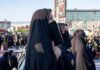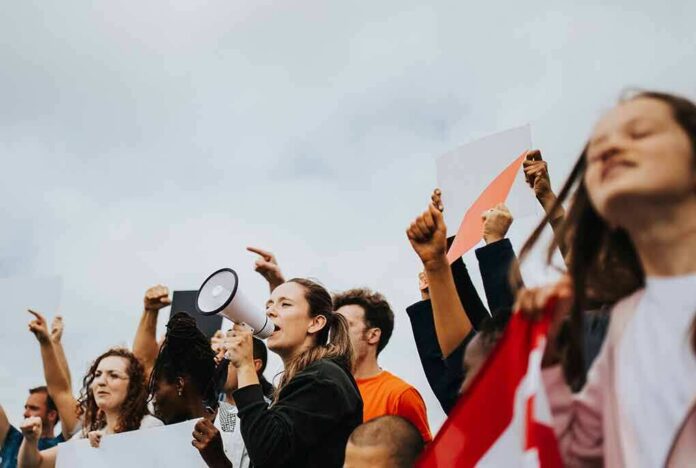
About 30 leftist activists blocked the garage exit at ICE’s Philadelphia headquarters, daring police to arrest them, and walked away without a single cuff clicked.
Quick Take
- No ICE Philly organizers blocked the garage at 8th and Cherry streets on January 20, 2026, to stop vehicles from leaving the ICE facility.
- Roughly 30 protesters, including clergy, formed a human wall and said they would not leave until arrested or forced out.
- Police moved the crowd aside just enough to let one vehicle exit, and no one was arrested that day.
- The stunt is the latest in a string of anti-ICE blockades in Philadelphia, some of which have ended with arrests and injured officers.
Blockade Outside ICE’s Philadelphia Office
Demonstrators from a group calling itself No ICE Philly surrounded the garage entrance at the federal building on 8th and Cherry streets in Center City. They said the goal was simple: stop ICE vehicles from “leaving the facility to terrorize our neighbors.” It was not a spontaneous gathering. Clergy members and faith leaders joined the roughly 30 activists, turning their bodies into a wall meant to physically block government business.
Protesters made clear this was theater with a purpose. They told reporters they would stay put “until they are arrested or forcibly moved,” according to local coverage of the scene. Philadelphia police eventually stepped in, but instead of hauling anyone away, officers simply nudged the crowd aside long enough for a single vehicle to pull out of the garage. No one was arrested.
Organizers Frame Disruption as Compassion
The demonstrators leaned hard on emotional language rather than specific evidence. One organizer said immigrant neighbors “have every right to be here and live the life that they deserve with dignity,” while the crowd sang and chanted for ICE operations to stop. Notably absent from the coverage: any specific ICE case, incident, or directive tied directly to the blockade. The protest rested on broad claims of fear, not documented wrongdoing by federal agents.
That distinction matters. Blocking a public roadway near a federal law enforcement facility is not a neutral act of free speech — it is a deliberate attempt to interfere with government operations. Reporting does not show any permit or authorized demonstration zone covering the garage entrance, meaning the group unilaterally decided a public right-of-way belonged to their cause for the day.
Part of a Longer Pattern in Philadelphia
This was not an isolated stunt. The Philadelphia Inquirer described it as part of “an ongoing series of protests against ICE operations,” and WHYY reported that earlier demonstrators had blocked the same garage and marched to the ICE office over immigration enforcement. Two months later, on March 30, clergy members were arrested attempting the same blockade tactic, and the Department of Homeland Security labeled the crowd of “50 to 60 rioters” engaged in a federal crime.
That escalating pattern should worry anyone who values the rule of law. What starts as a peaceful sit-in one week can turn into arrests, injuries, and property damage the next, as demonstrators test how far police will let them push before intervening.
Police Say Past Marches Turned Dangerous
Philadelphia police have not always let protesters off easy. In earlier 2025 anti-ICE marches near the federal detention center, officers said roughly 200 demonstrators blocked roadways and endangered public safety, ignoring three separate orders to disperse before arrests began. Fifteen people were arrested in one clash, two officers were hurt, and a police vehicle was vandalized with spray paint.
Police in that earlier incident said protesters used bicycles to physically obstruct officers on major roads, a tactic authorities say crossed the line from protest into unlawful interference. Those details are a reminder that “peaceful blockade” and “public safety hazard” often describe the exact same crowd, depending on who you ask — and depending on how far the activists decide to push it that day.
Conservatives have watched this playbook for years: activists frame lawbreaking as moral necessity, sympathetic press coverage focuses on the protesters’ feelings instead of the disruption they cause, and law enforcement gets stuck deciding whether to enforce the law or avoid a confrontation that makes headlines. President Trump’s administration has made clear that ICE enforcement will continue regardless of who stands in the garage. The question for Philadelphia is whether city police will keep letting blockades slide, or start treating obstruction of federal operations like the crime it is.
Sources:
inquirer.com, nbcphiladelphia.com, ground.news, whyy.org