

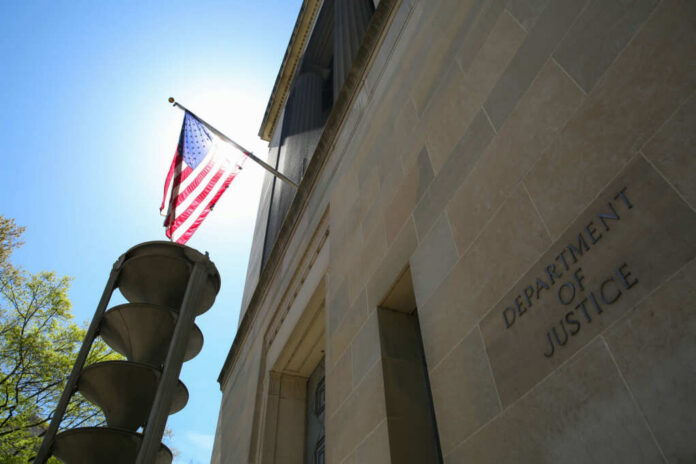
A reported Department of Justice probe into outside money behind E. Jean Carroll’s lawsuits raises fresh questions about sworn testimony, donor influence, and whether powerful political patrons quietly bankrolled a case against a former and current president.
Story Snapshot
- Department of Justice is reportedly scrutinizing whether E. Jean Carroll denied outside funding under oath in 2022 [1].
- Reporting ties funding support to billionaire entrepreneur Reid Hoffman and a nonprofit reportedly linked to him [1].
- Investigators are said to be weighing perjury, money laundering, and obstruction theories, with venue reportedly in the Northern District of Illinois [1].
- Carroll’s counsel later said she had a contingency-fee deal and no communications with nonprofit supporters, complicating intent claims [1].
What The Reported Probe Is Examining
Broadcast reporting states the Department of Justice is examining whether E. Jean Carroll’s October 2022 deposition accurately described her funding situation, after later disclosures indicated outside support helped cover legal fees and expenses [1]. The inquiry reportedly looks at whether her answer—that she had no outside funding—conflicts with subsequent information. Investigators are said to be assessing perjury, money laundering, and obstruction concepts, while noting the evidentiary record available to the public remains limited to media accounts rather than filed charges [1].
The same reporting says scrutiny extends to LinkedIn co-founder Reid Hoffman and a nonprofit associated with him, focusing on whether and how money flowed to support Carroll’s civil cases [1]. Reported details emphasize that Hoffman’s support came after Carroll filed suit, which, if accurate, may bear on materiality and intent. The Department of Justice has not publicly laid out evidence or charging documents, contributing to a vacuum filled by leaks and commentary instead of primary-source records [1].
Why The Funding Timeline And Knowledge Questions Matter
Carroll’s lawyer, Roberta Kaplan, reportedly told the court in April 2023 that Carroll had a contingency-fee arrangement, that outside nonprofit backing was secured months after filing, and that Carroll had no communications with the nonprofit or its financial supporters [1]. That explanation, if corroborated by documents, could weaken a perjury theory by undercuting knowledge and intent. An appellate panel reportedly accepted that Carroll could have plausibly forgotten limited outside funding, which complicates claims of a knowing false statement [1].
However, the reported probe highlights a factual contrast between Carroll’s 2022 deposition answer and later disclosures about donor-supported expenses, a tension prosecutors may test through records and testimony [1]. The available reporting does not provide precise amounts, funding routes, or contemporaneous client communications. Without invoices, wire records, or nonprofit ledgers, the public cannot yet assess materiality or intent. Analysts note that third-party support in civil litigation is not uncommon, but secrecy or inconsistency with sworn statements can trigger credibility and legal concerns [1][2].
Implications For Transparency, Politics, And Equal Justice
Conservative readers concerned with equal justice see two issues: whether sworn testimony was accurate and whether elite donors leveraged opaque channels to influence a high-profile case against a president they oppose. Reporting says the Second Circuit left Carroll’s civil outcomes intact, signaling courts did not view the funding theme as case-dispositive in that context [1]. Yet a criminal probe applies different elements, including materiality and intent under perjury statutes, which may turn on documents the public has not seen [1].
DOJ probe targets Reid Hoffman nonprofit tied to E. Jean Carroll case https://t.co/lHXU4KjtlE
— Axios (@axios) May 28, 2026
The Department of Justice’s reported involvement of the Northern District of Illinois and the mention of former Trump lawyer Todd Blanche in coverage have fueled speculation about optics, process, and politicization on all sides [1]. For citizens demanding accountability, the path forward is straightforward: surface the underlying funding documents, the October 2022 transcript, and the full April 2023 letter. Clear records can confirm who paid, when they paid, what Carroll knew, and whether her statements were accurate or materially false [1].
Sources:
[1] Web – DOJ probing outside funding E. Jean Carroll received for Trump civil …
[2] YouTube – DOJ investigating anti-Trump billionaire who funded E. Jean Carroll …