

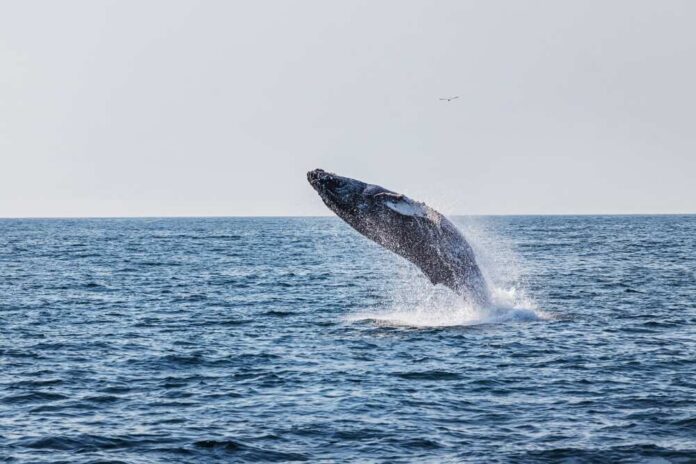
A massive humpback whale, trapped for days in the shallow Baltic Sea, finally broke free on its own—highlighting nature’s resilience amid human intervention and raising questions about shifting ocean patterns in a changing world.
Story Highlights
- A 12-15m humpback whale stranded on a sandbank near Timmendorfer Strand, Germany, since March 23, freed itself Friday after rescue teams dredged a channel.
- Rare sighting in the enclosed Baltic Sea underscores migration anomalies linked to recovering populations and environmental shifts.
- Biologist Robert Marc Lehmann credits the whale’s overnight strength-building for its self-liberation, now heading toward deeper waters.
- Efforts involved diggers, buoys, and floodlit operations, blending human ingenuity with animal determination for a hopeful outcome.
Stranding and Rescue Timeline
On March 23, rescuers spotted a 12-15m humpback whale stranded on a sandbank near Timmendorfer Strand, a resort area close to Lübeck on Germany’s Baltic coast. Multiple attempts to free it failed over the week. The shallow, brackish waters posed exhaustion risks to the massive mammal, far from its preferred open-ocean routes. Local teams monitored its condition closely amid public concern.
Intensive Dredging Efforts
Thursday marked a turning point as teams deployed two diggers to carve a channel through the sandbank, guided by buoys. Operations continued late under floodlights. The whale showed increased activity by evening, signaling recovery. Stephanie Gross from the Institute for Terrestrial and Aquatic Wildlife Research noted the challenges in orienting heavy machinery near the animal without causing harm.
Whale’s Dramatic Self-Rescue
By Friday morning, the whale had built strength overnight and swam off the sandbank independently. Observers tracked it hundreds of meters offshore via boat, heading toward deeper waters. Biologist Robert Marc Lehmann stated the animal “built up its strength overnight and freed itself.” Teams remain hopeful it navigates to the Atlantic, despite the Baltic’s limited access.
Rarity and Broader Implications
Humpback whales rarely enter the semi-enclosed Baltic, preferring migrations between polar feeding grounds and tropical breeding areas. Increased European coastal sightings tie to post-whaling population recovery and climate-driven range shifts. This incident spotlights stranding risks in shallow zones and the need for rapid marine rescue protocols. Local resorts endured disruptions but gained conservation publicity.
Humpback whale stranded off German coast for weeks swims to freedom https://t.co/js6DrZbLY7
— The Algiers Herald (@AlgiersHerald) May 2, 2026
Lessons for Conservation
The collaborative effort succeeded through human aid enabling the whale’s own agency. No political disputes emerged, but the event boosts awareness of ocean health. In an era of environmental flux, such rescues remind Americans of nature’s tenacity—and the limits of intervention. Monitoring continues to ensure the whale’s safe passage, affirming shared stewardship values across divides.